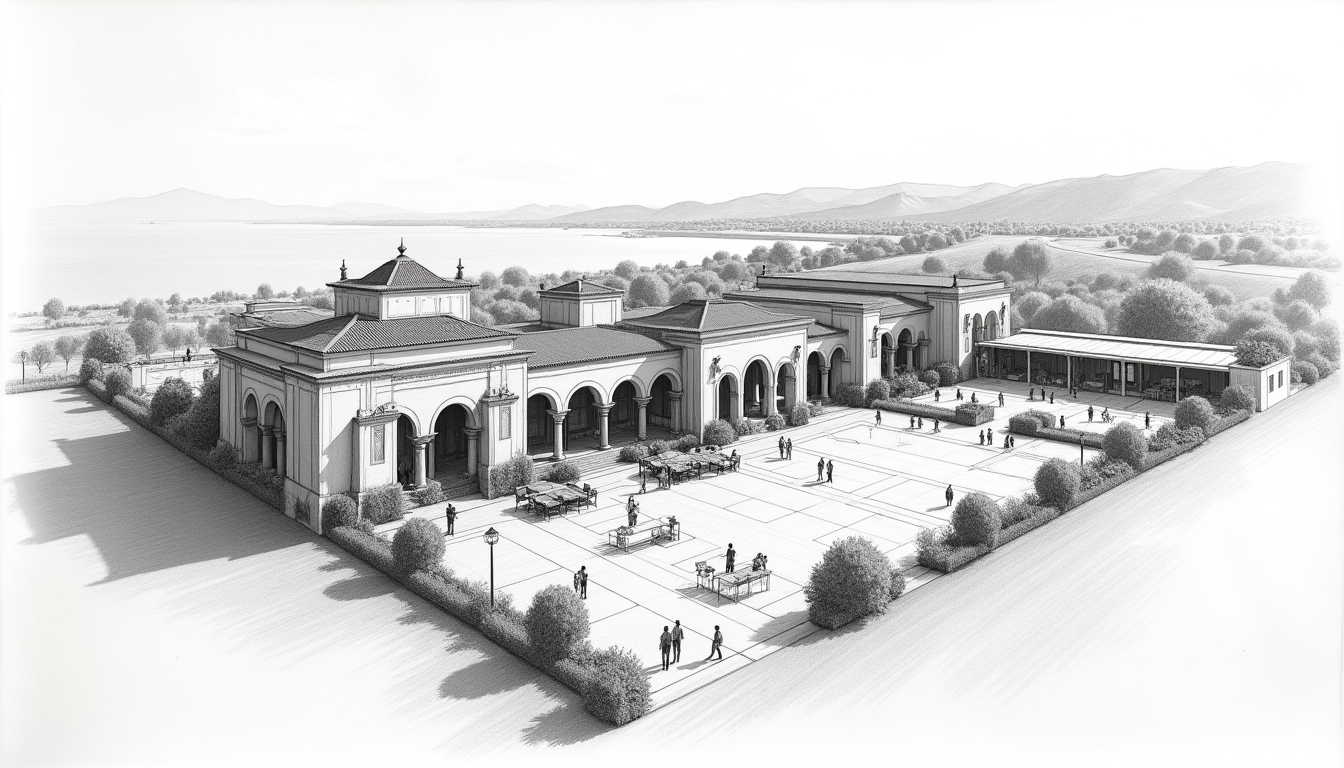
While the headlines focus on closures and cost pressures, someone just committed $15 million to building a hospitality compound in San Diego. The project is called The Admiral, it’s being developed at Liberty Station in Point Loma, and the person behind it already runs one of the most iconic dining rooms in the city.
Ryan Thorsen owns Mister A’s, the Bankers Hill restaurant that has been a San Diego institution for over 60 years. Thorsen’s path to ownership started with a Craigslist ad for a floor manager in 2010. He spent 11 years working under legendary French restaurateur Bertrand Hug, rising from entry level to Director of Operations. When the restaurant’s lease was expiring in 2022 and the space was slated for conversion to penthouse offices, Thorsen negotiated an extension, bought the business from Hug, and invested $2 million in a full renovation, all before his 33rd birthday. Now he’s taking on something significantly bigger, and the scale of the project tells you everything about where he sees the San Diego dining market heading.
Five Buildings, Five Concepts
The Admiral spans five 1920s-era Spanish Colonial Revival buildings across five to seven acres on the western edge of Liberty Station. These are the former officers’ quarters of the Naval Training Center, and they’ve sat vacant since the base was decommissioned in 1997, nearly three decades with no tenant willing to take on the scope of the restoration.
The plan puts a different hospitality concept in each building. The main restaurant, Quarters B, will be a 140-seat American concept with a Point Loma seafood emphasis, an oyster shucking window, and on-site edible gardens. Roughly two-thirds of the seating will be al fresco. Quarters D becomes The Canteen, a bakery and grab-and-go operation with a wine shop and floral counter. Adjacent to that is a game room with pool tables, shuffleboard, and bocce, deliberately built with no screens. The Gatehouse, a 1,600-square-foot building one block from the Jacobs Performing Arts Center, becomes a speakeasy cocktail bar with panoramic views from the deck. The two-story Quarters A/C becomes The Venue, a 1923 Spanish Revival event space with capacity for 250-person weddings, a B&B suite upstairs, and bridal party rooms.
At full capacity, the operation would employ approximately 200 people. OBR Architecture, known for historic renovations at Liberty Station, is handling the design. The aesthetic leans into the buildings’ original 1920s character, with vintage naval artifacts incorporated throughout.
Why This Investment Matters Right Now
Fifteen million dollars is an extraordinary commitment in any restaurant environment, and it’s especially notable in a San Diego market where over 70 bars and restaurants closed in 2025. Independent operators are citing razor-thin margins, rising wages, rent escalation, and an 8 percent decline in international tourism as compounding pressures.
The scale of the investment signals something important. Operators with strong track records and smart concepts are still finding capital, even in a difficult market, and Thorsen is far from alone. Zuma, the global luxury Japanese brand, is opening a 12,000-square-foot, 270-seat location downtown, its first in California. CH Projects committed over $15 million in property acquisitions for a Little Italy hotel and restaurant development. Station8 Public Market is building a 20,000-square-foot food hall at UCSD with 10 restaurant tenants.
The common thread across all of these projects is diversified revenue and strong capitalization. The operators attracting investment in 2026 aren’t single-concept restaurants hoping for the best. They’re multi-stream operations designed to generate revenue across dayparts, occasions, and customer segments.
The Multi-Concept Advantage
The Admiral’s structure is the part worth studying, because a standalone 140-seat restaurant is one revenue stream with one set of risks. The Admiral is five interconnected streams, from restaurant covers and event bookings at 250-person capacity to cocktail bar revenue, bakery and retail sales, and B&B accommodations. If the restaurant has a slow Tuesday lunch, the bakery is still selling. If a rainy weekend dampens walk-in traffic, a booked wedding keeps the numbers up.
This multi-concept compound model is gaining traction across the industry. Hospitality forecasters have identified hybrid formats and multi-use venues as a defining trend for 2026, noting that venues operating across multiple dayparts and use cases are “more useful and profitable” than traditional single-concept operations. For independent operators in San Diego watching the closure wave and wondering what sustainable growth looks like, this model offers one answer.
Liberty Station as a Platform
The location choice isn’t incidental, as Liberty Station draws over 500,000 visitors annually and contributes approximately $41 million to San Diego’s economy. The campus already hosts a mature dining ecosystem that includes Liberty Public Market, a 25,000-square-foot food hall with 30-plus vendors, Stone Brewing World Bistro & Gardens, Solare Ristorante, and dozens of other restaurants and shops.
The Naval Training Center was dedicated in 1923 and graduated more than 1.75 million recruits over its 74-year history, peaking at 33,000 personnel during World War II. The NTC Foundation, now operating as Arts District Liberty Station, manages 26 of the 45 historic buildings on campus and receives no city operating subsidy. The foundation handles leasing, curation, and programming for a tenant base of over 100 organizations, including artists, galleries, museums, and restaurants.
The officers’ quarters that The Admiral will occupy represent the last significant undeveloped section of the campus. NTC Foundation CEO Lisa Johnson’s comment on finding the right tenant says it plainly. “You have to find someone who is a risk taker and someone with great vision.”
What This Tells the Market
In a dining landscape where the prevailing narrative is contraction, The Admiral is a $15 million counterargument that doesn’t ignore the pressures facing the industry but addresses them structurally, through diversified revenue, a proven operator, a historically significant location with built-in foot traffic, and a model designed to be resilient across seasons and economic cycles.
SanDiegoVille described the current restaurant landscape as a “recalibration, not a collapse,” noting that San Diego is experiencing “some of the most opportunity-rich windows” for experienced operators. The Admiral is what seizing that window looks like at scale.
For restaurant owners, buyers, and investors watching the San Diego market, the signal is clear. Capital is still flowing toward the right operators with the right concepts in the right locations. The closures are real, but so is the investment, and the operators who understand that both things can be true at the same time are the ones positioning themselves for what comes next.
Source: San Diego Magazine | SD Union-Tribune | SanDiegoVille
Businesses Mentioned