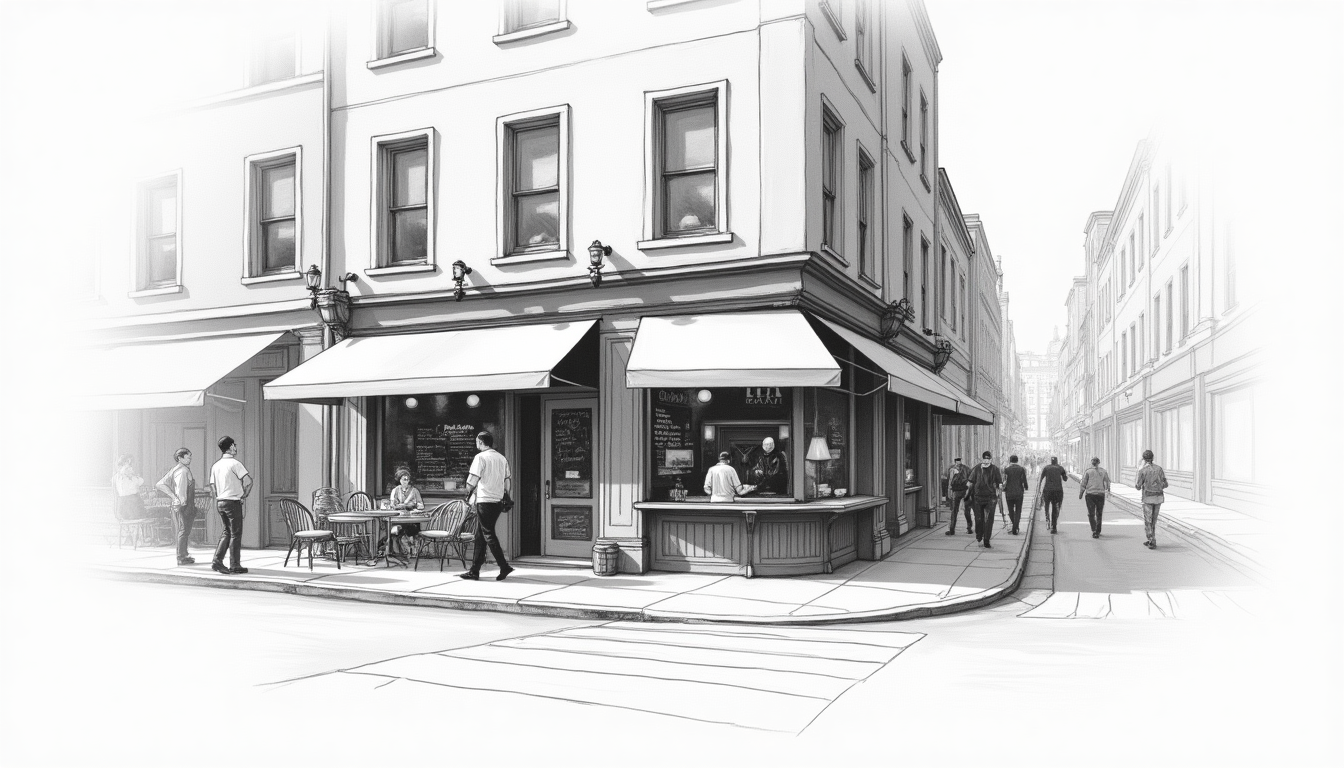
Carlos Altamirano opens Casa Sofia in mid-May at 701 2nd Street in San Francisco’s South Beach, one block from Oracle Park. The 120-seat dining room is his ninth Bay Area restaurant and his most ambitious format pivot to date, reframing his Peruvian fluency into a broader Latin American program drawing from Peru, Mexico, and Argentina, all delivered through a California seasonal lens.
The room was designed by Jon de la Cruz, whose previous work includes Wayfare Tavern, Che Fico, and JouJou. The aesthetic borrows from both Miami and California, with custom woodwork, soft pastel tones, greenery, and a dining room mural. Sample dishes from the SF Standard preview include oven-roasted pork chop with yuca mousse, chimichurri butter, and caramelized stone fruit, alongside the ceviches, tiraditos, and empanadas that have anchored Altamirano’s reputation for two decades, and the restaurant is named for his daughter, Sofia.
A Decade of Bay Area Scaling
Altamirano’s reach across the Bay Area is the more instructive part of this story for any operator thinking about scale. The portfolio already includes Sanguchon in Valencia and Altamirano in NoPa, plus a string of additional Bay Area properties that have given him the operating density to absorb a 120-seat South Beach unit without diluting his attention across the group.
Nine units in a single metro is the kind of footprint that changes how a restaurant company operates. Purchasing leverage on proteins and produce, shared kitchen labor across concepts, cross-training pipelines, and marketing infrastructure that pays back across the portfolio rather than against any one P&L all compound into operating advantages a single-unit competitor cannot match. A single-location independent in San Francisco is competing on the room, the menu, and the chef, while a nine-unit local group is competing on all of that plus the back-office machine that lets the room, menu, and chef perform without the operator pulling 90-hour weeks to hold it together.
That math is what makes a multi-unit Bay Area operator a different kind of buyer when they show up at a single-location seller’s table, because the buyer has somewhere to plug your concept in. Your lease, your customer base, and your kitchen become inputs to a system that’s already running.
The Ballpark-Adjacent Bet
South Beach is the right neighborhood for this concept and this operator. The Giants’ 81-game home schedule concentrates traffic from April through September, with playoff and event lifts when the team produces them, and the walking corridor from the ballpark to South Beach restaurants is one of the most reliably trafficked dining zones in the city during baseball months.
That seasonal lift cuts both ways for any ballpark-adjacent operator, who has to make unit economics work on the off-season as well as the home stand, because covers in February and March do not look like covers in July. The 120-seat capacity tells you Altamirano is building for the peak rather than the floor, which is what a ninth-unit operator can do. The pre-game and post-game traffic gets absorbed at a scale that a smaller room could not run efficiently, and the off-season is supported by the rest of the operation rather than carried by the South Beach room alone.
Pricing a ballpark-adjacent restaurant for sale, or modeling the rent for a ballpark-adjacent lease, requires this same math. The peak revenue months can flatter trailing twelve-month numbers in a way that an experienced buyer will quickly normalize. A seller running a strong concept in this corridor benefits from showing both the home-stand strength and a credible off-season operating plan, because that combination is what supports the multiple.
The California Coastal Read
What Altamirano is doing in South Beach mirrors a pattern we are tracking across coastal California more broadly. Established multi-unit operators are reading 2026 as a window to push deeper into their home markets rather than diversify across geographies. The Melt’s 8-unit Southern California expansion announced earlier this year, Daniel Patterson’s small-footprint Melrose return, Trust Restaurant Group’s 13-concept San Diego footprint, and now Altamirano’s ninth Bay Area unit all signal the same operator-side bet. The coastal California market is consolidating around groups with local density.
For owner-operators of single-location concepts along the coast, from San Diego to San Francisco, that consolidation pattern is the relevant context for any exit conversation in the next 12 to 18 months. The most likely buyer for your business has shifted from a first-time owner looking to step into your shoes to a multi-unit local operator who can pay for your concept on a strategic basis because they have somewhere to put it. That changes how a sale process should be structured, how the financials should be presented, and how the brand and lease tenure should be positioned.
Smith Allen tracks these consolidation patterns across the California coast and the broader SoCal market. We are here when you’re ready to think through whether to sell a restaurant in this cycle, with no pressure and no timeline.
Sources
- The San Francisco Standard, “Best New Restaurants Opening in May 2026”
- San Francisco Giants, Oracle Park
Businesses Mentioned
Tags