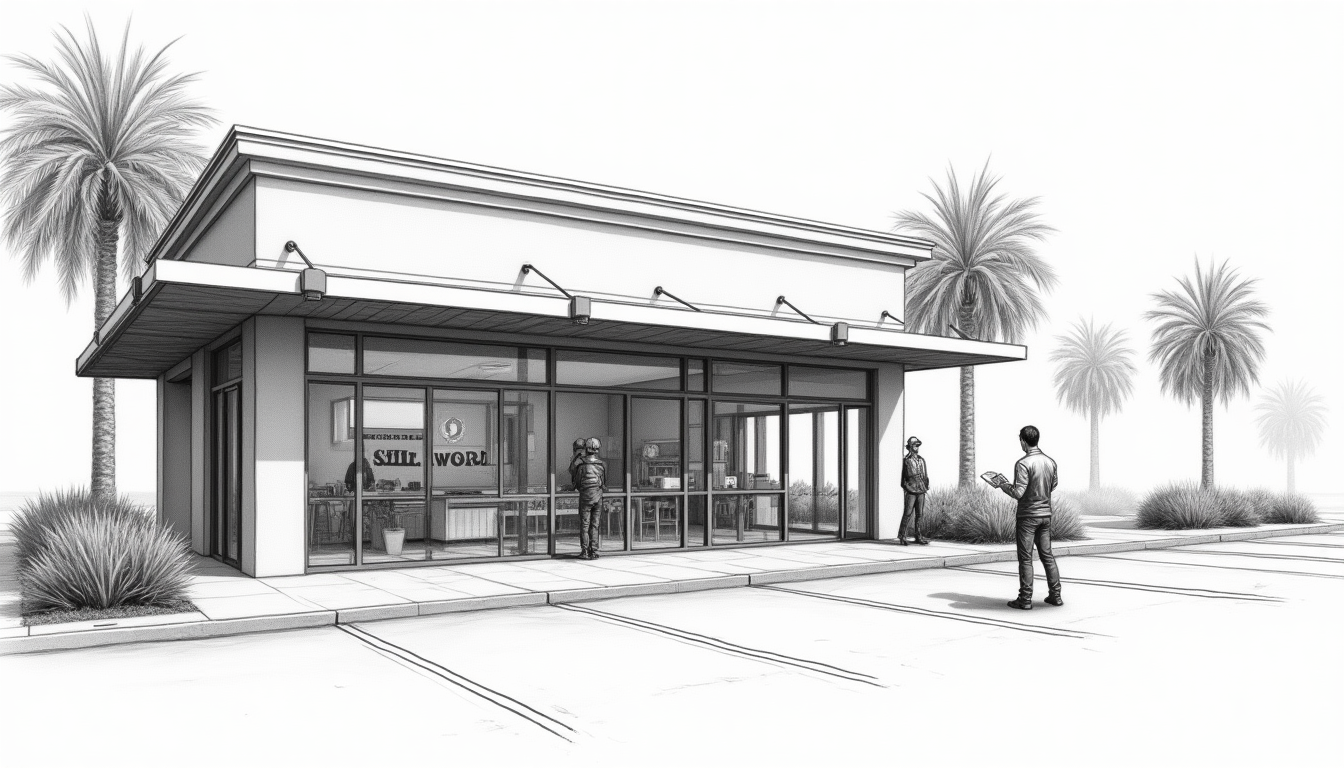
The headlines make it sound like a crisis, and the numbers back that up. Wendy’s is shuttering up to 360 locations, Pizza Hut is closing 250, Papa John’s is pulling back 200 stores in 2026 alone with another 100 planned for 2027, and Red Robin, Noodles & Company, Bahama Breeze, Smokey Bones, and Jack in the Box are all scaling back. Add it all up and over 800 chain restaurant locations are going dark this year.
But here’s what the headlines miss. Every one of those locations is a fully built restaurant with a commercial kitchen, hood system, walk-in coolers, grease traps, fire suppression, and plumbing already in place. For the right independent operator, this is one of the best buying environments in years.
What Second-Generation Space Actually Means
When a chain restaurant closes, the physical infrastructure doesn’t disappear. The commercial exhaust hoods, the Ansul fire suppression systems, the walk-in coolers and freezers, the grease interceptors, the gas lines sized for commercial cooking, the electrical panels rated for kitchen equipment, the floor drains, and the ADA-compliant restrooms all stay with the space.
That infrastructure is the single most expensive part of any restaurant buildout. Installing a commercial hood system alone costs anywhere from $5,000 to $50,000 depending on the size and complexity, a walk-in cooler runs $5,000 to $40,000, and grease trap installation adds another $1,000 to $15,000. Factor in fire suppression, commercial plumbing, and HVAC sized for kitchen heat loads, and you’re looking at $100,000 or more in infrastructure that a second-generation tenant inherits on day one.
The Math That Changes Everything
Building out a restaurant from raw shell space typically runs $150 to $300 per square foot, with total startup costs ranging from $275,000 to $850,000 for a standard concept and well over $1 million for a full-service restaurant in a prime location. The timeline is 12 months or more when you factor in construction, permitting, and inspections.
Second-generation space cuts that cost structure dramatically, with buildout costs dropping to $10 to $75 per square foot for cosmetic updates and moderate renovations. Industry data consistently shows 30 to 50 percent savings compared to new construction, and in many cases the savings are far greater. One case study from We Sell Restaurants documented a first-time owner who budgeted $750,000 for new construction, then pivoted to a second-generation space and opened for under $175,000 total, a savings exceeding $575,000.
The timeline compresses just as significantly, with projects that would take 12 months in raw space wrapping up in two to three months in a second-generation location where the zoning is already approved for restaurant use. Conditional use permits typically run with the property, not the tenant, so there’s no new public hearing. If the previous tenant held a liquor license, the space is already approved for alcohol service, which eliminates one of the longest permitting bottlenecks in the industry.
Smart Brands Are Already Moving on This
The operators paying closest attention to second-generation space aren’t doing it as a fallback, they’ve built entire expansion strategies around it.
First Watch, which opened a record number of restaurants in 2025, filled nearly 40 percent of its 80 new locations with second-generation spaces. The company plans 60-plus new openings in 2026 and has a pipeline of 130 sites, many of them former chain locations. IHOP has been even more aggressive. Roughly 80 percent of new IHOP restaurants now open in second-generation sites. Their dual-branded Applebee’s-IHOP conversions are generating 1.5 to 2.5 times the revenue of single-brand locations, with four-wall margins nearly doubling.
These aren’t desperate moves into leftover spaces but strategic real estate plays by operators who understand that the infrastructure is the expensive part, and the branding is the easy part.
Why Landlords Want You in That Space
From the landlord’s perspective, a vacant restaurant space is a problem. Converting it to non-restaurant retail means tearing out the hood system, remediating grease traps, reconfiguring plumbing and HVAC. That decommissioning easily costs $50,000 to $100,000 or more, and it destroys infrastructure that a restaurant tenant would pay to have.
That creates real leverage for operators shopping second-generation space right now. Landlords sitting on vacant chain locations are motivated to lease to another restaurant operator rather than absorb the cost of converting the space. In a market with 800-plus chain closures adding inventory, tenants can negotiate favorable terms, including tenant improvement allowances, reduced rent during buildout, and longer initial lease periods.
What This Looks Like in Southern California
The SoCal angle is especially sharp because Jack in the Box, headquartered in San Diego, has already closed 72 locations and is projecting up to 100 more California closures. With over 900 Jack in the Box locations in California alone, the footprint reduction will put dozens of fully equipped quick-service spaces on the market across San Diego, Orange County, and LA.
Meanwhile, San Diego’s retail vacancy sits at just 4.3 percent and Orange County is at roughly 5 percent. Those are historically low numbers, which means well-located restaurant spaces won’t sit empty for long. Operators who are watching this wave and positioning themselves early will have the pick of the inventory before the broader market catches on.
The Financing Advantage
Lower startup costs don’t just save money upfront, they change the financing equation entirely. SBA 7(a) loans are available up to $5 million for restaurant use, and SBA 504 loans require as little as 10 percent down. When the total project cost drops from $750,000 to $175,000, the loan amount shrinks, debt service falls, and projected cash flow improves. All of that makes the loan application stronger and the path to approval clearer.
For first-time operators or independent owners looking to open a second location, second-generation space turns a financially daunting proposition into a manageable one. The barrier to entry has never been lower for anyone willing to move on it.
The Window
Chain closures of this magnitude don’t happen in isolation. They’re driven by the same pressures hitting the entire industry, from rising wages, tariff-driven food costs, rent escalation to shifting consumer behavior. Those pressures are real, and they’re not going away. But the operators who succeed through environments like this aren’t the ones waiting for conditions to improve. They’re the ones who recognize that a fully equipped 3,000-square-foot restaurant with existing permits, proven foot traffic, and a motivated landlord is worth more than a blank slate and a dream.
Eight hundred spaces are about to hit the market, and the only question is who moves first.
Source: CNN | Nation’s Restaurant News | Modern Restaurant Management | NRN
Businesses Mentioned