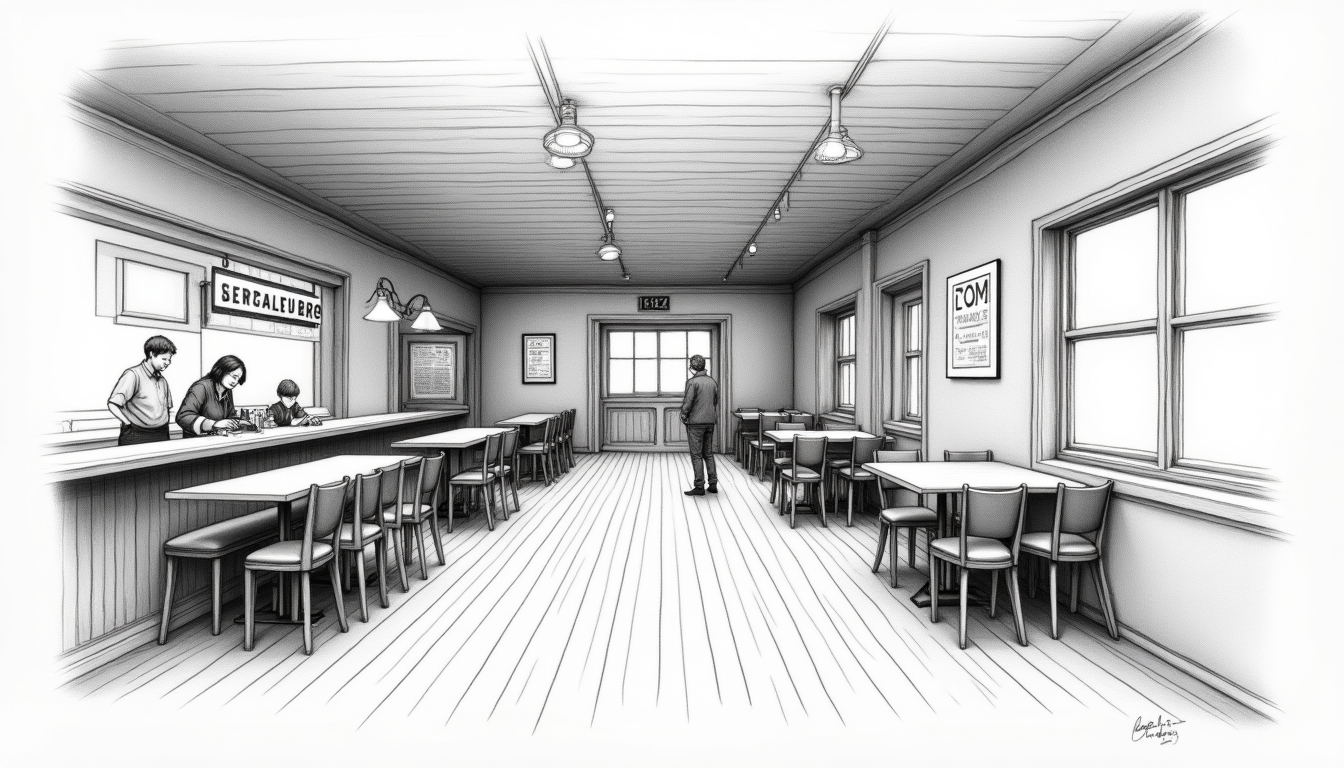
Cole’s Pacific Electric Buffet is closing this Saturday, March 29, after 118 years at 118 East 6th Street in downtown Los Angeles. The business is listed at roughly $500,000, and Bay Cities Italian Deli has been publicly floated as a potential buyer. If this sounds familiar, it should. Cole’s has announced its closure five separate times since July 2025, postponing each time as farewell crowds drove more business than normal operations ever did.
That pattern alone tells you everything about the economics of legacy restaurants in 2026, and it is playing out in real time this weekend.
What Made Cole’s an Institution
Henry Cole opened the restaurant in 1908 inside the Pacific Electric Building, which served as the main terminal for the Pacific Electric Railway. The origin story is part of LA food mythology and has been debated for over a century. Cole allegedly dipped French bread in beef jus for a customer who had dental work, other patrons requested the same, and the French dip sandwich was born. Philippe the Original, also in downtown LA, disputes the claim, but both restaurants built entire identities around the debate.
The space itself carries as much history as the menu. The bar tops are fashioned from varnished doors of retired Red Cars from the Pacific Electric Railway. Mickey Cohen and Charles Bukowski were regulars. The restaurant earned designation as a Los Angeles Historic-Cultural Monument in 1989 and a State Point of Historical Interest.
Current owner Cedd Moses, founder of Pouring With Heart hospitality group, invested $1.6 million to restore Cole’s in 2008 and won a Los Angeles Conservancy preservation award the following year. He also opened The Varnish, a hidden speakeasy behind Cole’s that helped launch downtown LA’s craft cocktail revival before it closed in June 2024 after 15 years.
The Farewell Bump, Five Times Over
The original closure announcement came July 7, 2025, with a planned final day of August 3. The community response was immediate and overwhelming, with lines wrapping around the block and 90-minute waits. Business surged well beyond what Cole’s had seen during normal operations.
So they extended to September. Then November. Then December 31. Then January 31, 2026. Each extension followed the same pattern. The farewell announcement drove a wave of nostalgic customers, business temporarily justified staying open, and then traffic receded until the next deadline approached. Moses described wanting to close “with grace, and perhaps a little dose of debauchery.”
The farewell bump is a real phenomenon in restaurant closures, but it is not a business model. It is a surge of emotional spending that cannot be sustained, and Cole’s proved that across five separate cycles. At some point, the operating fundamentals reassert themselves, and eight months of postponements later, March 29 became the final answer.
Why $500K for a 118-Year-Old Brand
The $500,000 asking price includes the business and the adjacent former Varnish speakeasy space. For a restaurant with one of the most recognizable names in Los Angeles, that number might seem low. It reflects the reality that brand recognition without sustainable unit economics is not worth what people assume.
Cole’s is a tenant in the Pacific Electric Lofts, a 314-unit residential conversion that happened in 2005. The restaurant does not own the real estate. Moses cited “unsustainably high rents” alongside the pandemic, actors and writers strikes, crime, rising labor and goods costs, and what he described as “mounting bureaucracy and legal exposure” as the combined factors behind the closure. Staff reportedly had to scrub feces off the property every other day due to conditions on the surrounding blocks.
Mark Verge, Moses’s business partner, said several groups have expressed interest and he hopes for a buyer who will “keep Cole’s identity intact instead of gutting the concept.” Bay Cities Italian Deli, the beloved Santa Monica institution, is reportedly an interested party and is participating in the closing weekend festivities with a “surprise dip” on Sunday.
The Broader Pattern in Downtown LA
Cole’s is not an isolated case, and downtown Los Angeles has lost multiple historic restaurant anchors in recent years. Broadway Bar, another Pouring With Heart venue, also closed recently. The Original Pantry Cafe and Pacific Dining Car, both longtime downtown staples, closed before that. Each one had decades of brand equity that proved insufficient to overcome the compounding cost pressures facing independent restaurants in urban cores.
Norm Langer, owner of Langer’s Deli and one of the few remaining downtown restaurant institutions, released a statement expressing sadness at Cole’s departure. When the operators who have survived the longest start publicly mourning each other’s closures, the market conditions are speaking louder than any single business story.
What Buyers Should Take from This
A $500,000 listing for a restaurant with 118 years of brand recognition, national media coverage, and a preservation-worthy interior is a data point worth studying. It demonstrates the ceiling on what legacy value is worth when the lease terms, location economics, and operating environment work against you. The brand is real, but a buyer still needs to pencil the deal against current rents, current labor costs, and the current reality of operating in downtown LA.
The farewell bump also raises an interesting question for anyone evaluating a distressed acquisition. If announcing a closure drives more traffic than normal operations, the issue is not demand. People want the restaurant to exist. The issue is that the cost structure between those emotional surges makes daily operations unsustainable. A buyer who can restructure the lease, reduce the cost basis, or bring operational efficiencies that the current operator could not might find real value underneath the headlines.
Cole’s final weekend runs Saturday and Sunday with guest chef collaborations, each limited to 118 portions. All proceeds benefit the Independent Hospitality Coalition.
Source: ABC7 Los Angeles, LAist, Time Out LA
Businesses Mentioned