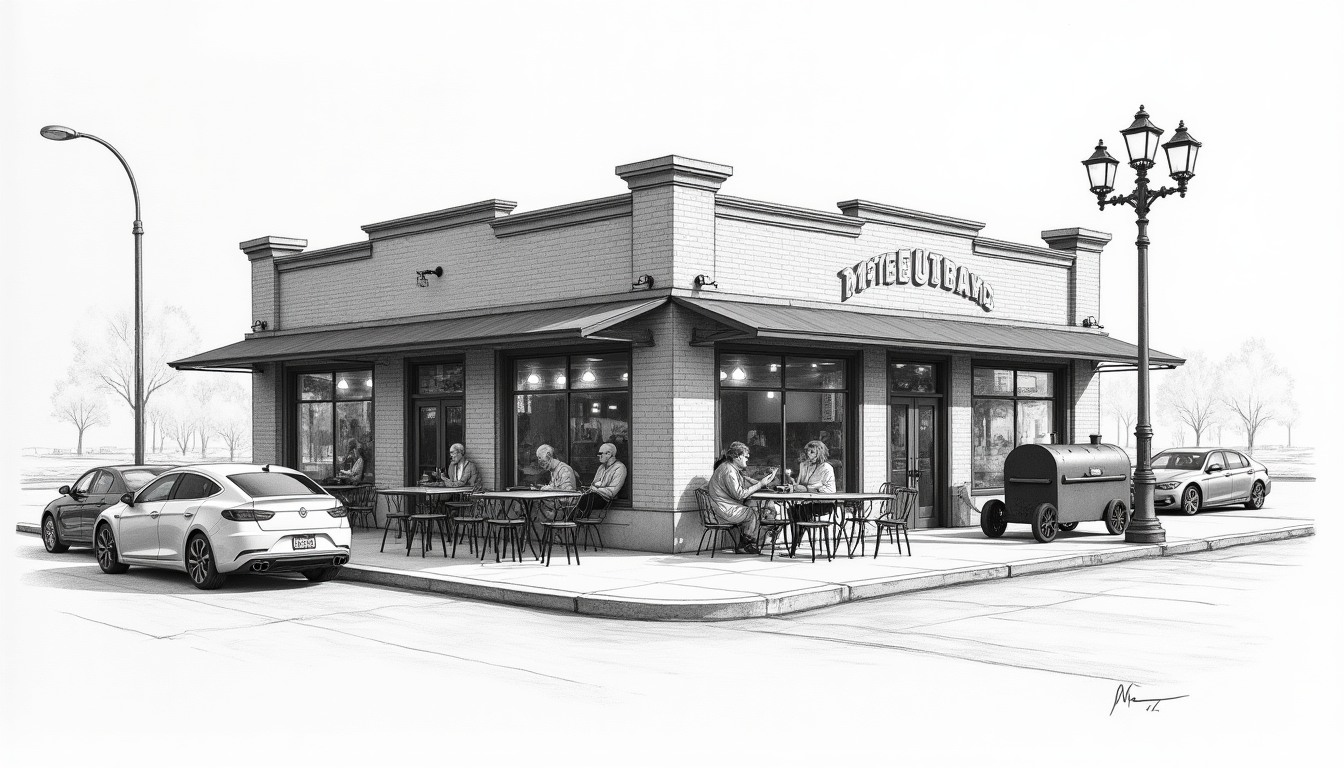
Corbin O’Reilly rebranded Corbin’s Q to Barlando in mid-April, transforming the Rolando Village storefront at 6548 El Cajon Boulevard from a sit-down barbecue restaurant into a neighborhood bar. The Q name moves with him into event catering, which O’Reilly told Times of San Diego “has always paid the bills.” The rebrand is being read locally as a shift in concept, and the operator math underneath it is the part San Diego sellers should pay attention to.
What the Pivot Actually Did
O’Reilly opened Corbin’s Q in 2017 after several years selling smoked meats at the La Jolla Farmers’ Market. The catering side scaled quickly, including a 3,000-person event for Solar Turbines, and over time the catering line carried the operation while the brick-and-mortar side did the slower work of building neighborhood traffic in a corridor that has been transitional for a decade.
Barlando keeps tri-tip and pulled pork on the menu but reformatted around handcrafted cocktails, weekly drink specials, live music, and karaoke. The food turns into bar bites built for a drinks-led check rather than a barbecue plate. The catering business stays branded as Corbin’s Q and operates as a separate revenue line.
That separation is the part of the move worth studying. Each business now operates as its own brand, with catering staying as Corbin’s Q for events and the storefront restructured as Barlando around drinks, music, and the part of the original concept that was scaling on its own.
Why This Math Works on This Corridor
El Cajon Boulevard between College Avenue and the Rolando Village stretch is a lower-rent, higher-density residential corridor with limited daytime foot traffic and stronger evening energy. Restaurants leaning on lunch covers struggle to make the rent line on volume alone, and the kitchen labor a full barbecue program demands runs eight to twelve hours a day before a single guest sits down. A bar program with a smaller back-of-house footprint and a drinks-driven margin profile carries the rent at a fraction of the labor load.
O’Reilly framed the move forward when he said, “This area is so on the come up, and if I can be one of the pillars supporting bigger, better business around here, I will do that.” The Boulevard between North Park and Rolando is in active redevelopment, with new residential density landing along the corridor and ground-floor retail still being absorbed. A neighborhood bar that local residents adopt over an 18-month build-up is a different financial profile than a barbecue restaurant fighting for daypart coverage in the same box.
The Pattern Is Wider Than One Restaurant
San Diego is showing several of these elective concept shifts in the last 30 days. Sushi Gaga, the 10-seat omakase tucked behind Asa Bakery in East Village, is reopening as Sake Bar Gaga, restructuring around a beverage-led bar concept rather than the chef-counter format. Bahn Thai returned to its Hillcrest Fifth Avenue space after a three-year closure that started with a 2023 kitchen fire, and the reopening sits on a different operating posture than the pre-fire concept did, with renewed focus on neighborhood positioning over destination dining.
Three independent operators in three different parts of the county are rebuilding their format around the part of the business that was actually carrying weight. All three moves are elective pivots run by operators who looked at their cost stack against their actual revenue mix and made the call before the operating math forced the call for them.
What This Means for SoCal Sellers
For an owner running a single-location concept that’s holding margin but feels the slope of the cost curve, the question Corbin O’Reilly answered in April is the question worth running on your own P&L. Where the revenue is actually coming from, what part of the operation pays the rent, and what happens to the EBITDA if labor moves another 40 cents an hour or insurance moves another 18% or the lease comes up for renewal are the diagnostics that tell an operator whether to pivot, sell, or hold.
The operators pivoting elective in San Diego right now share a common move. They saw the cost compression coming and reformatted before the trailing twelve months started reflecting it. The ones who didn’t reformat are the ones whose closures show up in the weekly trade press.
The decision to sell a restaurant runs the same direction. The trailing performance window narrows the longer an operator waits, and a sale on the reformatted business is a different conversation than a sale on the original concept under cost compression. Whether the answer is a pivot, a sale, or a partial recapitalization, the operating call needs to land on a clean P&L before the cycle closes the window quietly.
Sources
- Times of San Diego, “Rolando’s Rebranded Barlando Is Putting the Bar in Barbecue” (April 15, 2026)
- WhatNow San Diego, “Corbin’s Q Rebrands as Barlando in Rolando Village”
Businesses Mentioned
Tags