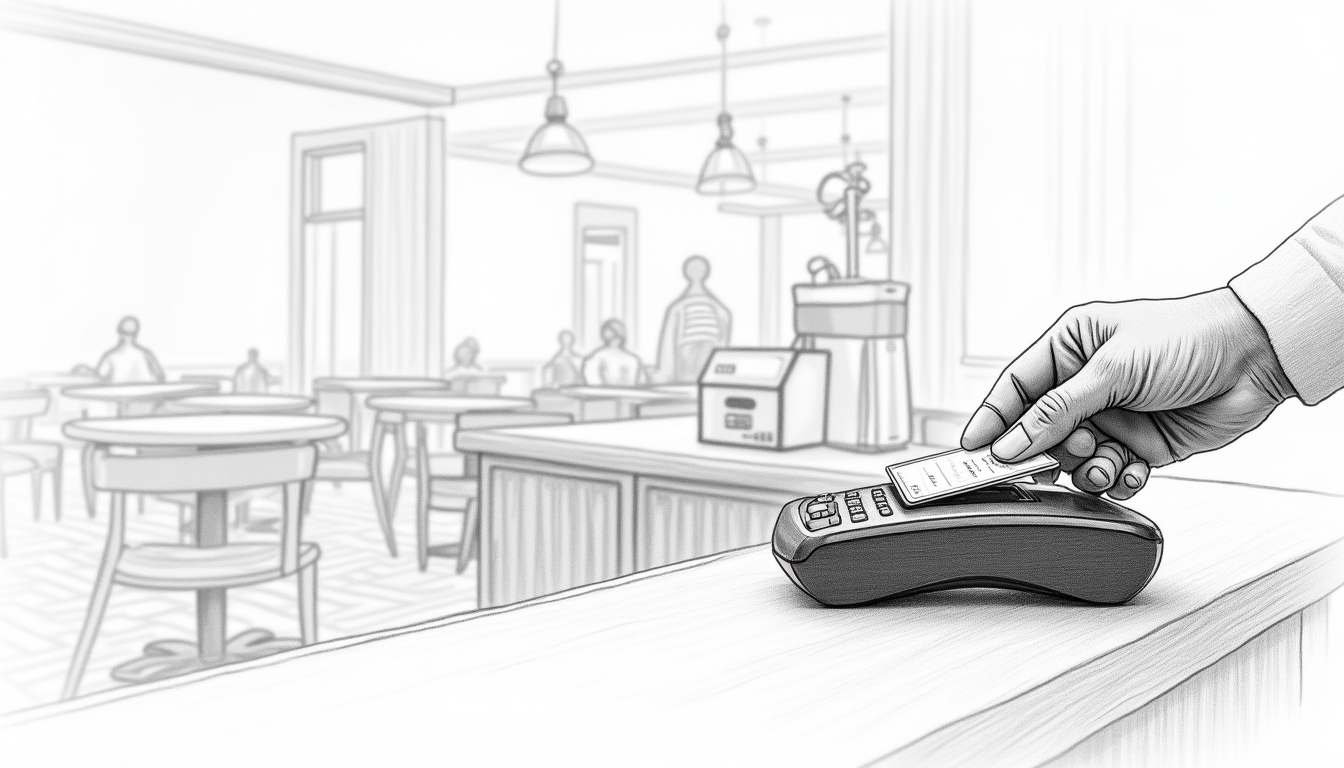
Every restaurant owner I talk to can rattle off their food cost percentage and labor numbers without looking at a spreadsheet. Ask them what they’re paying in credit card processing fees and most give you a rough guess, usually somewhere around “two-something percent.” The actual number is almost always higher, and for restaurants operating on today’s margins, the gap between what they think they’re paying and what they’re actually paying is significant.
U.S. businesses paid $236 billion in credit card and debit card swipe fees in 2024, according to the Merchants Payments Coalition. That number has more than doubled over the past decade. For restaurants specifically, the National Restaurant Association identifies credit card processing as the third-largest operating expense, behind only food and labor.
That puts card processing ahead of rent, insurance, and utilities.
The Real Cost on Thin Margins
The average restaurant processes card payments at somewhere between 2% and 3.5%, depending on the processor, card type, and whether the transaction is swiped, dipped, or keyed in manually. Rewards cards and premium cards from Amex push toward the higher end. And since full-service restaurants see roughly 80% to 95% of payments on cards, with cash declining every year, there’s no way to avoid the exposure.
Restaurant profit margins in most markets, including San Diego, are running 3% to 5%. When your processing fees are eating 2% to 3% of revenue and your net margin is 3% to 5%, card fees are consuming somewhere between a third and half of your actual profit.
On a $100 check at a restaurant running a 4% net margin, the owner keeps $4. The credit card processor takes $2.50 to $3. That’s not a rounding error, it’s a structural cost that directly competes with the owner’s take-home.
Gene-Christian Baca, who runs Walter’s Hot Dogs in New York, told NBC News that 3% of all his sales disappear into processing fees, roughly $50,000 a year. Shannon Tippett, who owns Mug & Mallet in Ocean City, Maryland, reported peak-season processing costs of $10,000 per month. And they’re not unusual cases. A January 2026 NRA survey of 900+ operators found that 66% have seen their processing fees increase over the past two years, with an average increase of 9.4%.
Where the Fees Actually Go
Most restaurant operators think of their processing fee as a single number, but it’s actually three costs stacked together.
Interchange fees go to the bank that issued the customer’s card. This is the largest component, typically 1% to 2.9% plus a flat per-transaction fee. These are set by Visa and Mastercard and are non-negotiable.
Network assessment fees go directly to Visa or Mastercard. Small in percentage terms (0.13% to 0.15%) but they add up across volume.
Processor markup goes to your payment processor: Square, Toast, Clover, or whoever handles your transactions. This is the only piece you can negotiate, and it’s where most operators leave money on the table.
The problem is that many restaurant owners sign up for flat-rate processing (2.6% + $0.15 per transaction is common) because it’s simple. For high-volume restaurants, interchange-plus pricing, where you pay the actual interchange rate plus a transparent markup, can bring effective rates down to around 1.9%. The difference on $1 million in annual card sales is $7,000 or more.
What’s Happening in Washington
The Credit Card Competition Act was reintroduced in January 2026 with bipartisan sponsorship in both chambers. Senators Durbin and Marshall are leading the Senate version, with support from VP Vance, who co-sponsored the bill when he was in the Senate. Trump endorsed it on Truth Social, calling swipe fees “out-of-control rip-offs.”
The bill would require large banks to enable at least two unaffiliated card networks on every credit card, letting merchants route transactions through the cheaper network. The NRA estimates it would save businesses $17 billion annually. The banking industry is pushing hard against it, with 10 major banking associations issuing a joint statement in opposition.
Whether it passes is uncertain. It has more momentum than any prior version, but it will likely need to be attached to a larger legislative package to make it through. In the meantime, Colorado has already passed a state law banning swipe fees on taxes and tips, saving restaurants an estimated $26,000 per year according to the Colorado Restaurant Association. Illinois passed similar legislation in 2024.
California took a different approach. SB 1524, signed in June 2024, exempts restaurants from the state’s hidden fee ban, allowing operators to add surcharges on card payments as long as the fee is clearly displayed on menus and signage. About 16% of restaurant operators nationally now use some form of surcharging or cash discount program, according to NRA data.
Why This Matters for Buyers
If you’re evaluating a restaurant acquisition, processing fees deserve more scrutiny than they usually get. I’ve seen statements where the posted rate was 2.4% but the effective rate, once you added in all the line-item charges, was 4.37%. That kind of gap doesn’t show up unless you run the math yourself.
Pull at least 12 months of processing statements during due diligence. Calculate the effective rate by dividing total fees by total volume. Cross-reference the processor’s reports against POS sales data and bank deposits, because credit card volume is one of the most reliable ways to verify a seller’s revenue claims.
Check the processing contract for early termination fees, auto-renewal clauses, and whether the seller got “free” POS hardware in exchange for inflated rates. Those contracts can be expensive to exit, and the cost should be factored into your offer.
The upside is that processing fees represent one of the most immediate post-acquisition savings opportunities. If the current owner is on a flat-rate plan or hasn’t renegotiated in years, a buyer can often reduce processing costs by 0.5% to 1% just by switching to interchange-plus pricing and shopping processors. On $1 million in revenue, that’s $5,000 to $10,000 back in the owner’s pocket every year. At a 3x SDE multiple, that savings alone adds $15,000 to $30,000 in enterprise value.
The Bottom Line
Swipe fees aren’t going away, and they’re not coming down on their own. The legislative push is encouraging, but restaurant operators can’t wait for Congress to fix this. The practical move is to understand exactly what you’re paying, negotiate the pieces you can control, and build the real cost into your financial planning.
For sellers, clean processing statements with competitive rates make your business look better to buyers. For buyers, inflated processing fees are a red flag and an opportunity in the same line item.