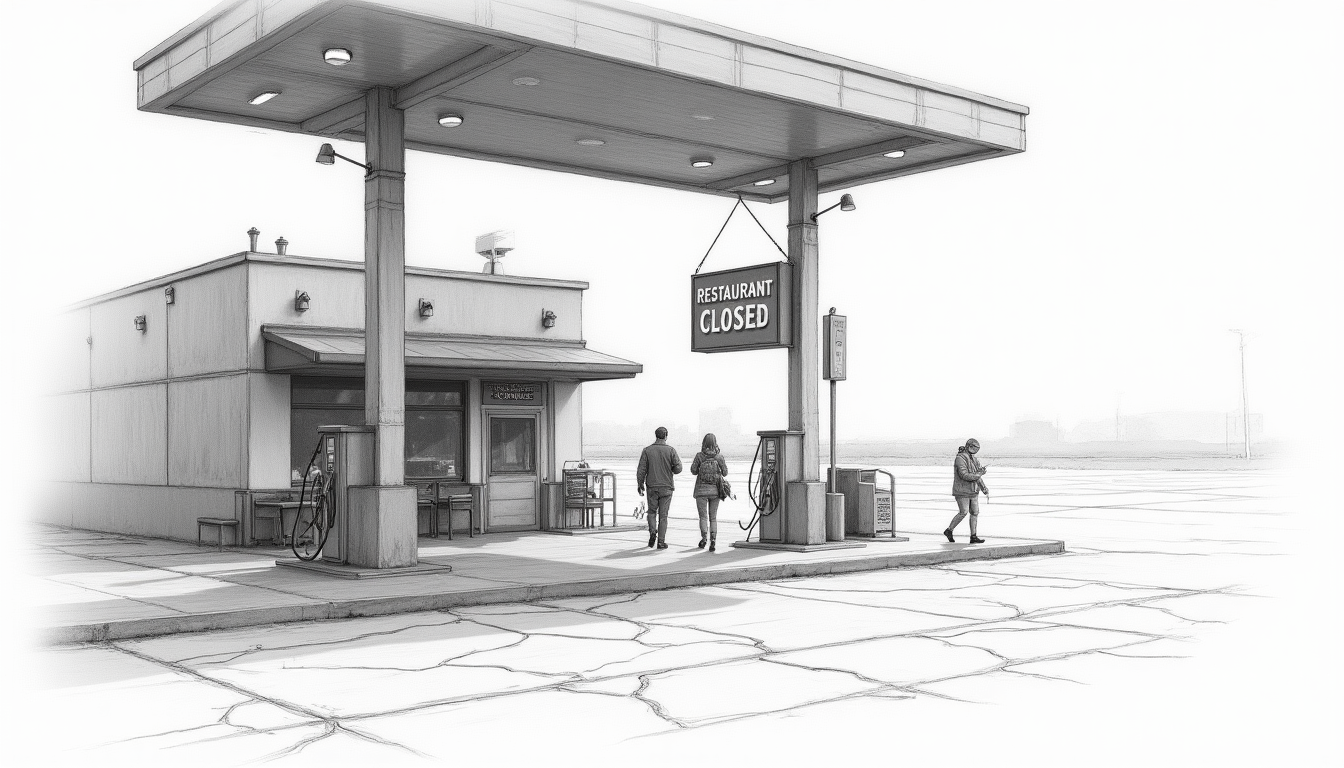
Oil prices crossed $100 per barrel earlier this week for the first time since 2022, driven by supply disruptions from the Iran War. Prices have since eased to around $90, but the damage to consumer confidence is already in the data.
Restaurant industry traffic was down nearly 2.5% year-over-year heading into 2026. February foot traffic fell another 2.1% according to the Fiserv Small Business Index. And that was before gas prices spiked.
For SoCal restaurant owners, this is a two-front problem. Gas prices kill the traffic that drives your top line. Rising food costs, especially beef, eat into whatever margin is left.
The Traffic Problem
Higher gas prices correlate directly with reduced spending on foodservice. Groceries are a necessity, and eating out is the first discretionary line item consumers cut when household budgets tighten.
The February jobs report showed roughly 92,000 positions cut from the U.S. economy. Household debt is at record highs. Consumers are already stretched by inflation across groceries, energy, and rent. A sustained jump in gas prices is the kind of additional pressure that turns “maybe we’ll eat out this week” into “let’s cook at home.”
Southern California restaurants are particularly exposed because this is a car-dependent market where every customer drives to you. When it costs $80 to fill a tank instead of $55, that math changes dining frequency for a lot of households, especially in suburban and commuter-heavy areas like Inland Empire, North County San Diego, and South Orange County.
The Cost Side Is Getting Worse Too
Beef prices have surged enough that Burger King is reporting a 20% increase in beef costs. McDonald’s and other burger-heavy chains are still promoting beef products because they can’t afford to lose the traffic, but the margins on those items have compressed significantly. Independent operators with smaller purchasing power feel the same pressure without the volume to absorb it.
February CPI data shows food-away-from-home prices up 3.9% year-over-year nationally. Full-service restaurant prices are up 4.6%. In the West region, which includes California, restaurant price inflation is running at 4.0%, second only to the Northeast at 4.3%.
But grocery prices only rose 2.4% year-over-year in February. That means restaurants are losing their relative value proposition. When the gap between cooking at home and eating out widens, traffic declines accelerate.
And the February CPI data was collected before oil crossed $100. Energy costs flow through the entire supply chain: transportation, refrigeration, packaging, delivery. The food cost increases we’re seeing now will get worse before they stabilize.
The Squeeze Math
This is what the double squeeze looks like for a typical SoCal restaurant Your traffic is down 2-3% because consumers are pulling back. Your food costs are up 4-6% because beef, energy, and transportation are all climbing. Your labor costs haven’t gone down (California’s $20 minimum wage for fast food and the general upward pressure on restaurant wages make sure of that). And you can’t raise menu prices fast enough to offset all three without pushing even more customers out the door.
Full-service restaurants in the West are already pricing 4.6% higher than a year ago. There’s a ceiling on how much further you can push before the value equation tips completely in favor of grocery and home cooking.
The 42% of operators who were unprofitable in 2025 are going to become a larger number in 2026 if these trends hold.
What This Means for Owners Thinking About Selling
Restaurant valuations are driven by cash flow. When traffic drops and costs rise simultaneously, cash flow compresses faster than either factor alone would suggest. A business earning $200K in SDE last year might be trending toward $150K or $140K this year if margins tighten by even a few points.
Buyers are still active and SBA lending is available, but buyers underwrite on trailing performance and forward trends. If your numbers are declining quarter over quarter, the offer you get in six months will be lower than the one you’d get today.
I’m not saying every restaurant owner needs to sell tomorrow. If your concept is strong, your lease is favorable, and your margins can absorb the pressure, riding it out may be the right move. But if you’ve been thinking about an exit and your numbers are starting to soften, the cost environment is working against you on both sides of the P&L. Waiting for conditions to improve before starting the process is a bet that conditions will actually improve, and the data right now doesn’t support that assumption.
Businesses Mentioned