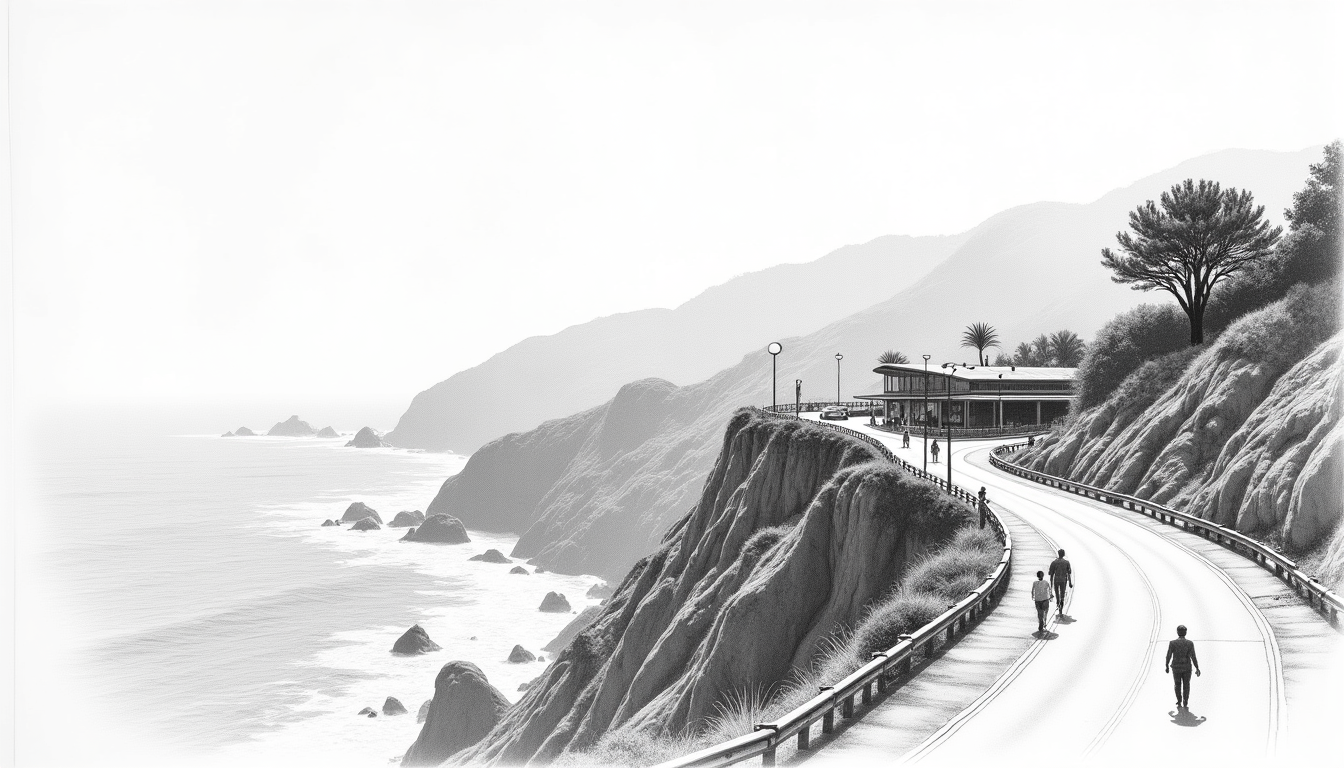
Highway 1 through Big Sur fully reopened on January 14, 2026, three months ahead of the original schedule, after a three-year closure caused by two major landslides. The reopening ended one of the longest infrastructure disruptions in California’s coastal history and gave restaurants, hotels, and galleries along the corridor their lifeline back. The estimated cost of that closure was $438 million in lost tourism revenue.
What Three Years Without a Highway Does to a Restaurant
Big Sur typically draws around 5 million visitors per year, and that traffic fuels an economy built almost entirely on hospitality. Restaurants like Nepenthe, Sierra Mar at the Post Ranch Inn, and the Big Sur River Inn depend on the steady flow of tourists driving PCH between San Francisco and Los Angeles. When the road closed, that flow didn’t slow down gradually; it disappeared.
One business owner described the impact as losing 30 percent of revenue immediately, with no timeline for when it would return. For restaurants operating on margins that are already thin in a region where supply costs run higher than most of California due to the remote location, a 30 percent revenue drop isn’t something you manage around. For businesses that were already running thin, it’s an existential threat.
The operators who survived did so by leaning on local traffic from Carmel and Monterey, cutting staff, reducing hours, and in some cases pivoting to models that didn’t require the same volume of walk-in diners. Some didn’t survive at all, and the businesses that closed during the three-year window created gaps in the corridor’s dining landscape that new operators may eventually fill.
The Recovery Is Real but Uneven
Since the January reopening, weekends along the Big Sur stretch have been fully booked at most restaurants and hotels. The pent-up demand is significant, and visitors who delayed trips for three years are making them now. Social media has amplified the reopening, with the dramatic coastal scenery generating the kind of organic reach that no marketing budget can replicate.
But the recovery isn’t hitting everyone equally. Restaurants that maintained their staff and infrastructure through the closure are capturing the rebound fastest. Those that cut to the bone during the lean years are now struggling with the same labor shortage that affects hospitality operators across California, made worse by the fact that affordable housing near Big Sur is essentially nonexistent. Hiring is difficult when the nearest workforce lives an hour away in Salinas or King City.
The supply chain challenges are also real. Big Sur’s remoteness means higher delivery costs, limited vendor options, and longer lead times on equipment and inventory. Operators who ran lean during the closure now need to invest in restocking, maintenance, and sometimes full kitchen rebuilds after years of reduced use.
What This Means for Restaurant Valuations Along the Corridor
For anyone watching the Central Coast restaurant market, the Highway 1 reopening creates an interesting valuation dynamic. Operators who held on through the three-year closure now own businesses with demonstrated resilience and a customer base that is returning aggressively. Their trailing twelve months of financials may still look weak, but forward-looking demand is strong, and savvy buyers know the difference between a business in decline and one recovering from an infrastructure event.
On the flip side, the businesses that didn’t survive the closure may have created acquisition opportunities. Vacant restaurant spaces in Big Sur are rare under normal circumstances, and any property that becomes available in a region with 5 million annual visitors and extremely limited commercial zoning carries inherent value regardless of what happened to the previous operator.
The question for buyers is whether the current recovery momentum will hold through 2026 and beyond, or whether the pent-up demand will normalize once the novelty of the reopening fades. History suggests that Big Sur’s appeal is structural, not cyclical, and the visitors will keep coming as long as the road stays open.
I’ve been driving through Big Sur this week, and the energy along the highway feels nothing like a region that just went through three years of economic disruption. Every pullout is packed, every restaurant lot is full, and the stretch between Bixby Bridge and Julia Pfeiffer Burns looks exactly the way it should in spring. The road is open, and the businesses that survived are collecting on three years of patience.
Source: Travel and Tour World | Fortune | Scot Scoop News
Businesses Mentioned