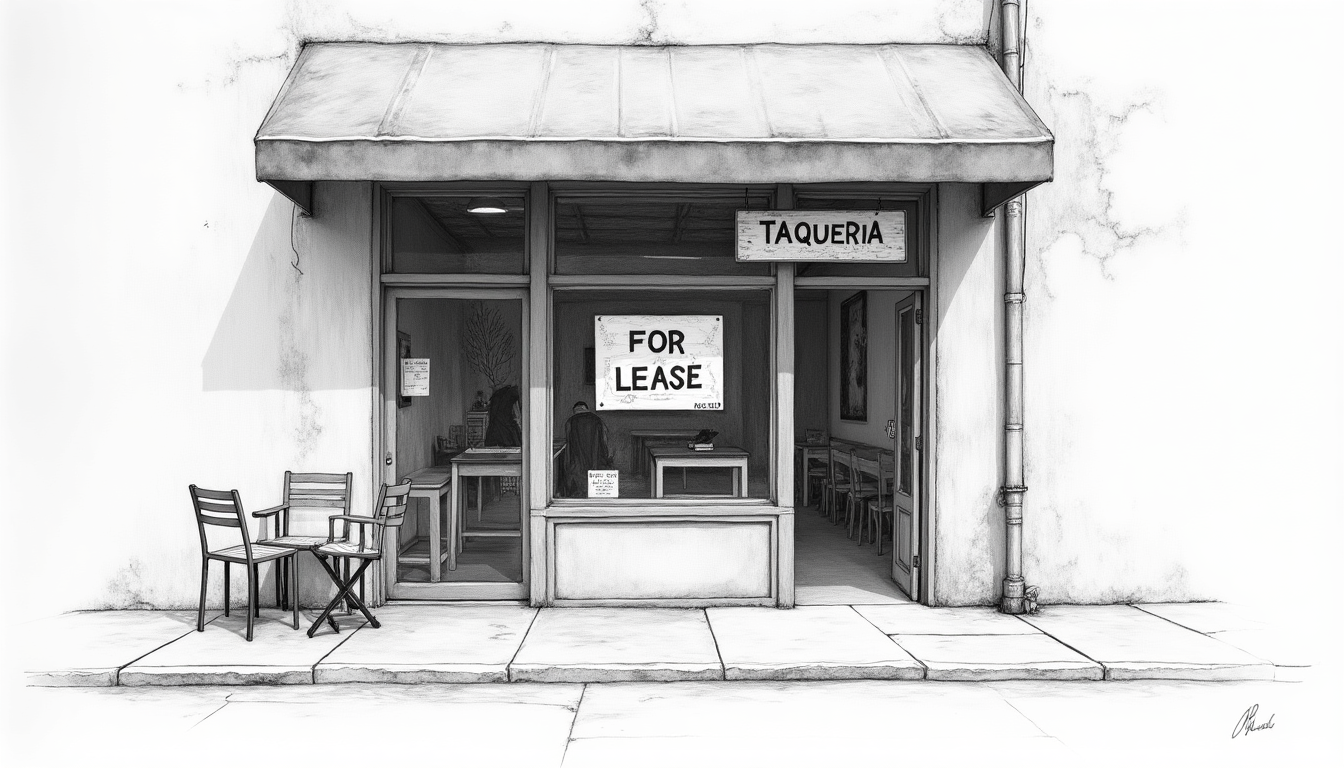
La Fachada taqueria is closing its doors at 2025 25th Street in Logan Heights after more than 30 years. Brothers Enrique and Jose Guadalupe “Lupe” Tello built the restaurant into a late-night institution, the kind of place that defines a neighborhood. Tijuana-style tacos, a modest storefront, a loyal following that spans generations.
The business didn’t fail. The lease did.
After the original property owner passed away and his son inherited the building, a combination of insurance disputes, a civil lawsuit, and failed lease renegotiations made continued operations untenable. Thirty years of goodwill, reputation, and cash flow, effectively wiped out by circumstances that had nothing to do with the food or the customers.
This is the story I see more often than almost any other in restaurant brokerage. And it’s the risk most owners don’t think about until it’s too late.
The Lease Is the Business
Here’s something that surprises a lot of restaurant owners when they sit down with a broker for the first time: your lease is often worth more than your equipment, your brand, and your recipes combined.
A restaurant with strong financials and a lease that has 8-10 years remaining with options is a fundamentally different asset than the same restaurant with 2 years left. The first one attracts serious buyers at full market multiples. The second one scares them away, or gets discounted 30-50%.
Why? Because a buyer isn’t just purchasing your revenue stream. They’re purchasing the right to operate in that location for a defined period. If that right is expiring or uncertain, the deal math falls apart. No SBA lender will finance a restaurant acquisition when the lease expires before the loan does.
What Goes Wrong
La Fachada’s situation hits several of the most common lease risk patterns I see:
Ownership changes
When a property changes hands (through inheritance, sale, or foreclosure) the new landlord has no personal relationship with the tenant. They may have different plans for the space. They may want to redevelop. They may simply want higher rent. The handshake deal you had with the original owner means nothing to their heir or their buyer.
Insurance and liability gaps
The La Fachada closure involved an insurance lapse that led to a $5 million civil lawsuit against the property owner. That kind of exposure gives a landlord every reason to terminate. Most restaurant operators carry insurance, but coverage gaps happen, especially during transitions, policy renewals, or when costs spike and operators try to save money by reducing coverage.
No formal documentation
After decades in one location, it’s common for restaurant operators to be running on expired leases, month-to-month arrangements, or verbal agreements. That feels fine when everything is stable. It becomes catastrophic when circumstances change.
The Barrio Logan Pattern
La Fachada isn’t an isolated case. Las Cuatro Milpas, another Logan Heights institution, recently closed its original location after decades and is now working to reopen at Mercado Del Barrio. The pattern across Barrio Logan and similar neighborhoods is clear: legacy restaurants that built their identity around a specific location are vulnerable when they don’t control the real estate.
This is happening in neighborhoods across San Diego and Southern California. Rising property values, redevelopment pressure, and generational ownership transfers are creating lease instability in exactly the corridors where long-standing restaurants have operated for decades.
What This Means for Valuations
When I’m running a business valuation, the lease is one of the first things I examine, before I even look at the P&L. Here’s what matters:
Remaining term plus options. A lease with 5 years remaining and two 5-year options is strong. A lease with 18 months left and no options is a red flag that will suppress your sale price.
Assignment and transfer rights. Can you transfer the lease to a buyer? Some leases require landlord approval for assignment, and some landlords use that approval process to extract concessions: higher rent, personal guarantees, or outright refusal.
Rent relative to revenue. Occupancy costs above 8-10% of gross revenue compress margins and scare buyers. If your rent has crept up over the years through escalation clauses, your SDE may look thinner than a buyer expects.
Demolition and relocation clauses. Some commercial leases include clauses that allow the landlord to terminate if they decide to redevelop. If your lease has one of these, a buyer’s attorney will flag it immediately.
What Operators Should Do Now
If you’re a restaurant owner, whether you’re thinking about selling next year or in ten years, your lease should be the first thing you audit. Not your menu. Not your Yelp reviews. Your lease.
Read it. Most operators signed their lease years ago and haven’t looked at it since. Pull it out. Read every clause. Know your expiration date, your renewal options, your assignment rights, and your obligations.
Get ahead of renewals. Start lease renewal conversations 18-24 months before expiration. If you wait until the last 6 months, you’ve lost all leverage. The landlord knows you can’t easily relocate a restaurant.
Document everything. If you’re operating on a verbal understanding or an expired lease, formalize it. Get it in writing. A month-to-month arrangement gives you zero protection and makes your business virtually unsellable.
Consider the real estate. For long-term operators, owning the building changes everything. It eliminates lease risk entirely, adds a real estate asset to the sale, and often makes the overall transaction more attractive to buyers. It’s not feasible for everyone, but it’s worth exploring.
La Fachada served Logan Heights for three decades. The food was good. The customers were loyal. The business worked. None of that mattered when the lease situation unraveled.
The best time to secure your lease position was years ago. The second best time is today.
Businesses Mentioned