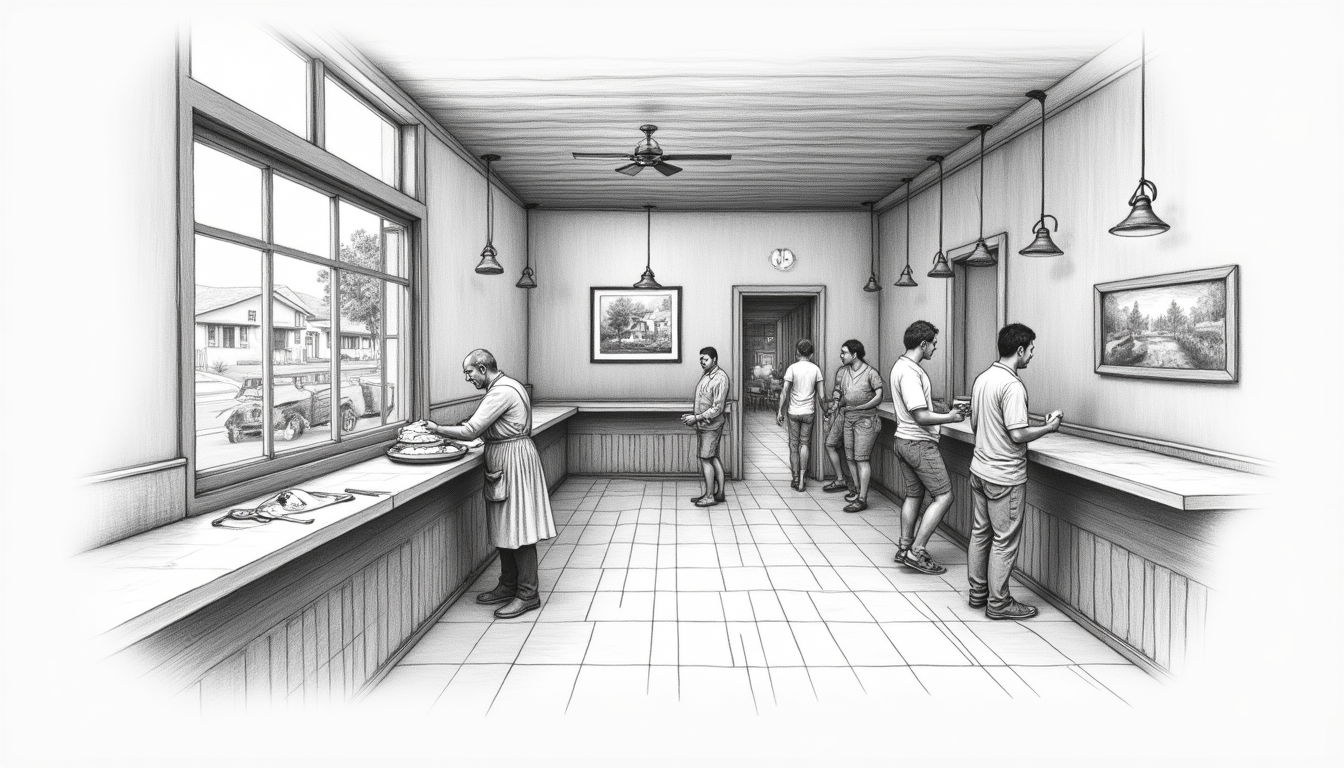
Las Cuatro Milpas reopened on Tuesday, May 12 at 1985 National Avenue inside the Mercado del Barrio complex, roughly four blocks from the Logan Avenue building that the Estudillo family ran from 1933 through the end of 2025. The original property sold in November 2025 for $2.2 million to Light of the World Church, the neighboring landowner, after the family worked through tax debt that ran into the hundreds of thousands. The new shop runs an 8 a.m. to 3 p.m. service window with the same Estudillo crew, the same tamales and handmade tortillas the counter was built on, and a first-time-ever credit and debit card option after 92 years of cash only.
The reopening of a heritage taqueria is a Barrio Logan story on its face. The way the Estudillo family separated the building from the operation, sold the real estate, and rebuilt the operation on a lease four blocks away matters for every multi-decade SoCal F&B operator weighing an exit right now.
How the $2.2 Million Sale Split Two Assets
Most heritage operator exits collapse the building and the business into one transaction. The owner sells the real estate to a buyer who shuts the shop down, and the brand goes with the box. The Estudillo family ran the inverse playbook by treating the building and the business as separable assets that could exit on separate timelines. The Logan Avenue building, the underlying commercial real estate asset that had been in the family for 92 years, traded to Light of the World Church for $2.2 million in a real estate transaction. The business, the recipes, the family, the staff, the customer base, and the brand equity built across four generations did not trade. The family signed a lease in February 2026 at 1985 National Avenue and used the six months between the close of the old shop and the open of the new one to move what was movable.
The result is a clean separation that broker work sees rarely in San Diego F&B. Light of the World Church got the corner property it had been building toward as the neighboring landowner. The family got a runway out from under tax pressure plus a smaller operating footprint with a hard 8 a.m. to 3 p.m. service window. The 92-year customer base got a four-block walk to the same crew making the same food. Nobody in this picture lost the part of the asset they cared most about.
The Heritage Operator’s Hardest Decision
The default exit for a 90-year-plus family-run shop in a corridor with real estate value is almost always the wrong one. The owner either holds the building too long and watches the operation slide into a forced closure, or sells the whole thing at once and accepts that the brand dies with the address. The third option, the one the Estudillo family ran, asks the operator to do harder work in the front half of the exit. The real estate has to be valued separately from the operation. The brand portability has to be tested before the lease gets signed. The customer base has to be told the move is happening, on a timeline the family controls, before the closure becomes a headline.
Nadia Estudillo, the 26-year-old great-granddaughter of the founders, told Times of San Diego the family is collecting photos and memories from the original shop to bring over to the new space. “We want to bring all those memories over so that this place has the same vibe as the previous restaurant.” That sentence is a brand-portability test phrased as a community gesture. The shop three blocks south on Logan Avenue was the building. The vibe the family is bringing over is the asset.
When a Multi-Decade Room Can Exit Without Closing
The Estudillo split is not a template every operator can run. A heritage shop without underlying real estate value cannot separate the building from the operation, because there is no building to sell. A heritage shop with real estate value but a brand that does not travel will see the customer base evaporate the moment the address changes. Three pre-conditions have to hold for the split to work. The operator needs owned real estate with meaningful market value, a brand that customers identify with the family and the food rather than the address, and a runway long enough to plan a closure and a reopening as a single coordinated move.
When all three pre-conditions hold, the split unlocks value the unified sale destroys. The 92-year customer base does not transfer to a buyer who shuts the shop down. The recipes do not transfer to a buyer who flips the building. The four-generation operator equity, the most valuable thing a family-run shop has on a sale, only transfers if the family stays in the operation. The Estudillo family kept the part of the asset that compounds, sold the part that does not, and reopened with a shorter service window and a cleaner cost structure than they could have run on Logan Avenue.
For every Barrio Logan, North Park, City Heights, and South Bay operator running a multi-decade shop on owned real estate, the reopening asks whether the building and the business have to exit at the same time. They usually do not, and the harder question is whether the brand can carry the move. That is the conversation worth having before the closure decision narrows to one option.
The Estudillo family showed how to run the split where the pre-conditions held. If a heritage operator profile maps to your business and you want to test whether the brand and the building can exit separately when you go to sell a restaurant, let’s have a confidential conversation.
Sources
- Times of San Diego, “Las Cuatro Milpas, once feared lost, re-opens, starting new chapter for Barrio Logan icon” (2026-05-11)
- KPBS, “Long lines welcome reopening of iconic Las Cuatro Milpas in Barrio Logan” (2026-05-12)
- CBS8, “Las Cuatro Milpas to close after 92 years as Barrio Logan building sells for $2.2M”
- San Diego Magazine, “Las Cuatro Milpas: SD’s Oldest Taco Shop Prepares to Close”
- TheStreet, “92-year-old family-owned Mexican restaurant closing forever”
Businesses Mentioned
Tags