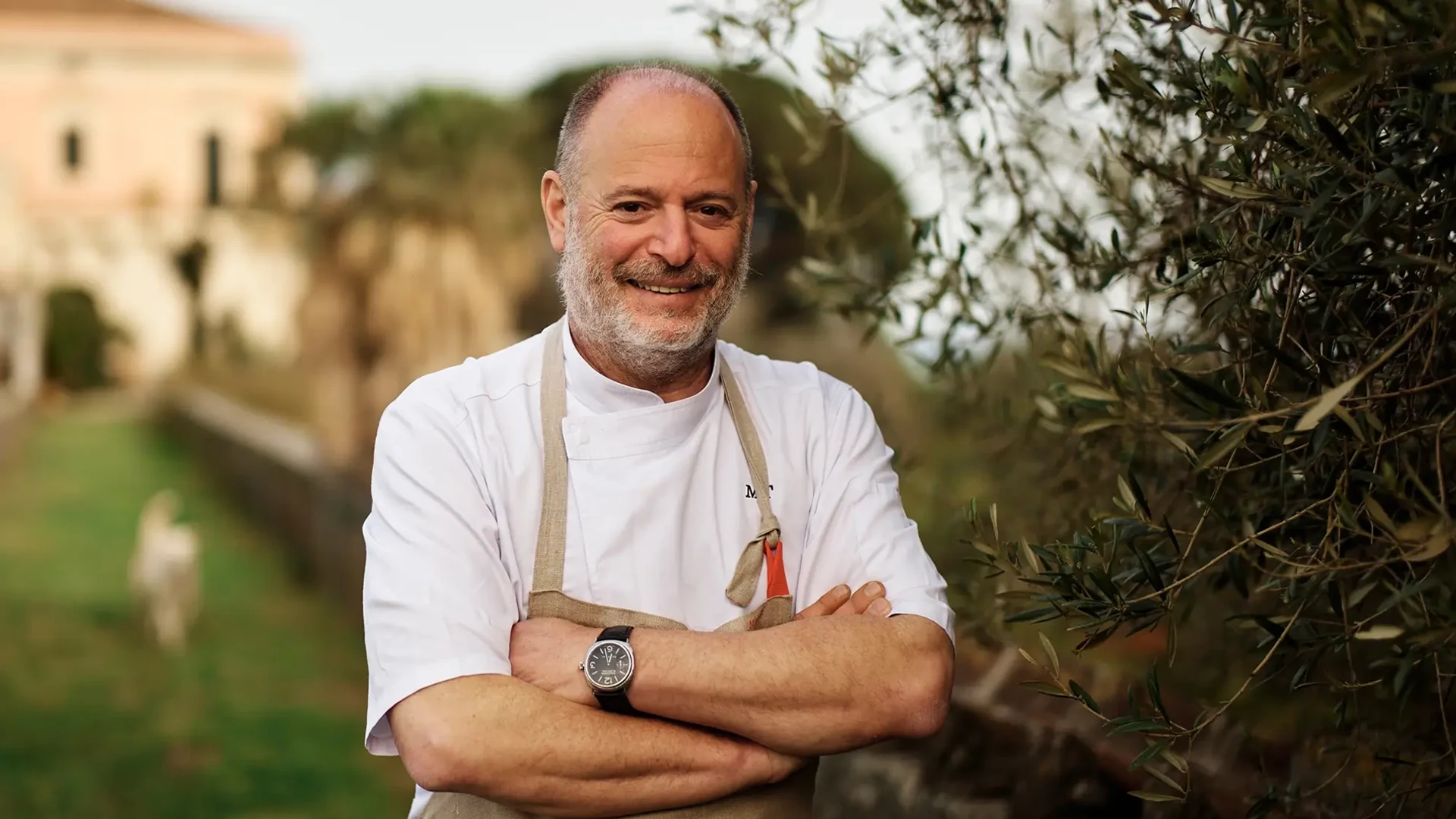
Michael Tusk won the James Beard Foundation’s Outstanding Chef award on June 16 in Chicago, twenty-three years into running Quince and fifteen years into building Quince & Co into a three-concept Jackson Square operator. Kevin Diedrich of Pacific Cocktail Haven took Outstanding Professional in Cocktail Service ten years after opening the bar near Union Square. Two San Francisco operators stood on the same stage on the same night, working very different asset profiles.
Of the two wins, the Tusk award carries the larger signal for California coastal operators weighing whether to expand, exit, or stay. The recognition itself is the news, but the more durable effect is what an Outstanding Chef award does to the asset profile of a 23-year-old multi-unit operator whose architecture deliberately layers a fine-dining flagship, a casual sister concept, and a wine bar across the same neighborhood.
Where the Recognition Premium Actually Sits
When a national award like Outstanding Chef lands on a multi-unit group, the immediate operational impact is reservation demand and a press cycle, which is real but short. The durable shift is on the buyer side of the table.
Quince & Co has held three Michelin stars at the flagship since 2017. Tusk had Best Chef Pacific on the wall since 2011. Outstanding Chef is the top of the national pyramid, and for a buyer underwriting this group, the recognition stacks. Each layer makes the asset harder to replace and easier to defend in due diligence.
National recognition is a moat against substitution risk, which is what buyers pay premiums for. Average ticket bumps from a press cycle fade in three months. Substitution risk gets repriced into the multiple, and a buyer comes away convinced the group cannot be recreated for less than what it is listed at.
The Three-Concept Architecture in Jackson Square
Quince opened in Pacific Heights in 2003 and moved to Jackson Square in 2009. Cotogna opened next door in 2011 as the casual sister, serving regional Italian. Verjus opened in 2019 at the base of the Transamerica Pyramid as a cave à manger, a wine bar with a small adjoining retail and conserva concept. The full architecture is a flagship that generates the prestige, a casual sibling that handles the volume and the easier reservations, and a third concept that catches the drop-in trade. All within walking distance, sharing one commissary footprint, one talent pipeline, one neighborhood reputation.
This shape is rare in California coastal markets and almost never executed this cleanly. Most multi-unit operators either run carbon copies of one concept across markets, or run unrelated concepts that share nothing but ownership. The Quince & Co architecture is harder, running three concepts at three price points and three cuisines on a single operational spine.
On the exit side, this shape is what generates premium multiples. Concept diversification inside one neighborhood is a hedge strategic buyers value, and it makes a group like this defensible against a fine-dining downturn because the casual concept catches the trade-down.
The Lindsay Tusk Line
In his acceptance, Tusk said, “I would not be receiving this if it wasn’t for her. She allows me to cook, create and do a lot of the other elements of running a business.” He was talking about his wife and co-owner Lindsay Tusk.
The Quince & Co structure is a married-couple co-ownership, and the operational separation, one in the kitchen and one running the business side, is what made twenty-three years possible without burnout or a partnership fracture. Disentangling a spouse partnership from a business is often the hardest part of any exit, harder than the deal terms. The Tusks have not signaled an exit, but the shape of their partnership is the textbook version of what makes a couple-owned operator sellable when the time comes, with clean role separation that maps to org-chart roles a buyer can replicate.
Diedrich at Ten Years Is a Different Operator Profile
Pacific Cocktail Haven opened in 2016 as a single unit near Union Square with cocktails built around Asian-Pacific ingredients. Diedrich is the co-owner and master mixologist, and Outstanding Professional in Cocktail Service is a bartender-and-program award. It lifts the program’s profile, but the underlying asset is still a single-unit bar that just hit its ten-year mark.
The exit profile on a ten-year, award-decorated, single-unit cocktail concept is fundamentally different from that of a 23-year, three-concept restaurant group, with a different buyer pool, a different multiple, and a different succession question. For Diedrich, the program is the brand and the program is also the operator. That is a harder transfer than the Tusks’ more institutional setup.
The Market Reaction That Follows an Award Cycle
Award cycles like this tend to move the broker market in two ways. Phones start ringing among adjacent operators, owners who were not weighing an exit suddenly asking what their own number looks like, because peer recognition prompts the question. Capital also looks harder at the segment, particularly at multi-unit concept groups with defensible architecture and a built brand a buyer cannot recreate cheaply.
Neither Tusk nor Diedrich has signaled a sale. The award is a recognition event rather than a transaction. What it changes is the asset profile underneath each operator, and for a 23-year, three-concept, three-Michelin-star group in one of the country’s tightest fine-dining markets, that profile now sits at the top of the national pyramid.
Sources
- SFist, “James Beard Award for Outstanding Chef Goes to Quince’s Michael Tusk, and Other Local Winners Revealed” (June 16, 2026)
- James Beard Foundation, “2026 James Beard Award Winners”
- Wikipedia, “Quince (restaurant)”
- Quince & Co, “Our Concepts”
- Pacific Cocktail Haven, “About”
Businesses Mentioned
Tags