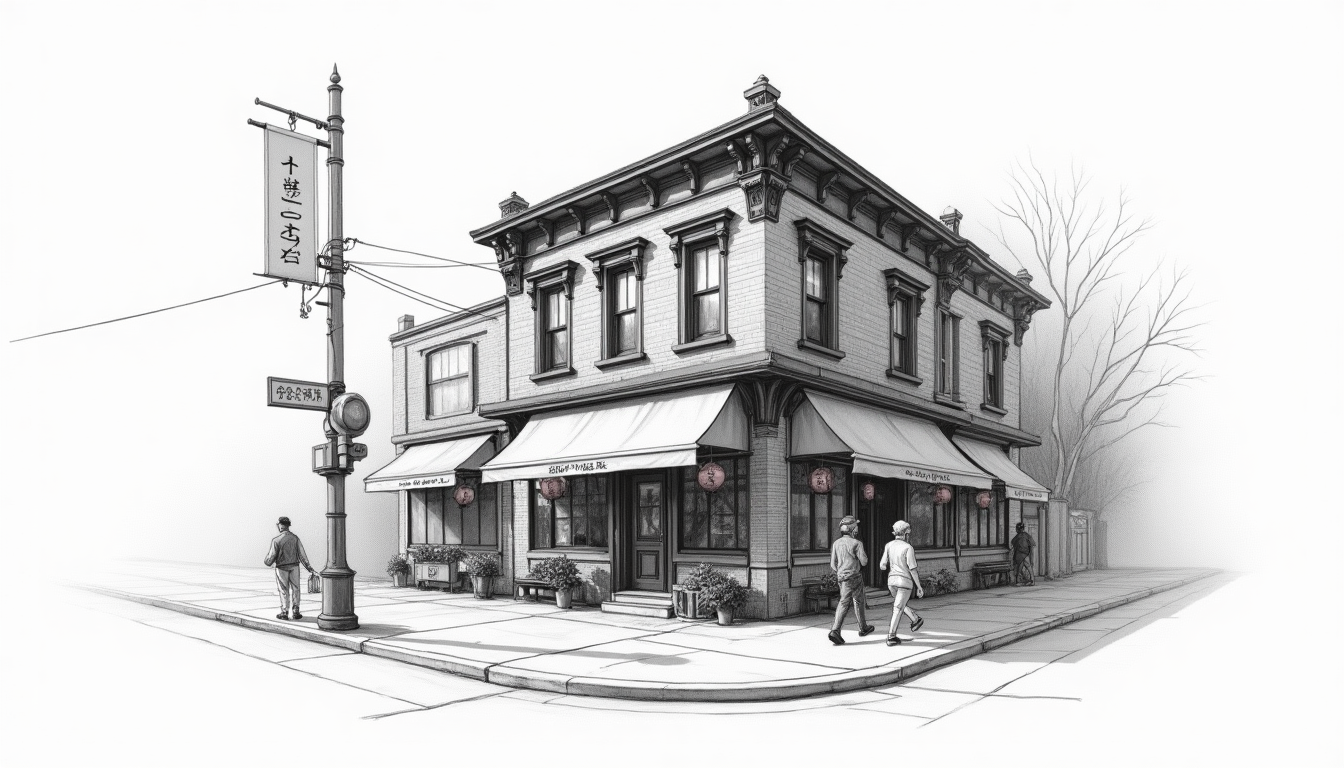
Brandon Jew opened Mister Jiu’s at 28 Waverly Place in San Francisco’s Chinatown on the weekend of April 8-10, 2016, in the historic Four Seas banquet hall space that ran for over five decades before its lease end in 2013. Six months later, in October 2016, the room earned a Michelin star and became the first Chinese restaurant in San Francisco to do so, holding the rating every year since. Jew is marking the 10-year milestone with a guest-chef dinner series, with the May 9, 2026 dinner featuring Mei Lin, ArChan Chan of Hong Kong’s Ho Lee Fook, and Lucas Sin from New York.
The 10-year mark reads as one number on its face. The operating content of the milestone is the format move Jew has run inside the same room across the past three years, and what that move says about where the cost stack is pushing fine dining operators in 2026.
Ten Years, Three Format Moves
When an operator with Jew’s profile takes a Michelin-starred Chinese-American room from à la carte to tasting menu, then back to à la carte three years later, the move is making a specific operating bet at each turn. In 2023, Mister Jiu’s switched from à la carte to a five-course tasting menu, with the Wikipedia entry attributing the change to “cost reasons.” In 2025, the room reverted to à la carte, with Jew telling Resy “it’s felt really good to be back in à la carte.”
The 2023 move was the format shape most fine-dining operators were reaching for at the time. Tasting menus simplify the kitchen line, cut food cost variance, and buy margin in a year when wage and food cost lines are both moving up faster than menu pricing can absorb. The 2025 reversal is the more interesting operating signal of the two. After running the tasting menu for two years, Jew flipped back to à la carte, putting guest choice and table-driven check size back at the center of the model. That is a different operating bet from the format shape most of the SF mid-tier reached for over the same window, and it is one worth tracking for operators reading the same cycle in their own markets.
The SF Cycle the Milestone Is Operating Inside
The reason the format move matters is the cycle 28 Waverly Place is sitting inside. Lord Stanley, the Michelin-starred tasting-menu room, closed in May 2025 after announcing the wind-down earlier that spring. Osito, Seth Stowaway’s live-fire Michelin-starred dining room, closed in May 2025 as well, with the SF Standard’s year-end accounting noting the Michelin star “wasn’t enough to sustain the business.” Resy’s SF year-end retro called the broader pattern directly in December 2025, writing that “Bay Area chefs are putting away their tweezers and tasting menus, opting to create more casual experiences and spaces that are a bit more low-key and accessible for all” and naming Mister Jiu’s as the example, writing that “this year he sunsetted a tasting menu format in lieu of both an à la carte and a communal style banquet menu.”
The cost stack is part of the picture for any operator reading this milestone. SF’s minimum wage steps to $19.18 per hour effective July 1, 2026, up from $18.67. California’s general state minimum sits at $16.90 effective January 1, 2026. The National Restaurant Association’s 2026 State of the Industry release reported that 42% of operators said their restaurant was not profitable last year and 60% reported softer customer traffic, with more than nine in ten flagging food, labor, insurance, energy, and swipe fees as significant challenges. The number of independent restaurants in the United States declined 2.3% in 2025, a net loss of about 9,500 locations across the country.
A Michelin-starred tasting-menu room signed against 2018 unit economics is fighting that backdrop on its old cost stack. A 10-year operator who has run the room across three format permutations and reverted to à la carte at year nine is making a working operating bet on what the back half of 2026 actually rewards.
The SoCal Read
The format question is live across the SoCal mid-tier. The same wage and food cost moves that pushed Mister Jiu’s into tasting-menu format in 2023 hit SoCal rooms over the same window, and plenty of operators made the same trade. The 2026 question is whether the tasting menu still pencils when the cost stack keeps moving and the customer traffic is softer than 2019 baselines. The way I read it, Jew’s reversal is one data point, a room with national credentials, three years inside the format, and the operating depth to flip back. The operators worth talking to right now are the ones running the same trade with a clear-eyed read on what their cover count and average check actually need to look like to clear the new floor.
On the M&A side, the strategic value of an operating concept that has held a credentialed rating across multiple format reversals and economic cycles is highest right now to a multi-unit group or a strategic buyer who can amortize design, beverage, and back-office across multiple rooms. The single-location operator absorbing the full cost stack alone is the harder asset to clear when you go to sell a restaurant, and the cost line is more likely to compress further than ease before 2027. If this sounds like your situation, let’s have a confidential conversation.
Sources
- Wikipedia, “Mister Jiu’s”
- Resy / Right This Way, “Brandon Jew on 10 Years of Mister Jiu’s in San Francisco’s Chinatown” (2026-04-04)
- The San Francisco Standard, “San Francisco’s saddest restaurant and bar closures of 2025” (2025-12-28)
- Resy / Right This Way, “The 10 Restaurants That Defined San Francisco Dining in 2025” (2025-12-03)
- California Labor Law Blog, “San Francisco Minimum Wage 2025–2026”
- California Department of Industrial Relations, “California’s minimum wage set to increase to $16.90 per hour on January 1, 2026”
- PR Newswire / National Restaurant Association, “Persistent Cost Increases and Enduring Demand Will Shape the Restaurant Industry in 2026”
- Restaurant Business Online, “The number of independent restaurants declined by 2.3% in 2025”
Businesses Mentioned
Tags