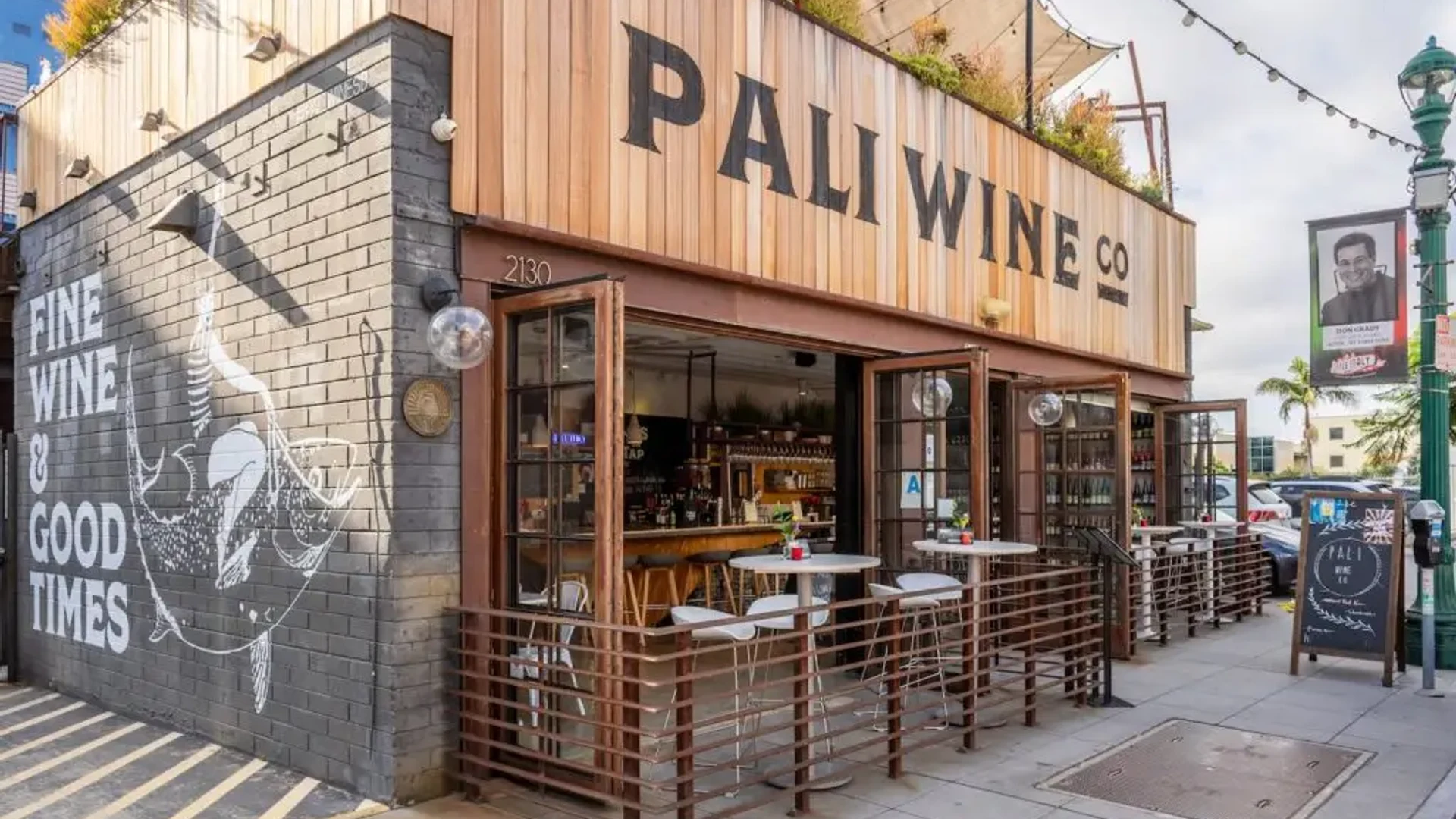
Pali Wine Co. is leaving Little Italy after roughly a decade at 2130 India Street, closing that tasting room on July 19 and reopening at 1440 University Avenue in Hillcrest, the former Cellar Hand space that shutters the same day. Managing partner Nick Perr told San Diego Magazine the landlord “tried to nearly double the rent” at renewal, and the Perr family, which owns both Pali and Cellar Hand, decided to fold their two San Diego storefronts into one. Soft opening in Hillcrest is August 12; grand opening August 22.
For operators reading this from the India Street corridor, the number is the story. When a landlord opens a renewal at nearly double the current rent, they are pricing out the market. Some operators pay it, some negotiate down to a smaller premium, and some walk. The Perrs walked, and they had a plan already sitting at 1440 University Avenue because they owned the tenant there too.
The Advantage of Owning the Winery Upstream
Most operators facing a renewal like this don’t have a second concept to fold into, but the Perrs do. Pali Wine Co. has been producing California Central Coast wine since 2005, with tasting rooms across the state positioned as retail outposts for a real winemaking business. The San Diego tasting room, roughly a decade old in Little Italy, moves inventory that gets made hundreds of miles up the coast.
That production side is the reason this move works, because when your retail rent doubles and you have wholesale economics, wine club fulfillment, and other outposts absorbing overhead, closing one storefront and reopening in a neighbor’s ex-space is a routing problem. Standalone restaurants without those upstream economics face a different set of choices at the same table.
Across SoCal renewals this year, the Little Italy pricing pressure isn’t isolated. India Street landlords have watched a decade of full-price rent absorption from concepts that could carry it, and renewal quotes are now being written against those top-of-market comps. Independent operators without production leverage or a portfolio to consolidate into are the ones with the shortest list of options.
Closing Cellar Hand Instead of Defending It
Cellar Hand, which was not a struggling concept on paper, opened in Hillcrest a little over two years ago as a 120-seat full-service restaurant with a farm-forward program, sourced from more than 20 local producers, and Wine Enthusiast named it one of the country’s Top 50 wine-focused restaurants in 2025. In a normal cycle, an award like that gets defended.
The Perrs are shuttering it anyway, and Perr’s own statement to San Diego Magazine framed the closure with pride. “We are extremely proud of what we accomplished at Cellar Hand. Running an independent restaurant with real values is hard, and we gave it everything we had,” he said. Chef Sable-Tanya Wentwoord, most recently running Cellar Hand’s kitchen, will carry the food program into the new Pali tasting room, so the food identity survives even as the full-service model shuts down.
A family with a Top 50 wine restaurant, a decade-old tasting room, and a Central Coast winery chose to consolidate two San Diego storefronts into one tasting-room format. That format shift means fewer seats to run, one kitchen instead of two, and a smaller labor footprint carrying a food program by a chef who already knows the space. The math on running a tasting room with a food menu is materially different from running a full-service concept, and the group had the leverage to pick the simpler model.
SoCal Operators on the Same Renewal Cycle
More India Street renewals are queued up behind Pali, and this exit is the first big signal on what those quotes look like. Hillcrest is absorbing displaced Little Italy tenants at the same time, and 1440 University Avenue is a marquee corner where the Perrs’ arrival reprices the neighborhood for the next round of leases.
Operators without an upstream production business or a portfolio to consolidate into need to model their next renewal well before the quote lands. For any India Street lease coming due in the next eighteen months, the modeling work belongs on the calendar this quarter, so a doubled-rent scenario against current EBITDA is a number the operator already knows when the landlord opens the conversation. Same math for anyone on a University Avenue block that is about to reprice against the Pali arrival.
For an operator considering an exit rather than a renewal fight, the current environment is one where clean books, a written continuity plan for the food program, and a confidential sale process usually produce a better outcome than absorbing a doubled rent to run the current model for another cycle. Pali had the option to consolidate two storefronts into one, but many operators don’t have a second concept to fold into. Their option is a structured exit, and it’s a better one than the alternative most owners default to when the renewal quote arrives.
Sources
- What Now San Diego, “Pali Wine Co. Relocating Tasting Room to Hillcrest” (July 14, 2026)
- San Diego Magazine, “Cellar Hand Is Closing as Pali Wine Co. Moves to Hillcrest” (July 14, 2026)
- What Now San Diego, “San Diego Wine-Focused Restaurant to Close After a Brief Run” (July 15, 2026)
Businesses Mentioned
Tags