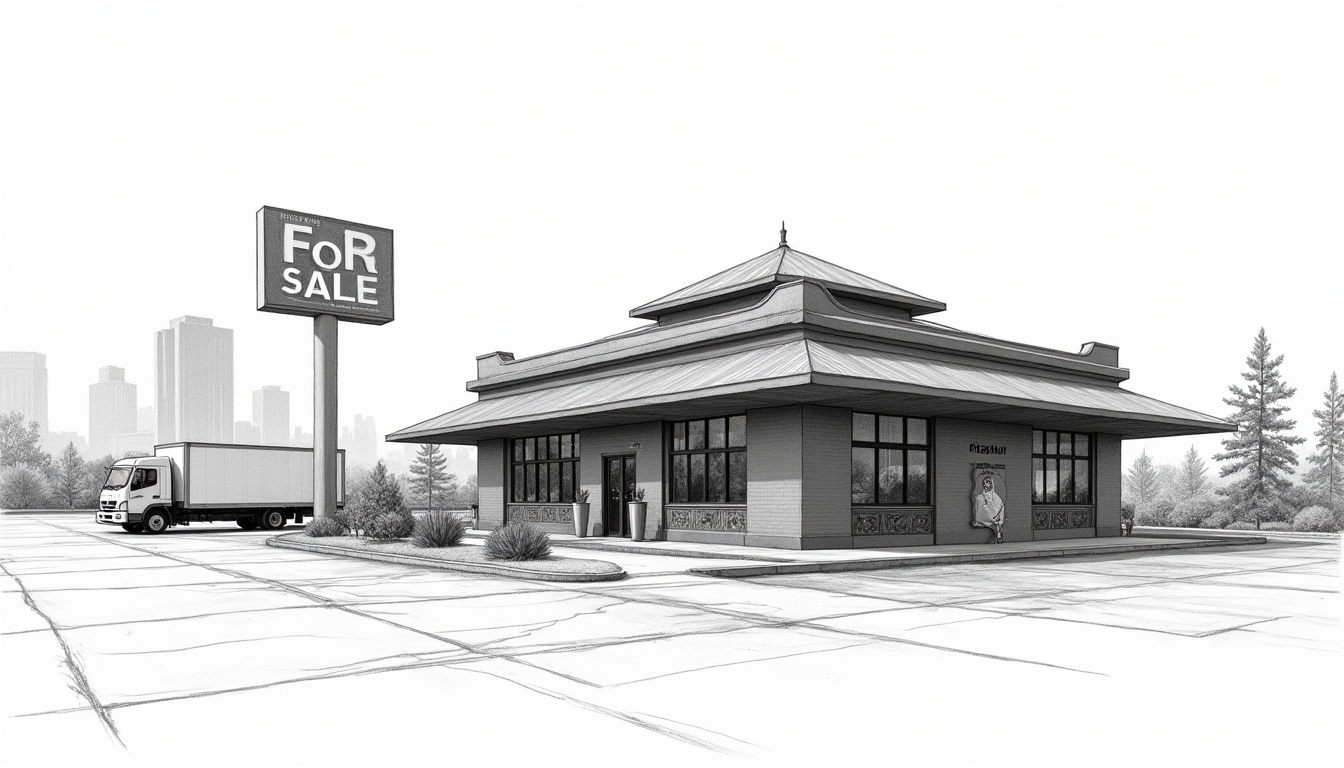
Yum Brands is closing 250 Pizza Hut locations in the first half of this year, but the bigger signal is what’s happening behind the closures: Yum launched a formal strategic review of Pizza Hut late last year, and selling the entire brand is on the table.
We’re talking about a chain with nearly 20,000 locations globally and $3.47 billion in system sales. If Yum follows through, this would be one of the largest restaurant brand divestitures in recent memory. And whether you operate a single-unit independent or you’re looking at buying your first restaurant, the ripple effects of a deal this size reach further than most people realize.
What’s Actually Happening
The 250 closures represent less than 4% of Pizza Hut’s U.S. footprint of about 6,500 locations. Yum CFO Ranjith Roy framed them as part of “Hut Forward,” an initiative to modernize the brand through updated marketing, new restaurant models, and refreshed franchise agreements. The closures target what the company calls underperforming locations.
But the strategic review, announced by CEO Chris Turner in November, goes well beyond trimming weak stores. Yum is evaluating whether Pizza Hut belongs in its portfolio at all. The brand’s system sales dropped from $3.61 billion in 2024 to $3.47 billion in 2025. The global unit count declined from 20,225 to 19,974. Even as Yum opened 1,200 new Pizza Hut locations across 65 countries last year, the net count still went down.
That math tells you everything. When a brand is opening aggressively and still shrinking, the closures are outpacing the growth. The franchise model is under pressure from both ends: existing operators can’t sustain their units while new operators are being brought in to replace them.
The Franchise Fallout
The 250 U.S. closures will put hundreds of franchise operators in transition. Some will close permanently. Others will try to sell their units, their equipment, and their remaining lease terms. That creates a wave of distressed restaurant assets hitting the market in a compressed timeframe.
For anyone in the restaurant acquisition space, this is worth watching closely. Franchise closures at this scale produce second-generation restaurant spaces, used commercial kitchen equipment, and motivated landlords looking to fill vacancies. The quality and location of those spaces will vary, but the volume of available inventory is significant.
This isn’t the first time we’ve seen this pattern. When Pizza Hut’s largest U.S. franchisee filed for bankruptcy a few years ago, it created a cascade of real estate activity that took months to work through. The current wave is smaller in individual market impact but broader geographically.
What a Sale Would Signal
If Yum actually sells Pizza Hut, it sends a message that even the biggest players in the restaurant industry are willing to shed legacy brands when the growth story stalls. Yum still has KFC and Taco Bell performing well. Holding onto a brand that’s dragging the portfolio down doesn’t serve shareholders, and Yum’s leadership appears to be doing the math on that in real time.
For the broader restaurant M&A market, a deal of this magnitude tends to reset expectations. It validates the idea that restaurant brands are tradeable assets with quantifiable value, not just operating businesses. That mentality filters down. When a multi-billion-dollar brand changes hands, it creates a reference point that affects how every restaurant transaction gets framed, from a 50-location regional chain down to a single-unit independent.
It also signals that the current cost environment is forcing strategic decisions at every level. If a company with Yum’s resources and scale is struggling to make Pizza Hut work in this market, it reinforces what we’re seeing on the ground with independent operators: the margin compression from labor costs, food inflation, and shifting consumer behavior is structural, not cyclical, and it’s not going to correct itself.
The Real Estate Angle
Two hundred fifty store closures concentrated in the first half of the year means a lot of restaurant real estate entering the market at once. Pizza Hut locations tend to be freestanding or endcap units with drive-throughs, which makes them attractive conversion candidates for other QSR and fast-casual concepts.
If you’re a buyer looking for restaurant space in a market where one of these closures is happening, you may be able to negotiate favorable lease terms with a landlord who’s suddenly facing vacancy. The equipment and infrastructure in a Pizza Hut kitchen won’t map perfectly to every concept, but the bones of the space, the hood systems, the grease traps, the parking, are transferable.
What This Means Locally
Southern California has a significant Pizza Hut footprint. While we don’t have the specific closure list yet, it’s reasonable to expect some of these 250 locations will be in our market. When they do close, they’ll add to the pool of available second-generation restaurant spaces that’s already growing due to independent closures.
For sellers in the SoCal market, the increased supply of available restaurant spaces means buyers have more options. That puts additional pressure on valuations for businesses that don’t have strong differentiators like prime locations, transferable liquor licenses, or proven financials.
For buyers, the opposite is true. More supply means more leverage, more negotiating room, and more opportunities to find a space that fits your concept at a sustainable cost. The key is moving quickly when the right space opens up, because the best locations from these closures will attract multiple interested parties.
The Pizza Hut story matters beyond pizza because it shows what happens when the economics of a restaurant model stop working at scale, and how that ripples through every market where those locations sit empty.
Businesses Mentioned