Nancy Silverton’s Pizzeria Mozza closed its Newport Beach location on October 31 after 13 years at 800 West Coast Highway. The space didn’t stay dark long. Vasili Kotsiovos, an Orange County native who runs the Greek restaurant Louka in Beverly Hills, is opening Nesos in the same spot this spring.
On the surface, this is a straightforward tenant turnover. One restaurant closes, another moves in. But the details underneath tell a more interesting story about how high-profile restaurant spaces actually change hands in a market like Newport Beach, and what kind of operator thrives in the next cycle.
What Left, and Why It Matters
Pizzeria Mozza was built on three names: Nancy Silverton, Joseph Bastianich, and Mario Batali. Two of those names carried significant weight in the culinary world. One became a liability. The brand operated for over a decade at the Newport Beach location, and by most accounts, it worked. Good food, strong reputation, loyal following.
But 13 years is a long run for any restaurant, and brand-dependent concepts have a shelf life that owner-operated ones don’t. The founding names move on, retire, or get complicated. The menu calcifies. The energy shifts. Eventually the rent stays the same but the draw doesn’t.
I wrote recently about the same dynamic playing out at Red O in La Jolla, where Rick Bayless’s licensed brand couldn’t sustain a $7 million build-out at UTC. The mechanics are different here. Silverton is a legitimate operator, not just a licensor. But the underlying principle is the same: when a concept’s identity is tied to a famous name rather than to the person running the kitchen every night, the long-term durability is always in question.
The Replacement Tells You Something
Kotsiovos isn’t a private equity group or a national chain backfilling a vacancy. He’s a solo operator from Villa Park who built a Greek restaurant in Beverly Hills, proved the concept on Canon Drive, and is now bringing a version of it home to OC.
A few things stand out about how he’s approaching this:
Right-sized capacity. Nesos will seat under 100 guests. In a space that previously operated as a full-scale pizzeria from one of the most recognized names in Italian food, scaling down is a deliberate choice. Fewer seats means lower labor, tighter service, and higher per-cover revenue. At Newport Beach rents, that math matters.
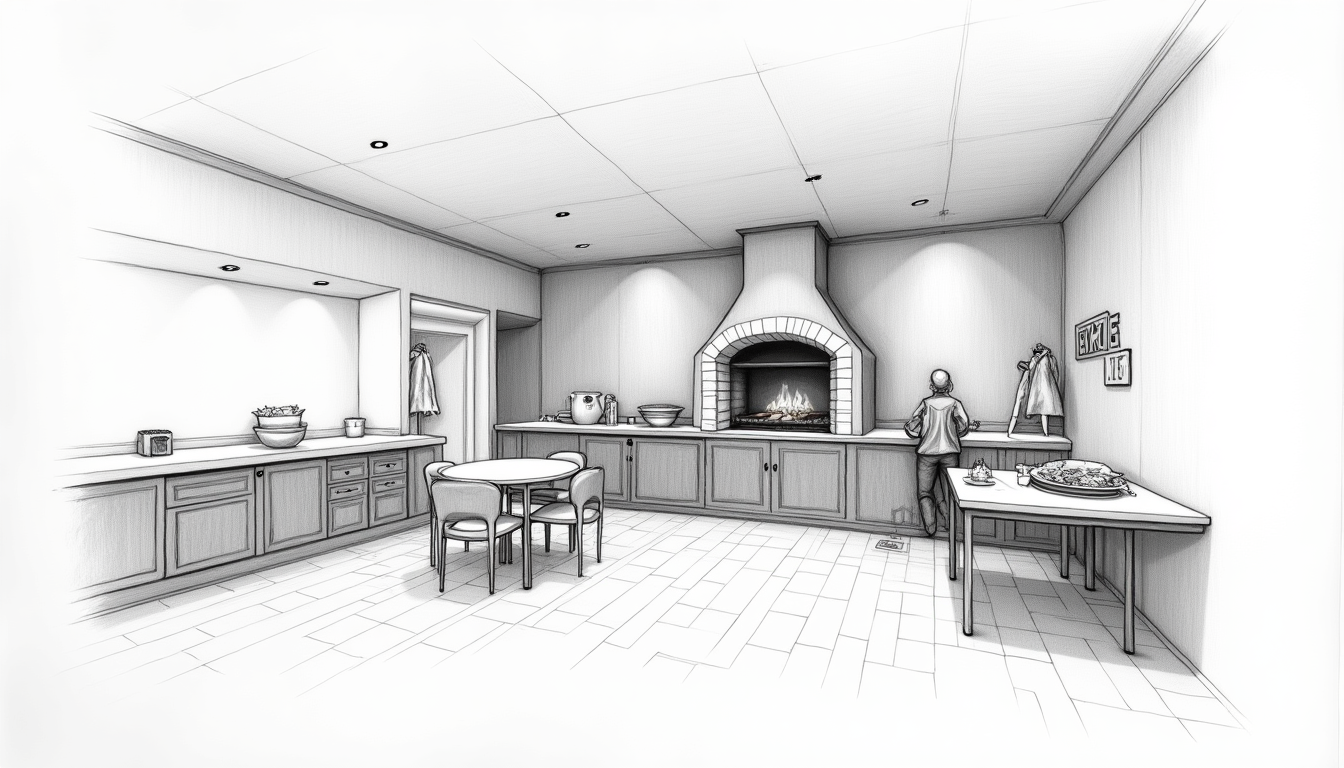
Built-in infrastructure. The space has a wood-burning oven that stays with the building. Kotsiovos is building a lamb-heavy Greek menu around it. That’s an operator who sees the asset in the space, not just the address. When you’re evaluating a restaurant acquisition, the physical infrastructure (hood systems, walk-ins, specialty equipment) is often worth more than the brand that’s leaving.
Proven concept, new market. He’s not testing an idea. Louka has been running on Canon Drive in Beverly Hills since 2018. That’s seven years of operational data, menu refinement, and brand building before committing to a second market. Compare that to operators who sign high-rent leases on a concept that’s never been tested anywhere.
Local knowledge. “The demographics of Newport kind of match what we’re looking for.” That’s Kotsiovos talking about his own backyard. He grew up in OC, went to school here, and chose this market because he understands the customer base. That’s a different risk profile than a national brand picking Newport Beach off a demographic spreadsheet.
The Concept Succession Pattern
This is a pattern I watch closely in brokerage. When a high-profile space turns over, the replacement operator reveals where the market is headed.
In strong markets, the space gets backfilled quickly by an operator with capital, a track record, and a concept suited to the corridor’s economics. That’s what’s happening at 800 West Coast Highway. Mozza leaves, a proven operator steps in within months, invests in a redesign, and targets a spring opening. No extended vacancy. No downmarket pivot.
In softening markets, you see the opposite. The space sits. Landlords offer concessions. The replacement concept is smaller, cheaper, or less proven than what came before. The gap between tenants stretches from months to years.
Newport Beach’s Coast Highway corridor is firmly in the first category right now. Between the Mariners’ Mile mixed-use development bringing Uchi and new residential density, Mastro’s renovating on East Coast Highway, and now Nesos filling the Mozza space, this corridor is attracting operators who’ve done the rent math and decided the numbers work.
What This Means for Current Owners
If you own a restaurant in the Newport Beach corridor, the concept succession at 800 West Coast Highway is net positive for your position. The space didn’t go dark, didn’t become a smoothie shop, didn’t sit empty for 18 months waiting for a tenant to bite. It attracted a serious operator who’s investing in a full redesign and bringing a differentiated concept to the neighborhood.
That kind of turnover signals a healthy market. It means the corridor is attracting capital, the customer base supports premium dining, and the landlords have enough leverage to be selective about who gets the keys. All of those factors support stronger valuations for existing operators with established businesses.
The flip side: more competition. When a corridor is attracting proven operators from Beverly Hills, that raises the bar for everyone. The restaurants that will hold their value are the ones with clean financials, loyal regulars, and a reason to exist beyond the address.
Speaking of established Newport Beach operations: we’re currently representing iL Farro, a coastal Italian restaurant steps from the beach that’s been operating since 1993. Over $1.4M in annual sales, Type 47 liquor license, turn-key with decades of neighborhood goodwill built in. It’s the kind of listing that proves the point: when the corridor is healthy, the businesses with real history and real customers are the ones that attract serious buyers.
The Takeaway
Celebrity chef brands build restaurants on reputation. Local operators build them on execution. Both can work. But when a 13-year-old celebrity concept exits and a local operator with a proven track record takes the keys, the market is telling you what it values in the next cycle.
Newport Beach isn’t looking for famous names. It’s looking for operators who can fill 100 seats six nights a week at $80 a cover, and do it consistently for the next decade.
Thinking about what your OC restaurant is worth in this market? Our free SDE calculator gives you a baseline in under a minute. For a confidential conversation about your specific situation, reach out anytime.
Businesses Mentioned