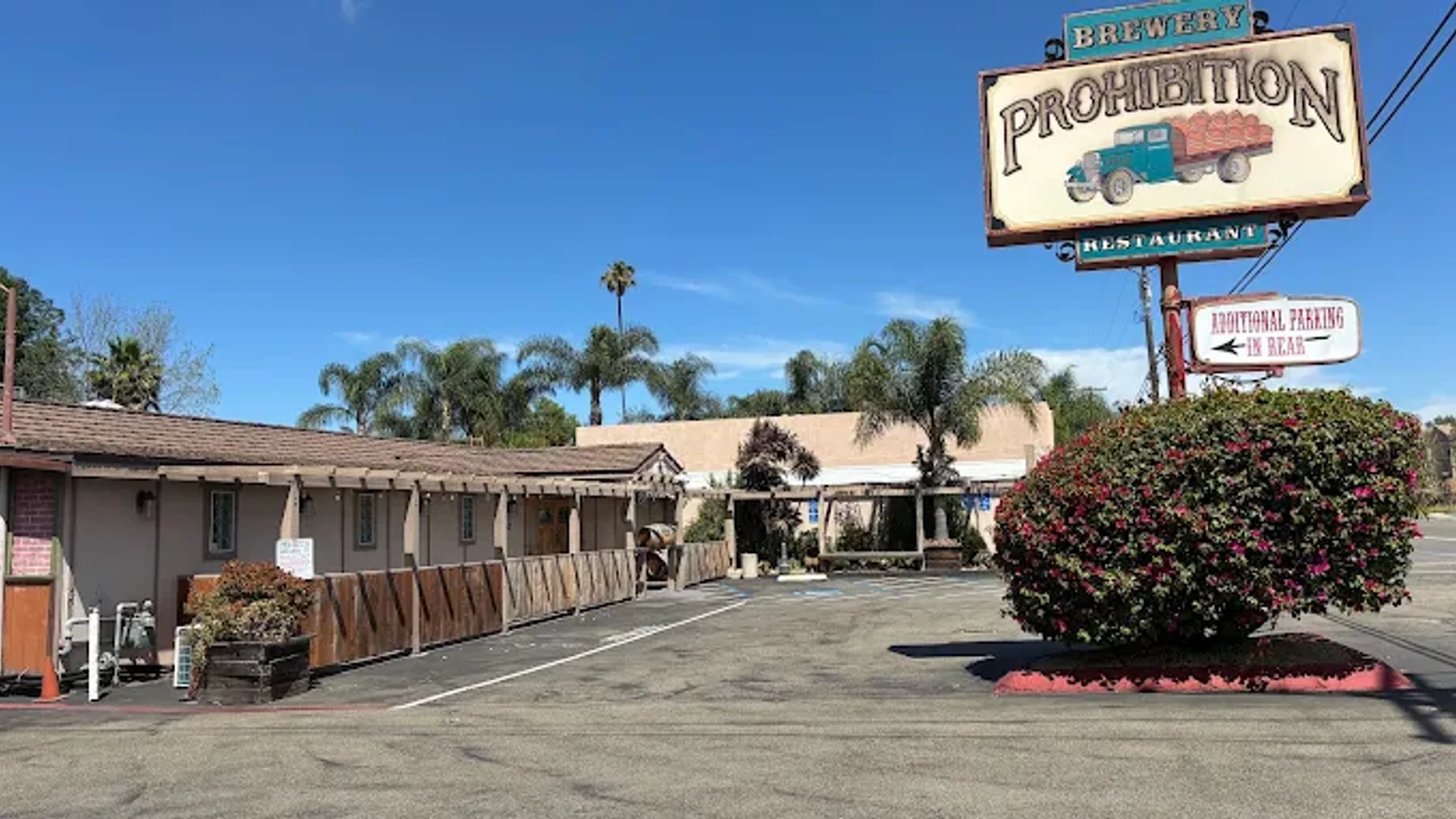
Prohibition Brewing Company, a Vista brewpub that has poured house-made beer on East Vista Way for about 15 years, is closing at the end of September and going up for sale as a single package priced at $2.75 million. Kyle Adams, who runs the business, is selling because his parents, Ron and Kathy Adams, are retiring, and the listing bundles the brewery, the restaurant, the name, the equipment, and the real estate the family has owned since 2010.
The property at 2004 E. Vista Way covers 6,687 square feet across three buildings on just over an acre, with roughly 5,000 square feet of dining room, a full kitchen, a brewery, a patio, and 87 parking spaces. Food and beer recipes are available to a buyer who wants to keep the brewpub running. For the North County San Diego market, the structure of the deal carries more weight than the beer does, because the family owns the ground the business sits on, and that shapes almost everything about how it sells.
Owning the Building Changes the Exit
Most restaurant and brewpub operators lease their space, so when the business winds down they return the keys and walk away with whatever the equipment and any remaining goodwill will fetch, which is often very little once a place stops serving. Prohibition owns its real estate, so once the taps go quiet the family still holds a 1.03-acre commercial parcel with three buildings on it. That is a far stronger position than a leaseholder ending a tenancy, and it is what lets the Adams family treat this as a sale rather than a shutdown.
The real estate also anchors the number. A closed brewpub is worth a fraction of its operating value the day it stops pouring, but the dirt and the buildings hold their value whether or not anyone is brewing. Owning the property is one of the clearest advantages an operator can carry into an exit, and it is the difference between selling an asset and simply closing a door.
Pricing Two Assets at Once
A $2.75 million asking price on a package like this is really two valuations stacked together. The real property is valued on comparable sales and on what the space would command as a lease, the way any commercial real estate is priced. The brewery equipment, the built-out kitchen, the licensing, the brand, and the recipes are valued as turnkey assets, the kind a new operator would otherwise spend a year and a large check assembling from scratch.
Because the business is closing, a buyer is acquiring a shuttered operation together with its real estate, which puts most of the value in the parcel and the turnkey build-out and very little in trailing cash flow. That is a different calculation than valuing a restaurant as a going concern, and it changes how a buyer should think about the price. How the eventual sale allocates dollars between the real property and the business assets also drives both sides’ taxes and the buyer’s financing, since real estate and business assets qualify for different loan structures.
Who Buys a Turnkey Brewery
A listing structured this way draws two very different buyers into the same conversation. One is an operator who wants a working brewery without the build-out, walking into tanks, a kitchen, pour licensing, a 160-seat dining room, and 87 parking spaces already in place, with the option to take the recipes and a 15-year-old name for a running start. The other is an investor who wants the parcel itself and will re-tenant or redevelop the three buildings for something new.
Which buyer wins usually comes down to the state of the sector. Craft brewing has contracted hard over the past few years, and used tanks sold piecemeal at auction bring pennies on the dollar, which pushes down what a broken-up brewery is worth. A complete, running plant sold whole to someone who actually wants to brew is a different story, and the health of the local craft brewery market will decide whether Prohibition trades as a brewery or as a redevelopment site.
A Retirement Exit on the Family’s Terms
The Adams family bought the Vista property in 2010, opened the brewpub, and built it into a neighborhood fixture over about 15 years, with three generations involved down to grandfather Ted Adams, who made the hand-carved decor. “My parents want to retire,” Kyle Adams told The Coast News, explaining the decision to sell.
That story is playing out across independent hospitality as founding owners reach retirement age with no family member who wants to keep operating. The wave of ownership transfers working through small businesses in San Diego and Orange County includes a great many owners who simply close and walk away. The ones who own their real estate, keep the equipment in working order, and package the whole operation cleanly are the ones who capture value at the exit that the walk-away sellers leave on the table.
Sources
- What Now San Diego, “Vista Brewery and Restaurant to Close After More Than a Decade in Business”
- The Coast News, “Vista brewpub Prohibition for sale as owners retire”
- Hoodline, “Prohibition Brewing Closes Vista Doors After 15 Years, $2.75M Property Sale Looms”
Businesses Mentioned
Tags