The Red Fox Steakhouse & Piano Bar—one of San Diego’s most storied dining rooms—is on the market for $3,411,295. And that number tells a fascinating story about what “legacy” actually means in restaurant valuations.
This isn’t a typical restaurant sale. You’re not buying a lease, some kitchen equipment, and a customer list. You’re acquiring a piece of San Diego history with a business model attached to it. As the listing broker on this property, I want to break down what’s driving that valuation and what makes legacy restaurant acquisitions fundamentally different from a standard deal.
A 16th-Century English Pub in the Heart of North Park
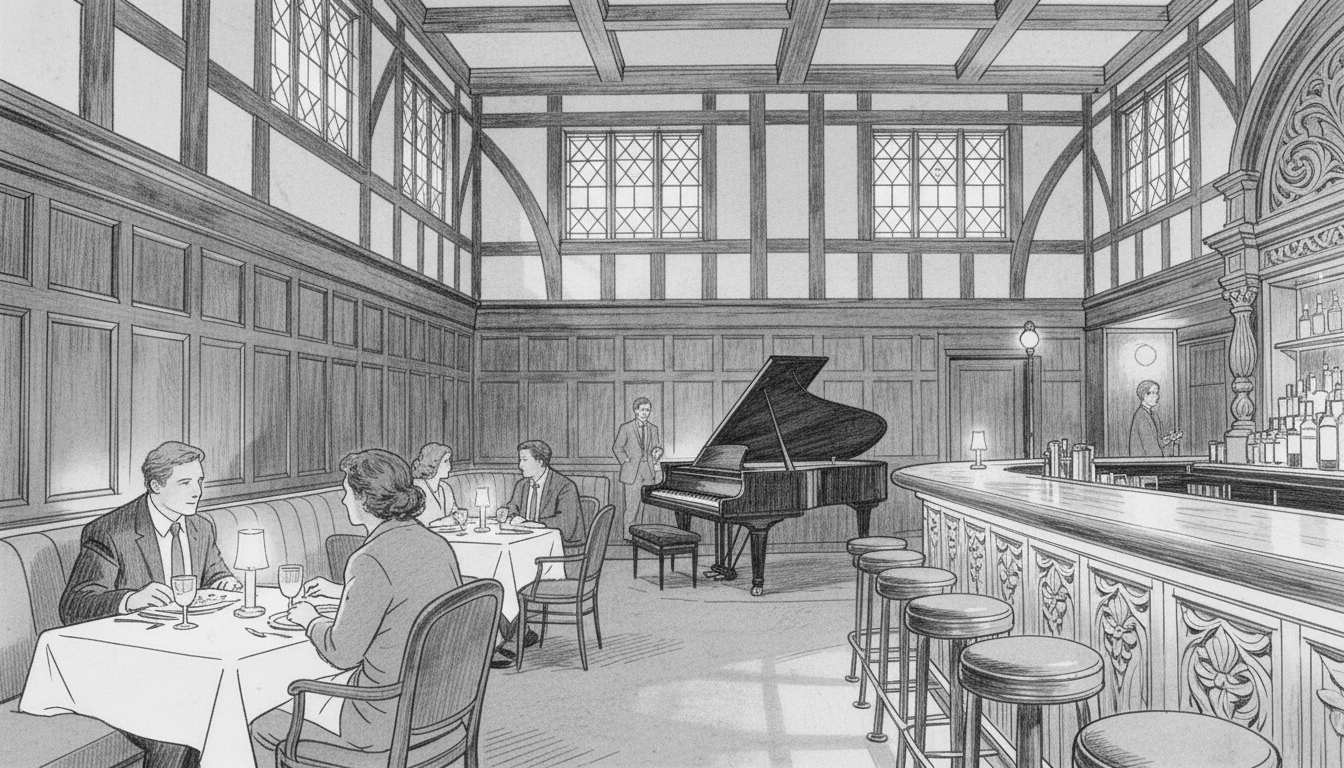
The Red Fox’s interior has a provenance that no new build could replicate. The Tudor-style wood paneling, leaded glass windows, and hand-carved bar originated in a 1560s pub in Surrey, England. In 1926, those materials were shipped to California and installed in a Santa Monica mansion owned by actress Marion Davies, companion of publishing magnate William Randolph Hearst.
By the late 1950s, the elements made their way to San Diego, where the Red Fox became a beloved institution under the Demos family, who operated it for decades. The current freestanding building at 2200 El Cajon Boulevard was purpose-built in 2022, giving the restaurant a near-new 3,000-square-foot shell wrapped around irreplaceable historic character.
That combination (modern infrastructure with century-old atmosphere) is exceedingly rare in restaurant real estate.
Breaking Down the $3.4M Valuation
When buyers see a seven-figure asking price, the natural question is: what am I actually paying for? In this case, the valuation stacks four distinct asset classes that rarely come bundled together:
1. The Real Estate
A freestanding restaurant building on a 4,748-square-foot lot in one of San Diego’s most active dining corridors. The building was constructed in 2022, which means near-new systems (HVAC, plumbing, electrical, fire suppression) with decades of useful life remaining. For anyone who’s dealt with the headaches of aging restaurant infrastructure, that alone carries significant value.
Owning the real estate eliminates lease risk entirely. No rent escalations, no landlord disputes, no lease terms that erode your margins. You control the asset.
2. The Type 47 Liquor License
California’s Type 47 license, which permits the sale of beer, wine, and distilled spirits in a bona fide eating place, is one of the most valuable restaurant assets in the state. Depending on the county, these licenses can sell for $50,000 to $120,000 on the open market, and availability is limited by population-based quotas.
The license conveys with this sale, which is a meaningful component of the deal structure. For buyers looking at bars for sale in California, the Type 47 is often the single most expensive line item after the real estate itself.
3. The Brand and Intellectual Property
“The Red Fox” carries 67 years of brand recognition in San Diego. That’s not something you can build with a marketing budget. The name, the concept, the reputation: all of it transfers to the buyer, creating a runway that a new concept would spend years and significant capital trying to establish.
In restaurant valuations, brand equity is notoriously hard to quantify. But the market does price it in: a known, beloved brand reduces the ramp-up risk that kills so many new restaurant ventures in their first 18 months.
4. The Revenue Track Record
The Red Fox generated $2.12 million in gross sales in 2024. That’s a real operating history that a buyer can underwrite against. When you’re evaluating what a business is worth, verified revenue is the foundation everything else builds on.
Compare that to opening a new concept in the same space with zero revenue history; you’d be guessing. Here, you have actual data to work with.
Who Should Be Looking at This
This is not a first-time buyer’s deal. The profile for a legacy restaurant acquisition like this typically includes:
- Experienced restaurant groups looking to add a flagship property with built-in brand recognition
- Chef-owners ready to put their stamp on a storied venue without starting from scratch
- Hospitality investors who understand that owning the real estate fundamentally changes the return profile
- Operators relocating to San Diego who want an instant market presence rather than a cold start
The El Cajon Boulevard corridor in North Park continues to evolve as one of San Diego’s premier dining destinations, with new concepts opening regularly alongside established institutions. The foot traffic, the neighborhood energy, and the parking access all support the kind of volume a steakhouse and bar concept demands.
The Bigger Picture: What Legacy Deals Signal About the Market
When a property like the Red Fox comes to market, it tells you something about where the San Diego restaurant scene is heading. Legacy operators are transitioning; many of the family-owned institutions that defined San Diego’s dining culture are reaching generational inflection points.
For buyers, that means opportunities to acquire established brands with real assets rather than paying a premium for unproven concepts. For sellers, it means the market recognizes that years of goodwill and brand building have tangible value.
We’re seeing similar dynamics across Southern California. The operators who built these institutions are looking for the right stewards: buyers who will honor the legacy while bringing fresh energy and capital to the next chapter.
What a Buyer Should Do Next
If you’re seriously evaluating a legacy restaurant acquisition, here’s the framework I walk clients through:
-
Run the numbers backward: Start with the revenue ($2.12M gross), model realistic operating costs, and determine what SDE looks like. Our SDE Calculator can give you a quick benchmark.
-
Value the real estate separately: Owning the building changes the entire risk profile. Model the deal as a real estate acquisition with a business attached, not the other way around.
-
Assess the brand carry: How much of the existing customer base transfers with new ownership? For a name as established as the Red Fox, the answer is usually “most of it,” if the new operator respects what made it special.
-
Factor in the license: The Type 47 is an appreciating asset in California. It has standalone value regardless of what you do with the restaurant concept.
Legacy restaurant deals don’t come along often. When they do, the buyers who move with preparation and conviction are the ones who end up writing the next chapter.
Businesses Mentioned