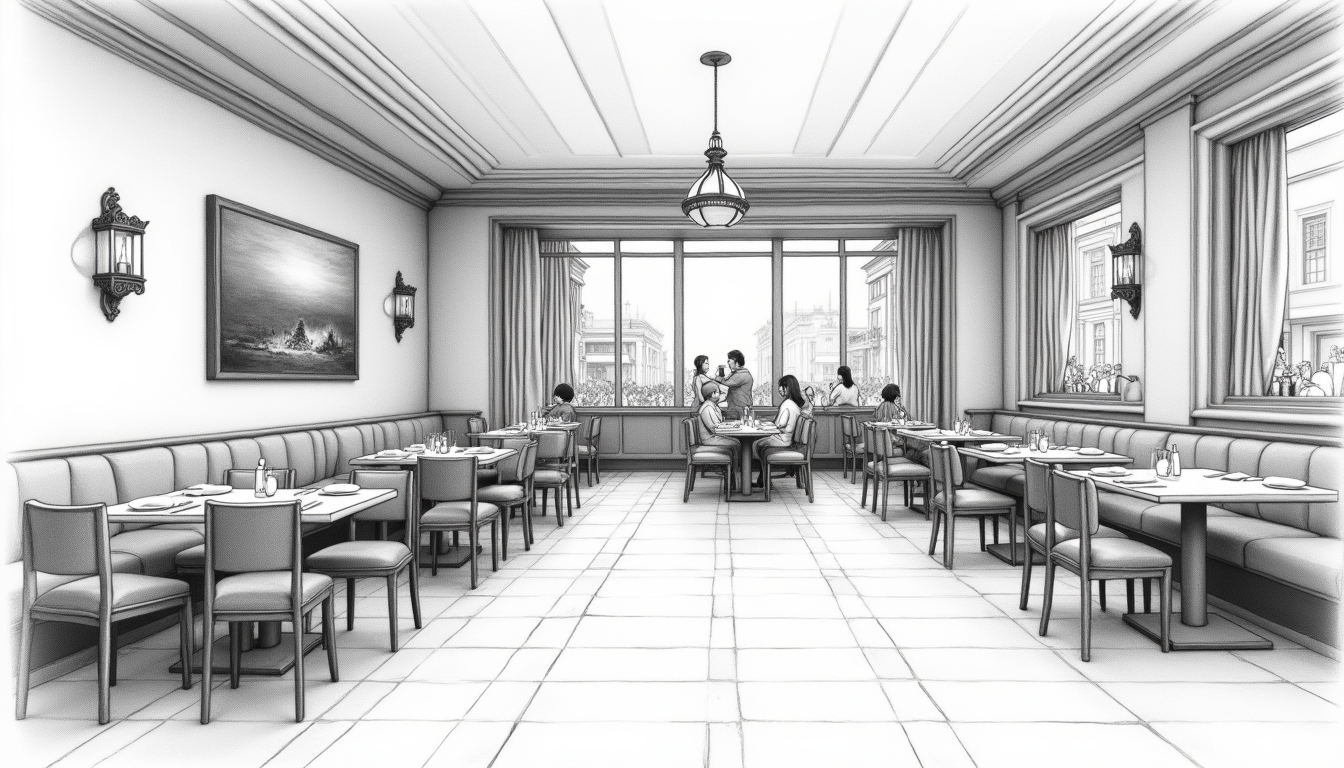
Red O, the upscale Mexican restaurant carrying Rick Bayless’s name, is permanently closing its La Jolla location. A WARN notice filed February 16 confirms an April 20 shutdown, with 91 employees affected. After nearly nine years in the 9,000-square-foot space at The Plaza at UTC, the restaurant is done.
This isn’t just another closure notice. It’s a case study in what happens when a celebrity brand, a premium build-out, and a high-rent corridor don’t add up to a sustainable operation.
The Build Was Expensive. The Model Was Fragile.
Red O La Jolla opened in May 2017 after more than two years of construction delays. The Irvine Company and Red O invested an estimated $7 million in the build-out: resort-style patios, fire pits, a bar stocking over 200 tequilas, and a dining room designed to justify a $70-plus per-person ticket.
Here’s the part that matters from a business perspective: Rick Bayless didn’t own this restaurant. He doesn’t own any Red O location. Bayless operates as a brand licensor: his team develops menus, trains staff, and runs quality assurance, but the actual operations and financial risk sit with a separate ownership group.
That licensing model works when the celebrity name drives enough premium traffic to cover premium costs. When it doesn’t, the operator absorbs the losses while the brand walks away intact. Bayless still has Frontera Grill and Topolobampo in Chicago. Red O still has locations in Newport Beach, Santa Monica, and Westlake Village. The La Jolla operation is the one holding the bag.
UTC Has a Pattern
Red O replaced Donovan’s Steakhouse in the same space. Donovan’s left after failing to reach terms with the Irvine Company on rent. Now Red O is following the same path out the door.
And it’s not alone. Lola 55’s expansion concept, L55 Tacos, just closed at nearby Westfield UTC after only 15 months. The planned 8,800-square-foot Liberty Station project from the same group is now paused.
UTC is an attractive corridor: high-income demographics, dense office and residential population, heavy foot traffic from the Westfield mall and surrounding developments. But those same factors push rents to levels where restaurants operate with almost no margin for error. When traffic patterns shift or consumer spending softens, there’s no cushion.
This is a dynamic I see across premium retail corridors in San Diego. The rent demands a certain volume. The volume demands a certain concept. And if the concept doesn’t hit from day one, the math never catches up.
What Celebrity Branding Actually Does to a Restaurant’s Value
Celebrity chef restaurants create a perception problem when it comes to valuation. The brand name inflates the top line during the honeymoon period, the first year or two of operation, when press coverage and curiosity drive traffic. But that traffic isn’t sticky. It’s tourism, not habit.
A locally owned restaurant builds its customer base through repeat visits, neighborhood integration, and word of mouth. A celebrity-branded concept builds it through media attention that inevitably fades.
When I evaluate a restaurant for sale, I’m looking at sustainable cash flow: what the business produces after the excitement wears off. A celebrity name can actually be a liability in a sale, because the buyer inherits the cost structure (the premium lease, the high build-out amortization, the staffing levels required for a high-touch concept) without inheriting the brand. If Bayless’s name comes off the door, what’s left?
That’s the question every buyer should ask about any restaurant leaning heavily on a single personality or brand affiliation.
The Broader Signal
Two weeks ago, I wrote about Zuma choosing San Diego for its first California location, a signal that the market is maturing, attracting global luxury brands that historically skipped us for LA and San Francisco.
Red O’s exit doesn’t contradict that signal. It sharpens it. San Diego’s dining market is maturing, which means it’s getting more selective. The brands that will thrive here are the ones that commit to the market, not the ones that license a name and hope the zip code does the work.
Zuma is building a 12,000-square-foot, 270-seat restaurant downtown with what appears to be a genuine operational commitment. Red O licensed a celebrity name into a mall-adjacent corridor and ran it from a distance for nine years. The market is telling us which model it rewards.
What This Means If You’re Thinking About Selling
If your restaurant has survived in San Diego on its own merits, built a local following, negotiated a workable lease, maintained consistent margins without a celebrity name propping up the numbers, that’s more valuable than you might think.
The operators who weather these cycles without the hype are the ones buyers actually want. Real cash flow, real customers, real community presence. That’s what survives a nine-year run. That’s what transfers in a sale.
Red O had the name, the build-out, and the location. It still didn’t work. Your neighborhood restaurant that’s been profitable for a decade? That’s a stronger asset than a $7 million build-out with a famous name on the awning.
If you’re evaluating your restaurant’s position in today’s market, our free SDE calculator can give you a baseline valuation in under a minute. And if you want to talk through what your business is actually worth, not what the brand suggests, reach out for a confidential conversation.
Businesses Mentioned