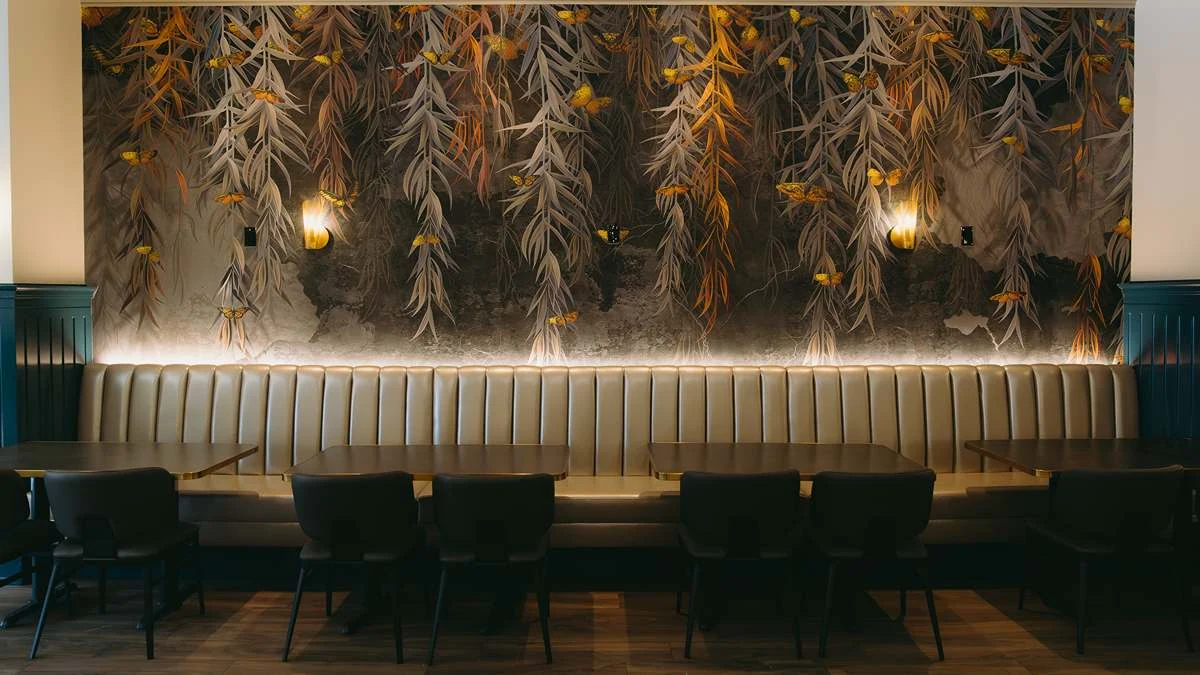
Rei do Gado reopens at 939 Fourth Avenue on July 20, nearly two years after a kitchen fire tore through the four-story building that houses it. The Brazilian steakhouse has run downtown since 1999, twenty-seven years that now include a two-year gap. The reopening date puts it back in service two days before Comic-Con preview night, which is the most concentrated revenue week downtown San Diego sees all year.
The room will serve dinner daily from 4 to 10 p.m., with lunch Friday through Sunday starting at 11 a.m. Rachel Larraine Crawford of Tiger Veil handled the redesign, working from the restaurant’s original butterfly artwork and Brazilian tropical landscapes toward warm textures and natural materials.
The Fire and the Two Years That Followed
The fire started in the kitchen on July 26, 2024, and spread through the building above, displacing fifty residents. Roughly 1,200 people were evacuated from a nearby venue while Comic-Con was underway. General Manager Geoffrey Alegria said the team is “incredibly excited to finally reopen and welcome back our loyal guests and new visitors alike.”
Nearly two years passed between that night and the reopening date, and the restaurant is coming back at the same address rather than a new one. That decision to rebuild in place carries more information than the fire itself.
A Two-Year Dark Period Works as a Solvency Test
Most restaurants that go dark this long never come back, and the reasons rarely have much to do with the fire itself. Rent obligations frequently survive a casualty event, and whether they abate depends entirely on lease language most operators have never read closely. Business interruption coverage pays on the carrier’s adjusting timeline, which almost never matches the operator’s payroll calendar. Staff scatter within weeks, and the ones worth keeping find jobs elsewhere. Vendor terms lapse, and the personal guarantee behind the lease keeps running the entire time.
That combination is why a two-year closure usually ends in a surrendered space or a quiet sale of whatever equipment survived. Coming back to the original address after nearly two years means the lease held and the capital held, in some combination, for the length of the rebuild.
The other asset that held is harder to see on a balance sheet. Rei do Gado opened in 1999, which puts twenty-seven years of downtown goodwill behind the name. Brand equity of that vintage does not depreciate on the same curve as the buildout. A concept with two years of name recognition and a two-year dark period has nothing left to reopen into, while one with twenty-seven has a reason to rebuild at the same street number. That distinction shows up directly in what the business is worth on the other side, which is why operators weighing a valuation after any long interruption are really asking how much of the goodwill survived the closure.
Reopening Into the Busiest Week of the Year
Comic-Con runs July 23 through 26 this year, with preview night on July 22. Rei do Gado’s July 20 date puts a fully rebuilt room on Fourth Avenue with two days to shake out service before the convention center fills.
Timing a reopening this way is a capital decision as much as an operational one. Every week a rebuilt restaurant sits closed costs carrying expense against zero revenue, which argues for opening the moment the permits clear. Opening into a soft week and stumbling through service in front of a returning guest base costs something harder to price. Comic-Con week resolves both pressures at once, delivering volume dense enough to justify full staffing from the first service and a crowd forgiving of a room that just came back.
The risk sits in the same place as the reward. A kitchen two years cold and a partly new staff meet the densest covers of the year in the same week. Getting that right takes a general manager who has run the week before.
Fourth Avenue and the Corridor’s Next Decade
Downtown San Diego has absorbed a difficult two years of its own, between the hospitality wage floor and the labor costs every operator in the corridor is now carrying. A twenty-seven-year operator choosing to spend rebuild capital on the same downtown address, when insurance proceeds could have funded a walk-away instead, says something real about how that operator reads the corridor’s next decade. It belongs in the same column as the broader county investment that has continued through the same stretch.
For anyone holding a downtown lease and thinking about an eventual exit, the Rei do Gado file rewards a close look. The fire itself was random, and the recovery was structural. It turned on lease language, coverage terms, and whether the address justified two years of patience. Those terms decide what happens to a business after a casualty event, and all of them are negotiable long before one occurs.
Watch the July 20 opening and the ten days after it. Whether the room holds through Comic-Con week is the clearest signal downtown will get about how well it was rebuilt.
Sources
- What Now San Diego, “San Diego Brazilian Steakhouse Reopens Nearly Two Years After Fire Forced Closure”
- Comic-Con International, “Plan Your Visit”
Businesses Mentioned
Tags