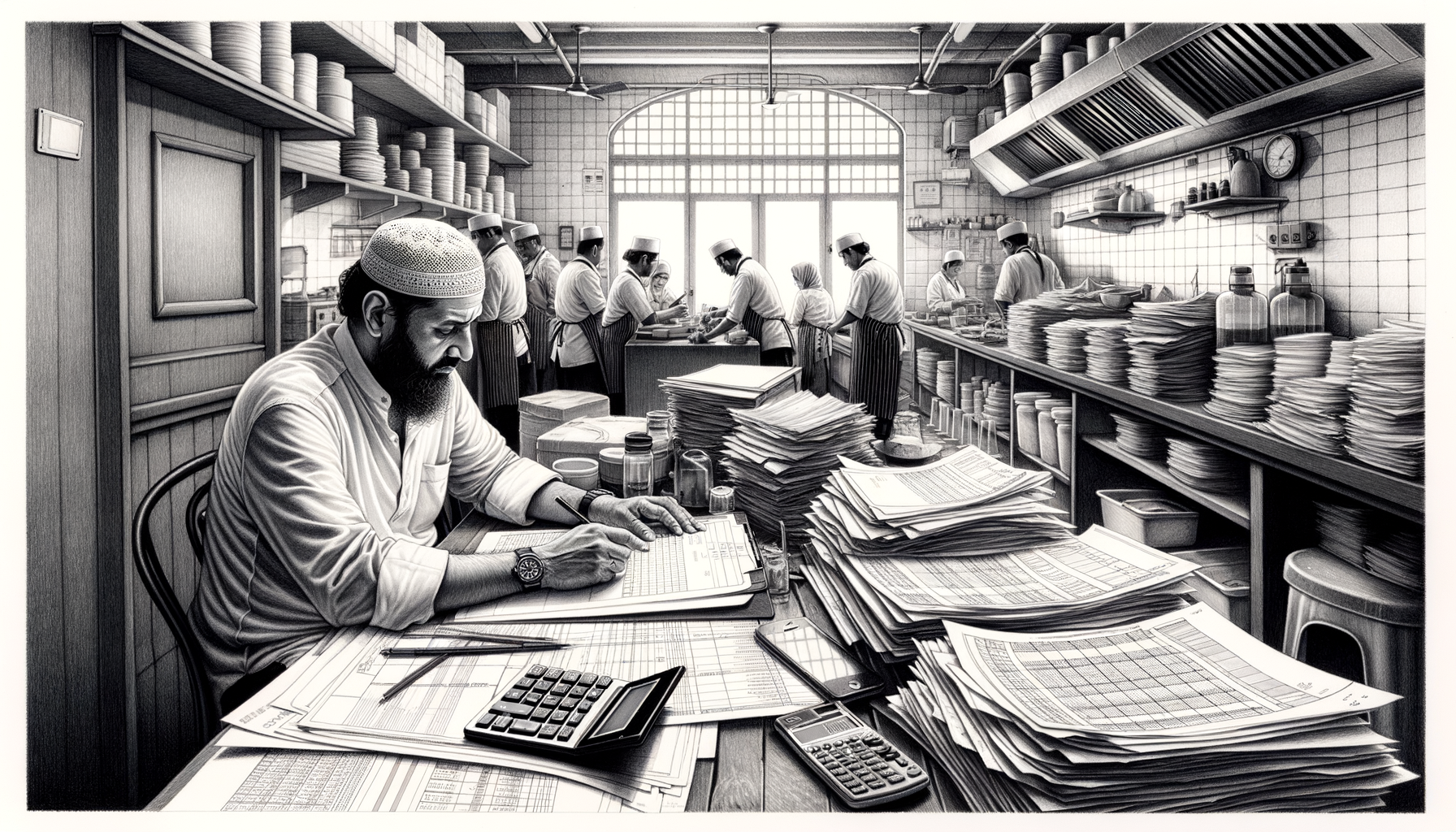
The restaurant industry is projected to hit $1.55 trillion in sales this year. That number sounds healthy until you look at the real growth rate behind it: 1.3%. Barely ahead of inflation.
And here’s the number that should keep every operator up at night: 42% of restaurant operators reported unprofitable operations in 2025. Not tight margins. Not break-even. Unprofitable.
The culprit isn’t one thing: it’s three things hitting at the same time. Labor costs that won’t stop climbing. Insurance premiums spiking from a surge in claims. And tariff-driven food price volatility that makes forecasting next month’s COGS feel like guessing. I’m calling it the triple squeeze, and it’s reshaping who survives in this business.
The Labor Wall
More than 90% of operators cite labor costs as a significant challenge heading into 2026, according to the National Restaurant Association’s latest State of the Industry report. That’s not new; labor has been the industry’s chronic headache for years. What’s new is the compounding.
California operators already absorbed the jump to $20/hour minimum wage for fast food workers in 2024. The ripple effect pushed wages up across all restaurant segments: you can’t pay your line cooks $18 when the Taco Bell next door starts at $20. Nearly three-quarters of operators plan to hire this year but expect difficulty finding experienced managers and chefs, partly because the 16-to-24-year-old labor pool is shrinking demographically.
The response has been predictable: 62% of operators raised menu prices to offset wage increases. But there’s a ceiling. 40% of consumers are already cutting restaurant frequency, and 80%+ now factor value promotions into where they eat. You can only pass so much cost to the customer before they stop showing up.
The Insurance Spike
This one caught a lot of operators off guard. Insurance claims across the food and beverage industry jumped 32.7% year over year in 2025, with an average payout of $14,158 per claim. Fire-related incidents, auto and trailer accidents, and weather events drove the bulk of it; 72% of claims occurred during summer months.
That claims spike translates directly into higher premiums for 2026. And it’s not just property and liability; workers’ comp in California remains among the highest in the nation. For a restaurant running 3-5% net margins, a $5,000-$10,000 jump in annual insurance costs can erase an entire month of profit.
The operators who feel this the hardest are the ones already running lean: food trucks, caterers, and single-unit independents. The FLIP report identified these as the highest-risk categories for claim activity. If you’re in one of those segments and haven’t reviewed your coverage recently, you’re probably overpaying or underinsured; neither is a good position.
The Tariff Wildcard
67% of operators say tariffs pose significant challenges to their business. 47% report tariffs have directly increased menu prices. And 41% attribute rising ingredient and supply costs specifically to trade policy.
The problem isn’t just the cost; it’s the unpredictability. As Shawarma Press CEO Sawsan Abublan put it: “Unlike labor or utilities, which can be forecasted, ingredient prices fluctuate frequently and are influenced by multiple external factors: global trade conditions, transportation costs, climate impacts, and even international conflicts.”
Food costs are already 35% above pre-pandemic levels according to BLS data. When you layer tariff volatility on top, operators lose the ability to plan. A menu that’s profitable in January might be underwater by March if the cost of imported produce, packaging, or cooking oil shifts 10-15% overnight.
25% of operators now identify supply chain volatility as a major operational obstacle. That’s a quarter of the industry admitting they can’t reliably predict their input costs.
The Compounding Effect
Any one of these pressures is manageable in isolation. Restaurants have always dealt with labor challenges. Insurance is a cost of doing business. Food prices fluctuate.
The problem is all three accelerating at once, against a backdrop of 60%+ of operators reporting that business conditions deteriorated in 2025 and only 15% saying conditions improved. The math stops working when your labor bill, insurance premiums, and food costs are all climbing while your customer count is flat or declining.
The NRA data confirms this squeeze is filtering the industry: full-service operators are split, with 32% expecting higher sales but the rest bracing for flat or declining revenue. Limited-service is even more divided: 29% expect growth while 27% expect declines.
What This Means for Valuations
When I’m advising sellers, the question I get most often is: “What’s my restaurant worth?” The triple squeeze changes the answer.
Buyers in 2026 are stress-testing deals harder than they were two years ago. They’re not just looking at your trailing twelve months of SDE; they’re modeling what happens if labor costs rise another 5%, if your insurance premium jumps 20%, if tariffs push your food costs up a few points.
If your financials show strong margins despite these pressures, your business is actually more valuable right now; you’ve proven resilience in a tough environment. But if your margins have been eroding steadily and you’ve been absorbing costs instead of adapting, buyers see that trajectory and discount accordingly.
The operators who are best positioned are the ones who’ve already:
- Locked in labor efficiency: cross-trained staff, optimized scheduling, invested in retention over constant rehiring
- Right-sized their insurance: reviewed coverage annually, addressed safety issues that drive claims, shopped competitive quotes
- Built menu flexibility: reduced reliance on high-volatility imported ingredients, engineered menus around stable-cost proteins and produce
- Maintained pricing power: earned enough brand loyalty that modest price increases don’t crater traffic
The Broker’s Read
Here’s what I’ll say directly: if you’ve been thinking about selling and your margins are still healthy, the window is open but it’s not getting wider. Every quarter that labor, insurance, and food costs climb is a quarter where your SDE trends down, and SDE is what drives your multiple.
The operators who exit well in 2026 will be the ones who move while their numbers still tell a strong story, not the ones who wait until the squeeze turns their P&L into a negotiation liability.
And if you’re buying? This environment actually creates opportunity. Sellers under pressure are more motivated, and a well-run restaurant in a high-cost environment is a proven asset; not every buyer can operate profitably when margins are this thin.
Feeling the squeeze on your restaurant’s margins? See what your business is worth today: our free SDE calculator gives you a valuation range in minutes.