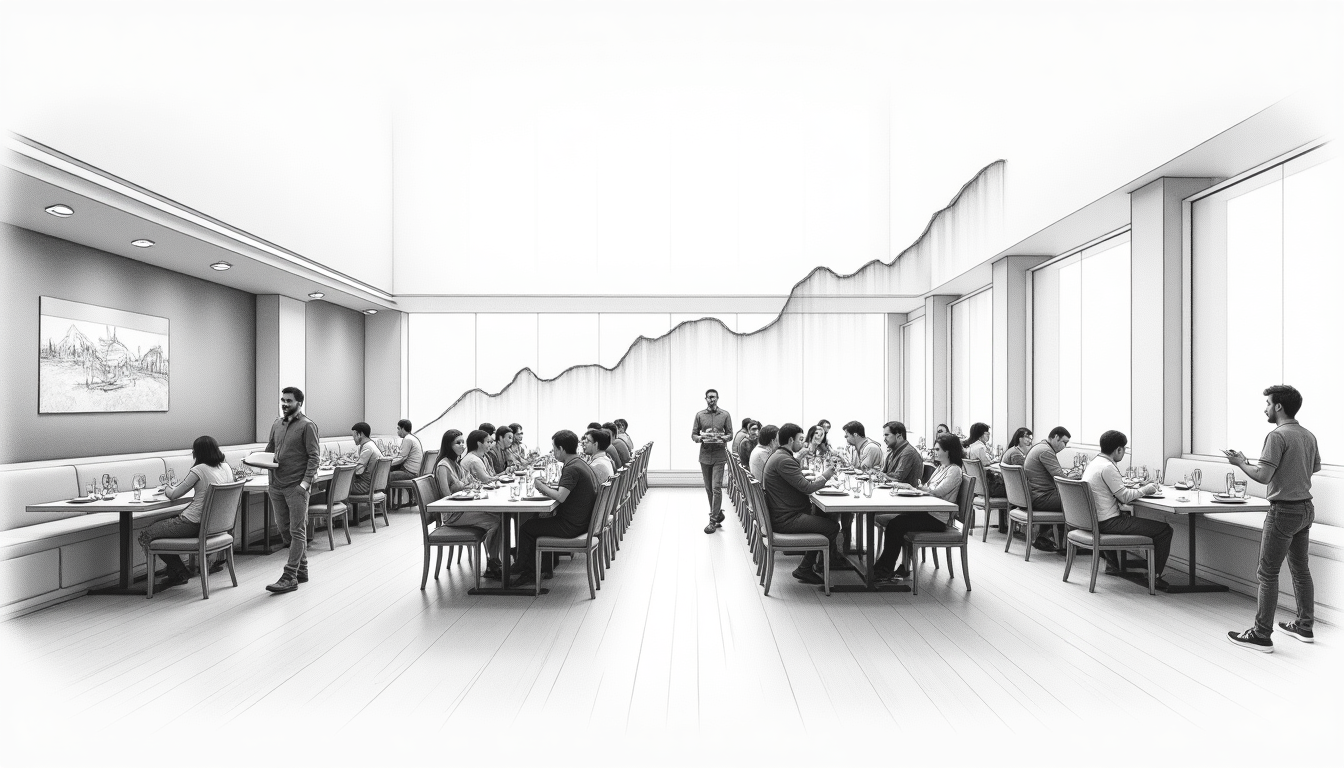
Circana released its global foodservice traffic report on March 12, and the headline number for the U.S. is the first genuinely encouraging data point the industry has had in over a year. Restaurant traffic turned positive in Q4 2025.
For the full year, U.S. domestic traffic was still down 0.3%. But that annual figure masks the trajectory. Traffic was negative through the first three quarters, weighed down by inflation fatigue, rising household debt, and a consumer base that had been pulling back from discretionary dining since mid-2024. The Q4 reversal means the trend line is bending in the right direction heading into 2026.
The Numbers in Context
Globally, foodservice traffic grew 0.2% in 2025 across Circana’s 12 tracked markets. The U.S. was one of five countries that posted positive Q4 traffic alongside China, Canada, Australia, and Germany. For the full year, only China and Canada showed significant growth.
The segment breakdown adds important context. Quick-service traffic was up 0.8% globally, and full-service restaurants posted 0.6% growth. Both segments outperformed non-commercial and retail foodservice, which declined. That pattern suggests consumers are still choosing to eat at restaurants when they go out, but they are being selective about when and where they spend.
Average spend per visit climbed 3% in Q4, which means customers who are showing up are spending more per occasion. That combination is a meaningful signal, because traffic recovering while check averages also rise indicates the consumer is not just coming back for discounts. There is real demand underneath the value-driven promotions that dominated the first half of 2025.
What Changed in Q4
Several factors contributed to the inflection. Value menu promotions that major chains launched in late 2024 reached full maturity by Q4 2025. Circana’s mid-year data showed value menu traffic was already up 1% by June even as overall traffic was still negative, and half of consumers surveyed said lower prices would bring them back more frequently.
But value alone does not explain the Q4 shift. Office occupancy hit 52% nationally, up 3 percentage points year-over-year. Morning foodservice traffic turned positive for the first time in two years as more workers returned to in-person schedules. The breakfast and lunch dayparts, which had been the weakest since COVID restructured commuting patterns, finally started recovering.
Consumer behavior also shifted in ways that favor restaurants with strong brand positioning. Circana found that 41% of adults are actively seeking increased protein intake and 25% are reducing ultra-processed foods. That trend benefits operators who can credibly market quality ingredients and fresh preparation over highly processed alternatives.
The SoCal Angle
Southern California’s restaurant market is disproportionately sensitive to traffic trends because the region’s dining culture is built around frequency. When consumers cut back, they cut back on the third and fourth weekly restaurant visit before they eliminate the first. When confidence returns, those incremental visits come back too.
The Q4 recovery is particularly relevant for full-service operators in SoCal, where the segment’s 0.6% traffic growth represents a reversal from the steeper declines that characterized most of 2025. Full-service restaurants in the West region were pricing 4.6% higher than a year ago heading into Q4. The fact that traffic recovered despite those price increases suggests consumers have largely absorbed the new pricing reality.
For operators who weathered the 2024-2025 traffic downturn without taking on excessive debt or degrading their food quality, the data suggests the worst may be behind them. The businesses that held their standards through the lean period are now positioned to capture returning traffic with intact margins and brand equity.
What This Means for Valuations
Restaurant valuations track cash flow, and cash flow follows traffic. When traffic turns positive while spend per visit is also climbing, the revenue line improves from both directions. An operator who was trending flat or slightly down through mid-2025 may see their trailing twelve months start to look materially better by Q2 2026 if the Q4 momentum holds.
For sellers, improving trailing numbers strengthen your negotiating position. Buyers underwrite on recent performance, and a business showing positive traffic trends and rising check averages tells a better story than one with declining comps and an argument that “things will get better.”
For buyers, the Q4 inflection is a signal to get serious about pipeline. The best acquisition opportunities often come right as the cycle turns, when sellers who were waiting for better numbers finally feel confident enough to engage, and before rising valuations make every deal more expensive.
The data says the U.S. restaurant market is recovering. The question for operators on both sides of a potential transaction is whether they are positioned to act on what the numbers are telling them.