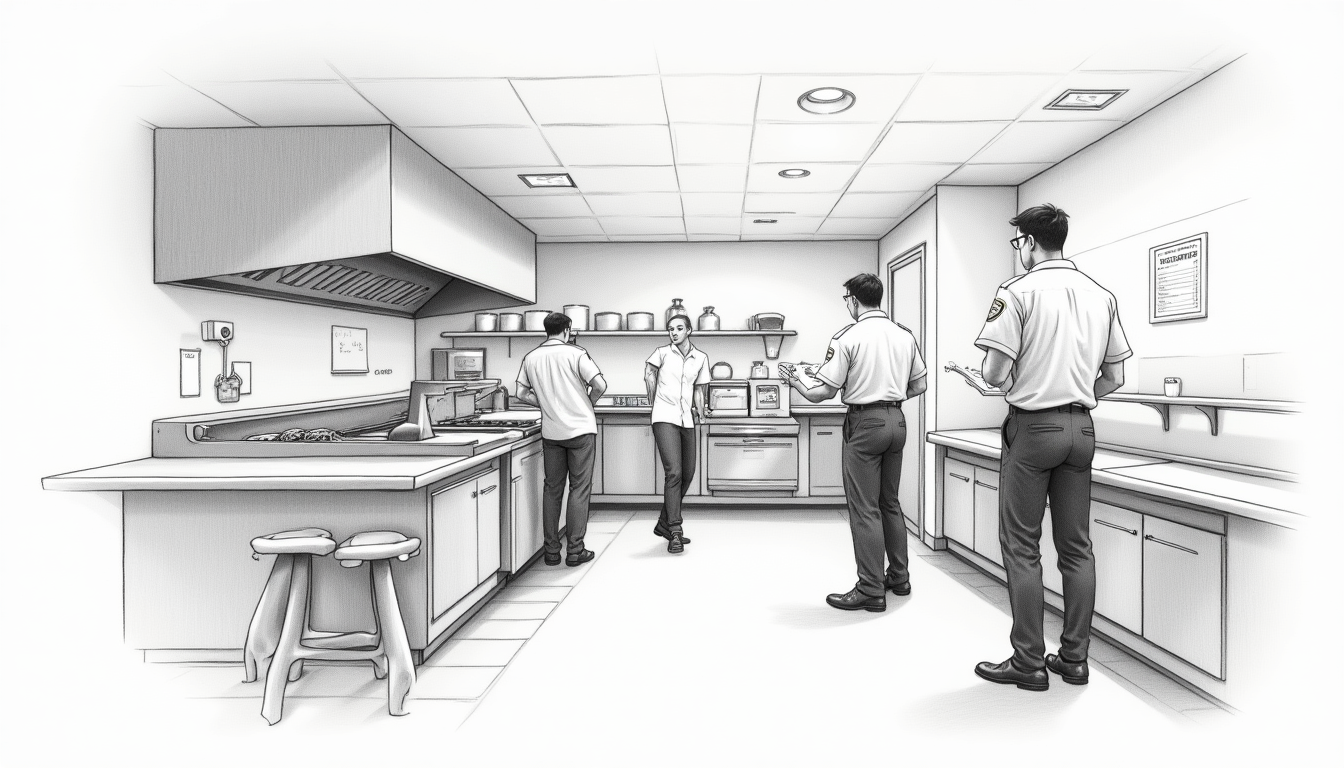
San Diego County health inspectors temporarily closed Zama Restaurant & Bar at 467 Fifth Avenue on April 6 after a routine inspection turned up major violations including vermin activity and improper shellfish tagging. Additional findings included issues with warewashing facilities, wiping cloth storage, and plumbing systems.
The closure followed a similar action at AKA, located at 611 Fifth Avenue, on March 12 for vermin and operational deficiencies. AKA corrected the issues and passed reinspection the following day. Both restaurants are part of the same ownership group operating multiple concepts in the Gaslamp Quarter and Little Italy.
Both are temporary closures rather than permanent shutdowns, and both restaurants can and likely will reopen after corrections and reinspection. But the pattern raises practical questions that anyone buying, selling, or operating a restaurant in San Diego should understand.
How the San Diego County Inspection System Works
The County of San Diego Department of Environmental Health and Quality inspects every permitted food facility on a regular cycle. Each inspection scores the facility on a 100-point scale, subtracting points by violation severity. A major risk factor costs four points, a minor risk factor costs two, and a good retail practice violation costs one.
The resulting score determines the letter grade posted at the entrance, where an “A” means 90 to 100 and satisfactory compliance, a “B” means 80 to 89 and needs improvement, and a “C” is 79 or below, which is a failing grade.
Certain violations trigger immediate closure regardless of the overall score. Vermin activity is one of them, because it cannot be corrected on the spot. Others include no hot water and improper sewage disposal. When a facility is closed, the inspector replaces the grade card with a CLOSED sign listing the reason. The restaurant can reopen within 24 hours if the operator resolves the issue and passes a reinspection.
For facilities that receive a B or C grade without an immediate closure trigger, the county conducts a regrade inspection within 30 days. If the restaurant doesn’t score an A within that window, it faces subsequent 30-day reinspection cycles until it does, and each regrade carries a fee. All of this information is public, and anyone can search a restaurant’s full inspection history through the county’s SD Food Info database.
Why This Matters Beyond the Headlines
Temporary health closures are not uncommon in San Diego County, and according to NBC San Diego, 99% of restaurants carry an A grade at any given time, which means the system catches outliers effectively. Most closures last a day or two, the operator fixes the problem, and business resumes. No permanent record attaches to the business license beyond the publicly searchable inspection history.
The real impact is reputational and operational. A published closure shows up in local media, on Yelp, and in the county database, where customers, potential buyers, and landlords can all find it. The operational disruption is usually minor, but the visibility can linger.
For operators running multiple locations, the pattern matters more than any single event. When inspectors see recurring violations of the same type across related facilities, it suggests a systemic issue with training, maintenance, or operational standards rather than a one-off lapse. That distinction matters to buyers evaluating an acquisition, because systemic problems follow the operation while isolated incidents can be fixed with a deep clean and a reinspection.
What Buyers Should Look At
Health inspection history belongs on every buyer due diligence checklist alongside financial records, lease terms, and equipment condition. The county makes it easy because everything is publicly available and searchable by facility name or address.
Here’s what to look for when evaluating a restaurant’s health record.
Frequency and Pattern of Violations A single closure that was corrected in 24 hours is different from repeated closures or downgrades over a six-to-twelve month window. Look at the full history, not just the most recent inspection.
Type of Violations Temperature control issues, handwashing deficiencies, and vermin are the three that show up most often in closures. Vermin in particular can indicate deferred building maintenance that may require capital investment beyond a standard pest treatment.
Change-of-Ownership Inspection Requirements In San Diego County, a change-of-ownership triggers a health department inspection with higher standards than a routine visit. The inspector identifies code-upgrade requirements including three-compartment sinks, mop sinks, hand sinks, special floor drains, and surface conditions on walls, floors, and ceilings. If the seller’s facility doesn’t meet current code, the buyer inherits those costs or negotiates a price adjustment for an as-is sale.
Score Trajectory A restaurant that went from an A to a B and back to an A after a regrade tells a different story than one cycling between B and C grades for multiple inspection periods.
What Sellers Should Know
If you’re planning to sell your restaurant, your health inspection history is one of the first things a serious buyer’s broker will pull. It’s public, it’s free, and it takes about two minutes.
Running a clean operation in the months leading up to a listing isn’t just good practice, it directly affects the perception of risk. A buyer who sees a clean inspection record has one less reason to discount the price or walk away during diligence. A buyer who sees a pattern of violations has a legitimate basis to renegotiate or request holdbacks.
The change-of-ownership inspection adds another layer. If your facility has deferred maintenance items that current inspectors have overlooked or de-prioritized, those items will likely surface during the more rigorous ownership-transfer inspection. Knowing about them before listing lets you either fix them proactively or price accordingly, rather than having them show up as a surprise during escrow.
The Bigger Picture
Gaslamp Quarter restaurants operate under more scrutiny than most, because foot traffic, tourism, and high-profile locations attract attention from both customers and regulators. A temporary closure in the Gaslamp gets reported in local media the same day, while the same closure in a strip mall in Mira Mesa might never make the news.
That visibility is a double-edged sword. It creates pressure to maintain high standards, but it also means that any lapse, even a temporary and correctable one, becomes part of the public narrative about the business. For operators, the best defense is boring and unglamorous but effective, built on regular pest control contracts, documented training, consistent temperature logs, and a physical plant that’s maintained rather than patched.
For anyone buying or selling in San Diego’s restaurant market, the county’s inspection database is one of the best free tools available, and it’s worth checking early and often. What you find there won’t tell you everything about a business, but it will tell you things the seller might not volunteer.
Sources
- San Diego County, “SD Food Info”
- San Diego County, “Food Program”
- San Diego County Code, “Restaurant Grading Ordinance (Sec. 61.107)”
- NBC San Diego, “99% of San Diego Restaurants Earn A Grades — Bringing Usefulness of System Into Question”
- Restaurant Realty Company, “The Buyer’s Due Diligence Process — Part I”
Businesses Mentioned
Tags