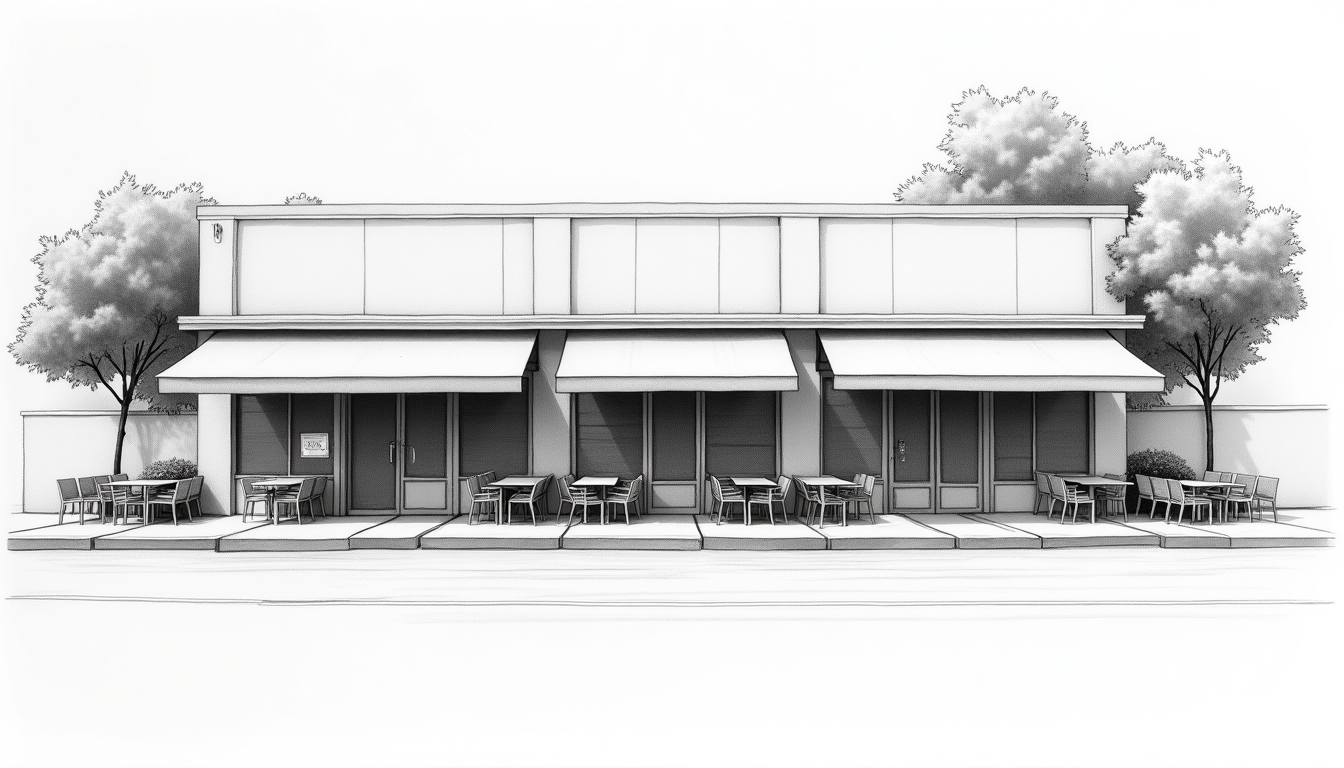
Isabel Cruz, the chef and co-founder behind Barrio Star in Bankers Hill, put it plainly when she closed her doors: “The costs of goods and labor keep skyrocketing. There are no breaks anywhere for restaurateurs.”
She’s not exaggerating. Over the past 10 months, the Gaslamp Quarter and East Village alone have lost nearly a dozen restaurants. Across the county, the closures are accelerating. Times of San Diego reported that 72% of San Diego County restaurants saw declining customer traffic through 2024 and 2025, and 7% of the county’s 11,594 restaurants have already reduced their operating days to cut costs.
The recent closure list reads like a neighborhood guide to places people actually liked: Breakfast Republic and Chocolat in Hillcrest. URBN Wood Fired Pizza, Seventh House, and Flap Your Jacks in North Park. King & Queen Cantina in Little Italy. Bottle Rocket Bar & Grill and Henry’s Public House in East Village. Harley Gray in Mission Hills.
These aren’t marginal operations that never found their footing. Several had strong followings, years of operating history, and decent foot traffic. They’re closing because the economics stopped working.
The Squeeze from Every Side
Restaurant profit margins in San Diego have compressed to 3% to 5%, down from the 8% to 10% range operators could expect before COVID. That’s a dramatic shift. On a million-dollar restaurant, the difference between a 9% margin and a 4% margin is $50,000 a year in the owner’s pocket. Multiply that over a few years and you’re talking about the difference between a viable business and one that’s slowly bleeding out.
The pressure points are stacking up. California’s minimum wage increases continue to push labor costs higher. Trump administration tariffs are raising prices on everything from imported ingredients to kitchen equipment, furniture, and to-go packaging. Rents haven’t come down. Insurance premiums have spiked across the state.
And then there’s a pressure point that’s specific to San Diego: the city charges up to $30 per square foot for outdoor dining space. For restaurants that expanded their outdoor seating during COVID and now depend on it for revenue, that fee is a meaningful hit. Some operators are also running into entertainment license restrictions. According to the Hillcrest Business Association, at least one closure was tied directly to the city denying a stable entertainment license because other businesses in the area already held them.
When you add a local tourism decline on top of all of that, especially in the Gaslamp Quarter and East Village where visitor traffic drives a significant share of sales, the math gets very difficult.
What This Means for Sellers
If you’re a restaurant owner watching this and thinking about your own exit, the instinct is to assume this is the worst possible time to sell. That’s understandable, but it’s not always accurate.
Valuations are compressing, yes. A restaurant generating $80,000 in seller’s discretionary earnings is worth less today than it was three years ago, because buyers are pricing in the margin risk. But there’s a floor under well-run operations. Buyers are still actively looking for restaurants with clean financials, transferable leases, and a concept that works in its neighborhood. The demand for those businesses hasn’t disappeared, it’s just more selective.
The risk of waiting is real. Every month that margins shrink, the business becomes worth less on paper. And if you’re already operating at 3% to 4% margins, one bad quarter (a kitchen equipment failure, a rent increase, a key employee departure) can push the business into the red. Selling a profitable business, even in a compressed market, is always better than trying to sell one that’s losing money.
What This Means for Buyers
This is a buyer’s market for restaurant real estate in San Diego, and the window is wide open.
Second-generation restaurant spaces are hitting the market at a pace we haven’t seen since 2020. These are fully built-out kitchens with existing infrastructure, and in many cases the landlords are motivated to fill the space quickly. That gives buyers leverage on lease terms that simply wasn’t available 18 months ago.
The specific neighborhoods worth watching right now are North Park, Hillcrest, and the Gaslamp/East Village corridor. Each has seen multiple closures creating openings for operators who can execute a concept that fits the neighborhood at a sustainable cost structure.
The key for buyers is being realistic about the operating environment. The cost pressures that closed these businesses don’t disappear when you take over the space. Labor, food costs, insurance, and city fees are structural challenges that aren’t going away. A viable concept in this market needs to be built for 3% to 5% net margins from day one, not 8% margins with a hope that costs come down.
That means smaller menus, tighter labor models, realistic pricing, and a genuine connection to the neighborhood. The operators surviving and growing right now are the ones who built their businesses around these constraints from the start.
The Honest Assessment
San Diego’s restaurant scene is in a correction. It’s not a collapse, because new concepts continue to open and certain neighborhoods still have strong demand. But it is a meaningful shakeout of operators who can’t absorb the current cost environment.
For the brokerage market, this creates volume. More businesses available, more motivated sellers, more second-gen spaces, and more activity across the board. Whether that’s good or bad depends entirely on which side of the transaction you’re on and how clearly you see the numbers.
The restaurants that survive this period are going to be leaner, more focused, and better positioned than what came before. The ones that don’t will create opportunities for the next generation of operators. That cycle has played out in San Diego before, and it’s playing out again right now.
Businesses Mentioned