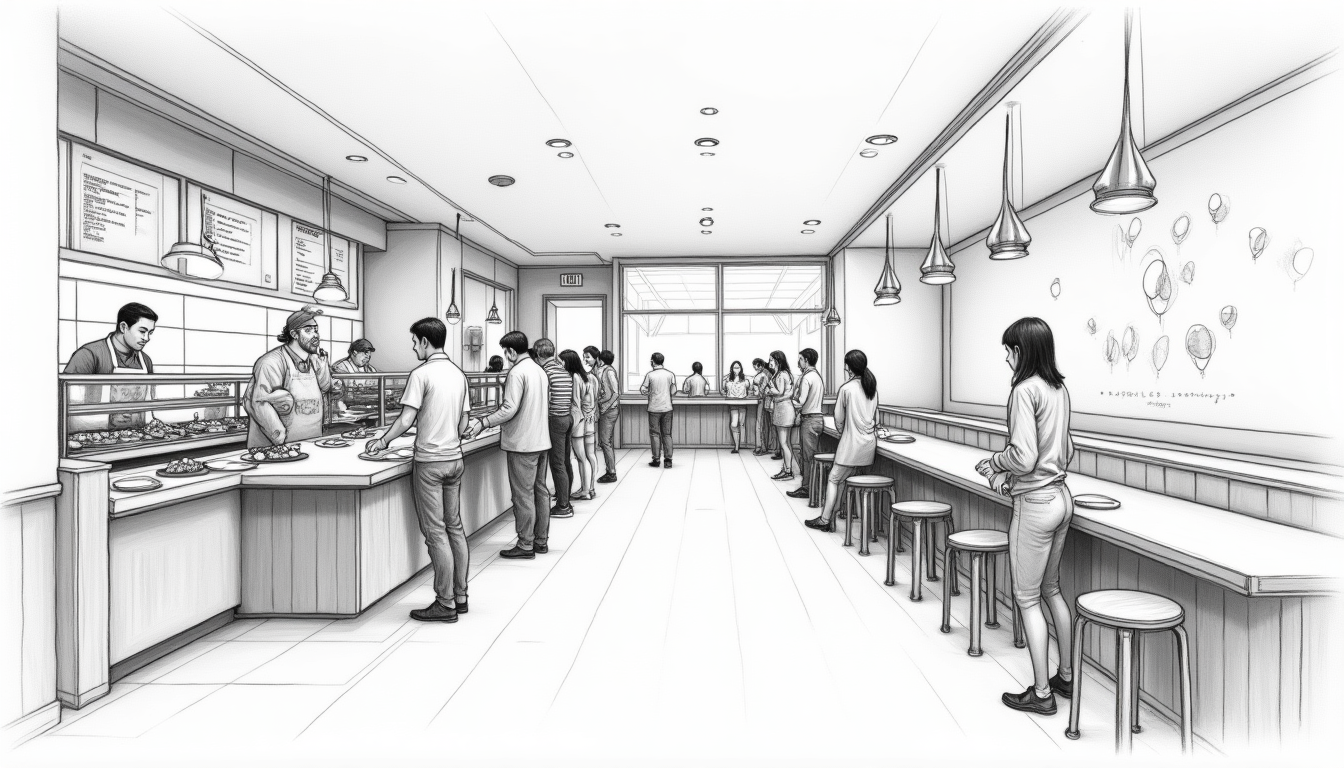
The Melt just reported $58.2 million in revenue for 2025, a record year for the fast-casual burger chain, and announced it will open eight new Southern California locations in 2026. That will more than double its SoCal footprint from six restaurants to fourteen.
The unit economics behind the expansion are worth paying attention to. Across 14 mature locations open at least a year, the average unit volume is $3.4 million. The top third of those mature locations average over $4.5 million. And the Stanford location generated $6.1 million from just 1,900 square feet, which translates to roughly $3,200 per square foot annually. Those are numbers that most fast-casual operators would consider exceptional.
Where They Are Opening
The eight new SoCal locations span the market from San Diego County to the Westside of LA, with specific timelines already announced.
Brea Mall opened in February 2026. Burbank is expected in early 2026. Del Amo Fashion Center in Torrance and San Marcos in San Diego County are both targeting spring. Hollywood Park in Inglewood and Monterey Park are set for summer. Bixby Village Plaza in Long Beach and a UCLA Westwood location will open in the fall.
The geographic spread covers the full SoCal market by design. San Marcos puts them in North County San Diego. Del Amo and Long Beach anchor the South Bay. Burbank, Hollywood Park, and Monterey Park cover the LA basin. UCLA gives them a high-traffic campus location with a built-in late-night audience, which matters because roughly 40% of The Melt’s sales happen after 8 PM through their “Melt After Dark” program.
The Numbers Behind the Confidence
COGS running at 29.6% and unit-level labor at 25.5% give The Melt strong four-wall margins by fast-casual standards. Those numbers are particularly notable in California, where the $20 fast-food minimum wage and elevated food costs have pressured margins across the segment.
Same-store sales grew 5% in 2025 with positive traffic, continuing a trend that CEO Ralph Bower says has held for a decade. The brand grew AUV from roughly $700,000 to $3.4 million over the course of its evolution, with much of that growth coming during and after COVID when sales more than doubled over an 18-month stretch.
Off-premise channels account for 60% of total sales, with 40% flowing through third-party delivery. That mix reflects a brand built for the way people actually eat now rather than a legacy dine-in model retrofitted with delivery. Review averages across Yelp and Google sit between 4.6 and 4.7, with some locations hitting 4.9.
The company also hired Greg Vojnovic as Head of Franchising. Vojnovic previously helped double Popeyes by adding over 1,000 restaurants and was the sixth employee at Inspire Brands. But Bower has been clear that franchise expansion will happen outside California and on a timeline driven by readiness rather than revenue pressure. “We don’t have to go fast on franchising,” Bower told Restaurant Business Online. “We’re not desperate for those dollars, so we can afford to do it the right way.”
What It Signals About the SoCal Market
When a brand posts $6.1 million from 1,900 square feet and responds by doubling down on Southern California, that is a data-driven bet on the region’s consumer demand. The Melt is not entering SoCal cautiously with one or two test locations. They are committing to eight openings across a 12-month period because their existing SoCal performance justifies the investment.
That confidence is instructive for anyone evaluating the Southern California restaurant market right now. The narrative around California restaurants has been dominated by closures, minimum wage pressure, and margin compression. Those challenges are real, but they exist alongside a market where well-run concepts with strong unit economics can generate exceptional returns.
The Melt’s approach also highlights what buyers and investors are looking for in 2026. Small footprints under 2,500 square feet that minimize occupancy cost. Menus built for off-premise volume. Strong brand identity that drives repeat visits and late-night traffic. Operational discipline that keeps COGS below 30% and labor below 26% even in California’s cost environment.
For SoCal restaurant owners, the takeaway from all of this is straightforward. The market is not contracting. Capital is flowing into the region, and growth brands are competing for locations. If your restaurant occupies a desirable space with favorable lease terms, that real estate value is part of your business’s worth, and it is appreciating as demand for restaurant-suitable locations increases.
Operators who have built something that works in this environment have more leverage than the doom-and-gloom headlines suggest.
Businesses Mentioned