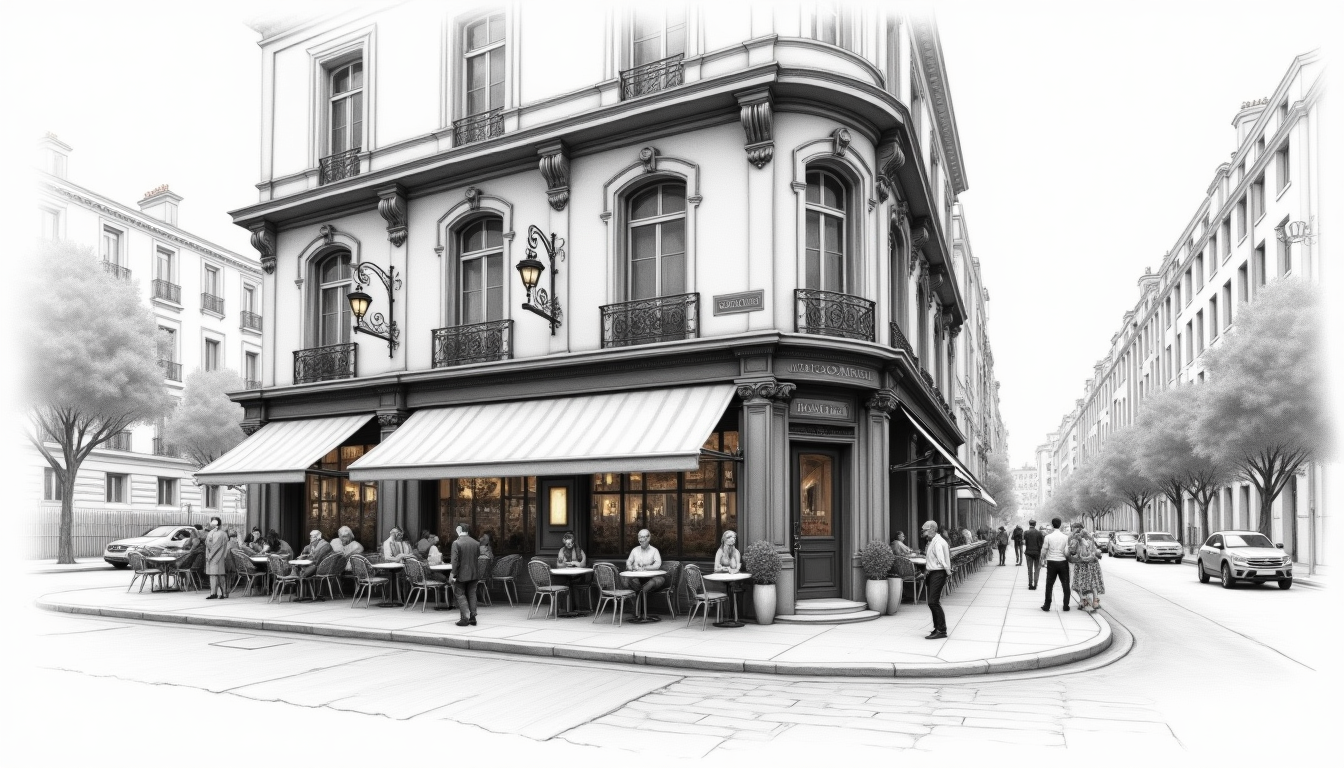
Brad Wise opened À L’ouest on February 11 at the corner of 30th and University in North Park. It’s a 4,387-square-foot French brasserie with 200-plus seats, a reported $4.5 million build-out, and a menu built around wood-fired interpretations of French classics: steak au poivre, duck à l’orange, cold-smoked mussels. Studio Rallou designed the space with wrought iron, arched details, and greenery-lined banquettes.
It’s also TRUST Restaurant Group’s 13th restaurant. Wise founded the group in 2016 with the original Trust in Hillcrest. A decade later, the portfolio includes Fort Oak, Rare Society (now in multiple locations across Southern California and Las Vegas), Cardellino, The Wise Ox, and Wild Child. Thirteen concepts. One city as the base of operations.
That trajectory tells you something about San Diego’s restaurant market that a lot of people miss.
The Multi-Concept Operator is the Highest-Value Profile in This Industry
When I evaluate restaurant businesses, the operator profile matters as much as the financials. A single-unit owner running one location is one kind of asset. A multi-concept operator with a proven track record of opening, stabilizing, and scaling restaurants across different neighborhoods and cuisines is a fundamentally different kind of asset.
TRUST’s portfolio demonstrates exactly what makes multi-unit operators valuable:
Concept diversification. A French brasserie, a steakhouse, an Italian spot, a butcher shop, a neighborhood restaurant. If one concept hits a downcycle or a neighborhood shifts, the portfolio absorbs it. Single-unit operators don’t have that buffer.
Operational infrastructure. By restaurant number five or six, groups like TRUST have built the back-office systems, vendor relationships, hiring pipelines, and management depth that make each subsequent opening less risky. The marginal cost of opening number 13 is dramatically lower than opening number two.
Real estate leverage. Landlords want proven operators. When Wise walks into a lease negotiation for a high-visibility corner in North Park, he’s bringing a track record of 12 successful openings. That’s a different conversation than a first-time restaurateur with a business plan and a dream.
What North Park Tells You About San Diego’s Restaurant Geography
À L’ouest landed at 30th and University, one of the most prominent corners in North Park. That’s not an accident. North Park has become San Diego’s most active restaurant corridor over the past several years. The density of quality operators per block rivals neighborhoods twice its size in larger cities.
For brokers, North Park’s maturation matters because it demonstrates something about San Diego’s restaurant economy: the city can support premium dining concepts outside of the traditional tourist corridors. You don’t need to be in the Gaslamp or La Jolla to command a $4.5 million build-out and 200-seat capacity. Neighborhoods with strong residential density and walkability are pulling serious restaurant investment.
That pattern reshapes how you think about restaurant real estate valuations across the city. A well-positioned space in North Park, South Park, or University Heights isn’t a secondary market anymore. It’s a primary one.
The Rare Society Model: Prove Local, Then Expand
The most interesting piece of TRUST’s growth story is Rare Society. Wise opened the original steakhouse concept in University Heights, proved it, then expanded to Solana Beach, Santa Barbara, San Clemente, Mill Creek, and Las Vegas. One concept, refined in San Diego, then exported to multiple markets.
That’s the playbook that commands the highest multiples when it’s time to sell or bring in investors. You’re not selling a restaurant. You’re selling a replicable system with proven unit economics across different geographies.
Independent operators thinking about their own exit should pay attention to this model. The restaurants that sell for the highest premiums aren’t necessarily the ones with the highest revenue. They’re the ones where a buyer can see a clear path to replication. Documented systems, transferable recipes, a brand identity that works beyond a single location.
What This Means if You’re Thinking About Selling
If you’re a single-unit operator in San Diego watching groups like TRUST expand, the takeaway isn’t that you need to open 12 more restaurants. It’s that the market rewards operators who build transferable value.
That means documented processes. Recipes that don’t live exclusively in the owner’s head. A management team that can run service without the founder in the building. A brand that a buyer can see themselves continuing.
TRUST didn’t get to 13 restaurants by making each one dependent on Brad Wise standing in the kitchen. They got there by building systems that scale. The operators who build their single location the same way are the ones who get the best offers when they’re ready to move on.
Thirteen restaurants in a decade, rooted in one city. That’s not just a growth story. It’s a signal about what San Diego’s restaurant market can support, and what kind of operators are capturing the most value from it.
Businesses Mentioned