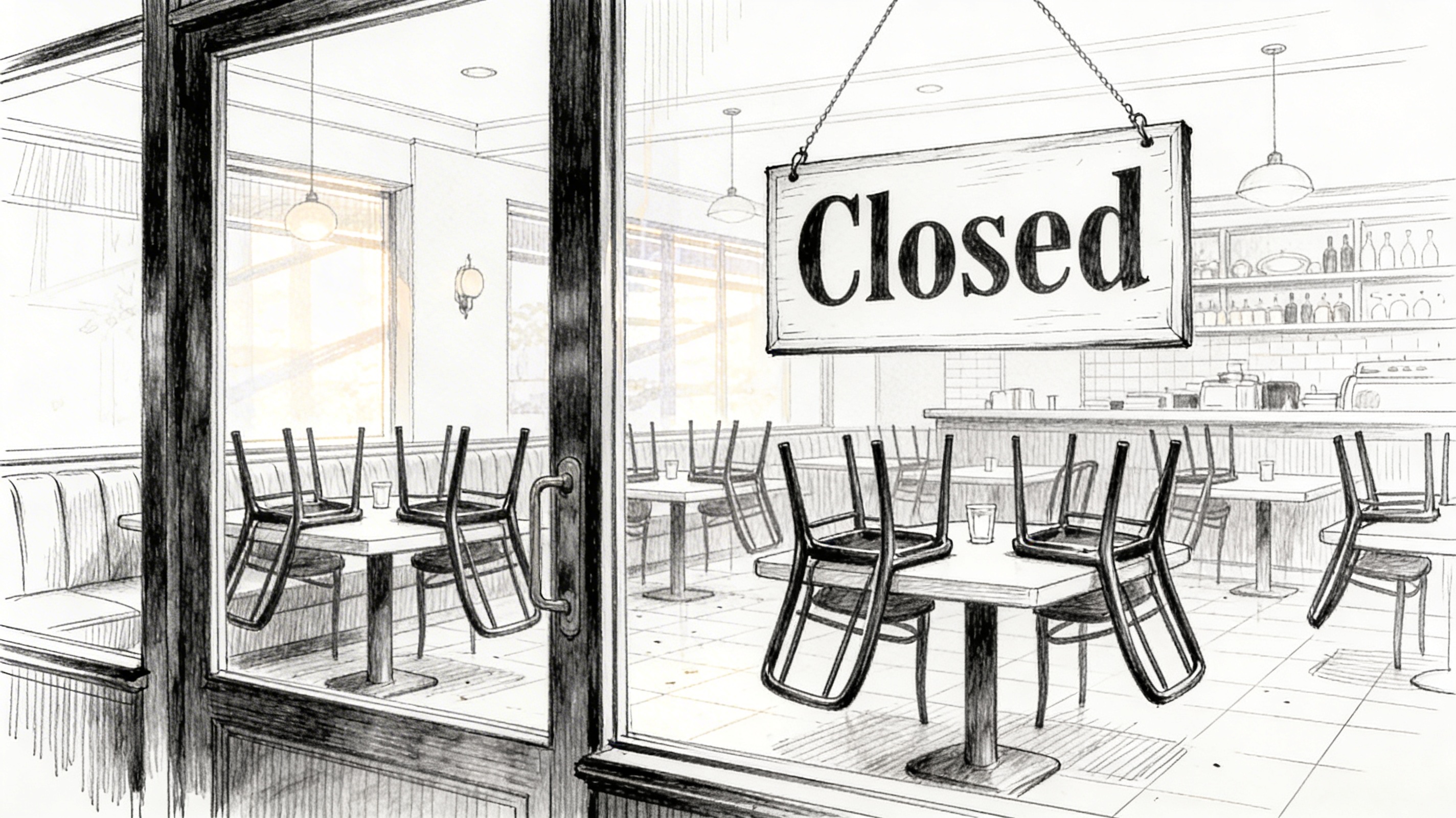
On February 8, 2026, University Heights lost two restaurants that never had a chance to find their footing. Vulture, an ambitious vegan fine-dining concept, and Dreamboat, its casual daytime counterpart, closed their doors at 4608-4610 Park Boulevard after roughly eight months in operation.
What makes this closure remarkable isn’t the timeline; restaurants fail within a year more often than most people realize. It’s who was behind it and how much was at stake.
The Operators Were Anything But Amateurs
This was a joint venture between Kory Stetina and Arsalun Tafazoli, two of San Diego’s most recognized restaurant figures.
Stetina is known for Kindred in South Park, which has been a critical darling since it opened. Tafazoli is the founder of CH Projects, the hospitality group behind 18 concepts including Born & Raised, Ironside Fish & Oyster, and Raised by Wolves. CH Projects has been shaping San Diego’s dining scene since 2007.
These are operators with deep industry knowledge, proven track records, and access to capital. If anyone could make a challenging concept work, it was this team.
The Numbers Tell the Real Story
The building at 4608-4610 Park Boulevard was purchased in July 2020 for $2.3 million. Millions more went into renovation over a five-year development period before the restaurants opened in June 2025.
Let that sink in from a valuation perspective: before a single plate was served, the operators had north of $3-4 million tied up in a concept that hadn’t been market-tested.
Tafazoli told the San Diego Union-Tribune that “the project struggled to find an audience commensurate with the level of capital required to operate at the level we set out to achieve.”
That’s a polished way of saying the revenue couldn’t support the debt.
Why This Matters for Every Restaurant Owner
As a broker, I see a pattern here that comes up repeatedly in restaurant sales and acquisitions. The lesson isn’t “don’t take risks”; it’s about understanding the relationship between capital investment and revenue potential.
Overcapitalization
When your buildout costs exceed what the concept can realistically generate, you’re starting underwater. A vegan fine-dining tasting menu in a neighborhood setting limits your addressable market from day one. The question a broker would ask: Can the projected revenue service the debt and still produce healthy seller’s discretionary earnings?
At these investment levels, you’d need to generate significant annual revenue just to break even, before paying yourself.
Concept Risk vs. Market Demand
Restaurant broker Nate Benedetto put it plainly: “Without meat dishes, I don’t think they had the volume to support the investment.”
Vegan fine-dining is a growing niche, but niche is the key word. When you’re carrying $2.3M in real estate plus a seven-figure buildout, you need broad appeal or premium pricing that the market will bear consistently, not just on opening weekend.
The factors that determine what a business is worth always come back to cash flow. Concept excitement doesn’t appear on a P&L.
Five Years of Development Risk
The building was purchased in 2020. The restaurants opened in 2025. Five years of carrying costs, construction, permitting, and a pandemic in between. Every month a restaurant project sits in development, it’s burning capital with zero revenue.
For anyone considering a restaurant purchase or major renovation: time-to-revenue is one of the most underappreciated risks in this industry.
What Happens to the Building?
The property at 4608-4610 Park Boulevard is now listed for sale; no asking price published. University Heights remains a desirable neighborhood with solid foot traffic, and the building has been fully built out as a restaurant space.
The irony for a buyer: all that buildout investment means someone could potentially acquire a turnkey space at a fraction of what it cost to create. This is how restaurant valuations work in distressed situations: the market prices the asset on what it can produce, not what it cost to build.
The Broker’s Takeaway
When two of San Diego’s most accomplished operators can’t make a concept pencil, it reinforces something I tell clients regularly: the concept must fit the capital structure. A $500K buildout gives you room to experiment. A $4M+ project demands a proven, high-volume model from the start.
If you’re considering buying or building a restaurant, run the numbers backwards. Start with realistic revenue, subtract operating costs, and see what’s left for debt service and ownership compensation. If the math doesn’t work on paper, it won’t work on Park Boulevard either.
Businesses Mentioned