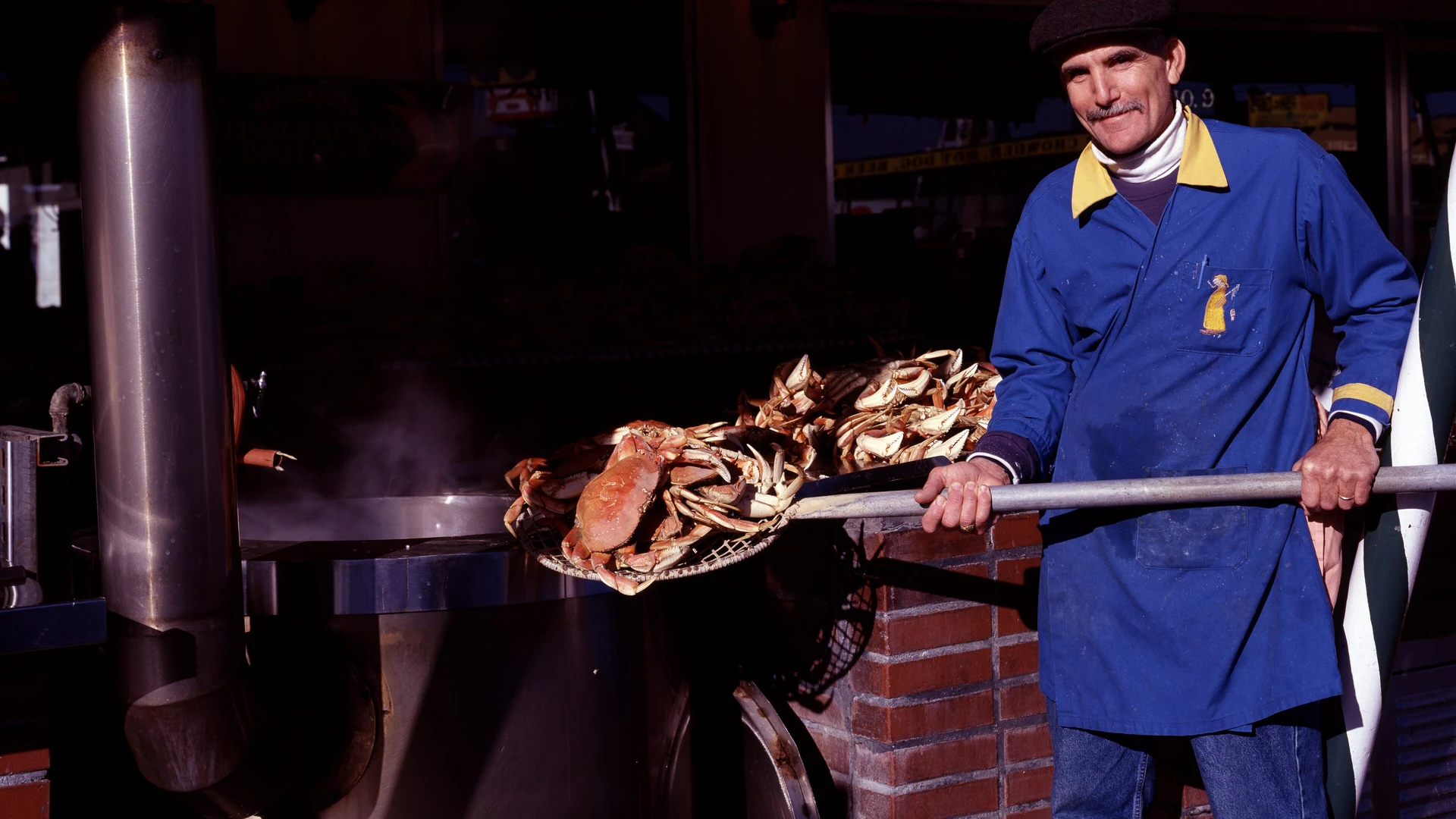
Woods Beer & Wine Co. is opening its seventh location in late summer 2026 at 2847 Taylor St., the ground-floor space that housed Fishermen’s Grotto No. 9 until the Port of San Francisco evicted the operator over more than $300,000 in back rent in 2023. Founder Jim Woods told the SF Standard the operation will sit in the space “for two years, maybe even three” with no buildout, simply the existing 2,000 square feet of waterfront real estate plus a Type 47 liquor license. That detail is the whole story for any broker watching how San Francisco tourist-district vacancies are being absorbed in 2026.
For three years the Fishermen’s Grotto space sat dark while the Port worked through a $1.4 million back-rent lawsuit against the prior operator. The institutional tenant who operated on that footprint for 77 years could not make the numbers work after the pandemic. The replacement is an established Bay Area craft brewer with six existing taprooms across San Francisco and Marin, taking a flag-planting bet on tourist foot traffic with almost no downside capital at risk.
Capital-Light Entry Is the 2026 Wharf Playbook
The Woods structure shows what an operator-extension lease looks like when the operator does not believe in the long-term rent. The lease runs two-to-three years as a pop-up, with zero tenant improvement spend. The brand, the customer base, and the supply chain through Woods’s brewing operations are already in place. If the Wharf foot-traffic story holds, Woods has the option to renew. If it does not, the brand goes back to its existing footprint and the Port goes back to leasing the space cold. Risk on this lease is asymmetric in the operator’s favor across every dimension.
That asymmetry is why Woods can take this bet at all. The Fishermen’s Grotto footprint did not get filled for three years by a new restaurant concept because the build-out economics on a 2,000 sq ft tourist-district seafood space at current construction and labor pricing did not pencil for an unproven operator. It only pencils now because Woods is bringing an already-built brand, an already-licensed Type 47 (the first Woods location with one), and a build-out budget of zero. “We’re not doing any work on the space. We’re just going to open,” Woods told the SF Standard.
For California coastal F&B brokers, the operator profile is the tell. Multi-unit operators with six or seven existing locations are the ones absorbing institutional-vacancy real estate right now because they can underwrite the marginal cost of a seventh outlet against the existing infrastructure. New independent operators looking at the same footprint cannot make those numbers pencil. The Wharf vacancy fill is being done by operators who already own the brand they are bringing in.
The Foot Traffic Behind the Bet
Fisherman’s Wharf hit 12.5 million visitors in 2024, making it San Francisco’s most-visited destination. Q1 2026 foot traffic was up 11.4% over Q1 2025 and up nearly 24% over Q1 2024. The neighborhood crossed 1 million monthly visitors in March 2026, the first month above that threshold since the pandemic shut it down. Bri Maughan, who runs the Fisherman’s Wharf Community Benefit District, told the SF Examiner that the data points to a neighborhood “not only recovering, but evolving.”
The evolving part matters more for an operator looking at this footprint. Castagnola’s, the oldest restaurant on the Wharf, settled with the Port in October 2025 and is required to reopen by October 2026 with a minimum $900,000 reinvestment. Everett & Jones is opening a barbecue-seafood concept in the former Lou’s Fish Shack space, and the Salvadoran restaurant Chasca Rio is in the pipeline. The next generation of Wharf tenants is running multi-unit brand-extension, regional fast-casual, and craft-beverage models, a different operator profile from the white-tablecloth seafood houses that defined the corridor for sixty years.
Tourist-District Landlords and the 2026 Underwriting Mismatch
For owners of waterfront F&B real estate in the broader California coastal market, from San Diego to Monterey to the Bay Area, the Wharf data points to a shift in the kind of tenant that now fills these spaces. The tenant pool replacing institutional white-tablecloth operators looks materially different from the pool that filled these spaces in the past two cycles, and it is multi-unit, capital-light, and short-term in lease structure. Landlords who underwrite their property on a 10-year corporate lease at pre-pandemic rent are pricing against a tenant base that does not exist in this segment anymore.
For operators thinking about exit, the same data cuts a different way. A multi-unit operator with a built brand and an existing supply chain is the buyer most likely to move when you go to market. The buyer pool for a single high-rent tourist-district unit has thinned considerably. The buyer pool for a unit that slots into someone’s existing operator stack as a seventh or eighth location is the part of the market that is actually moving.
The Woods opening is a clean single data point, with a small footprint, a simple lease structure, and a named operator with a public track record. Watch the rest of the Wharf pipeline over the next eighteen months. The tenant profile filling the next three institutional vacancies will show where California coastal tourist-district real estate is going.
Sources
- The San Francisco Standard, “Woods Beer is opening at the wharf with a full liquor license” (June 12, 2026)
- The San Francisco Standard, “San Francisco sues to evict iconic Fisherman’s Wharf restaurants for $1.4M back rent” (September 27, 2023)
- San Francisco Examiner, “Why Fisherman’s Wharf is the busiest it has been in years”
- The San Francisco Standard, “Oldest restaurant in Fisherman’s Wharf to reopen after multimillion-dollar settlement” (October 22, 2025)
- Port of San Francisco, “New Beverage Destination, Artistic Elements, and Amenities Advance Fisherman’s Wharf’s Economic Vitality”
Businesses Mentioned
Tags