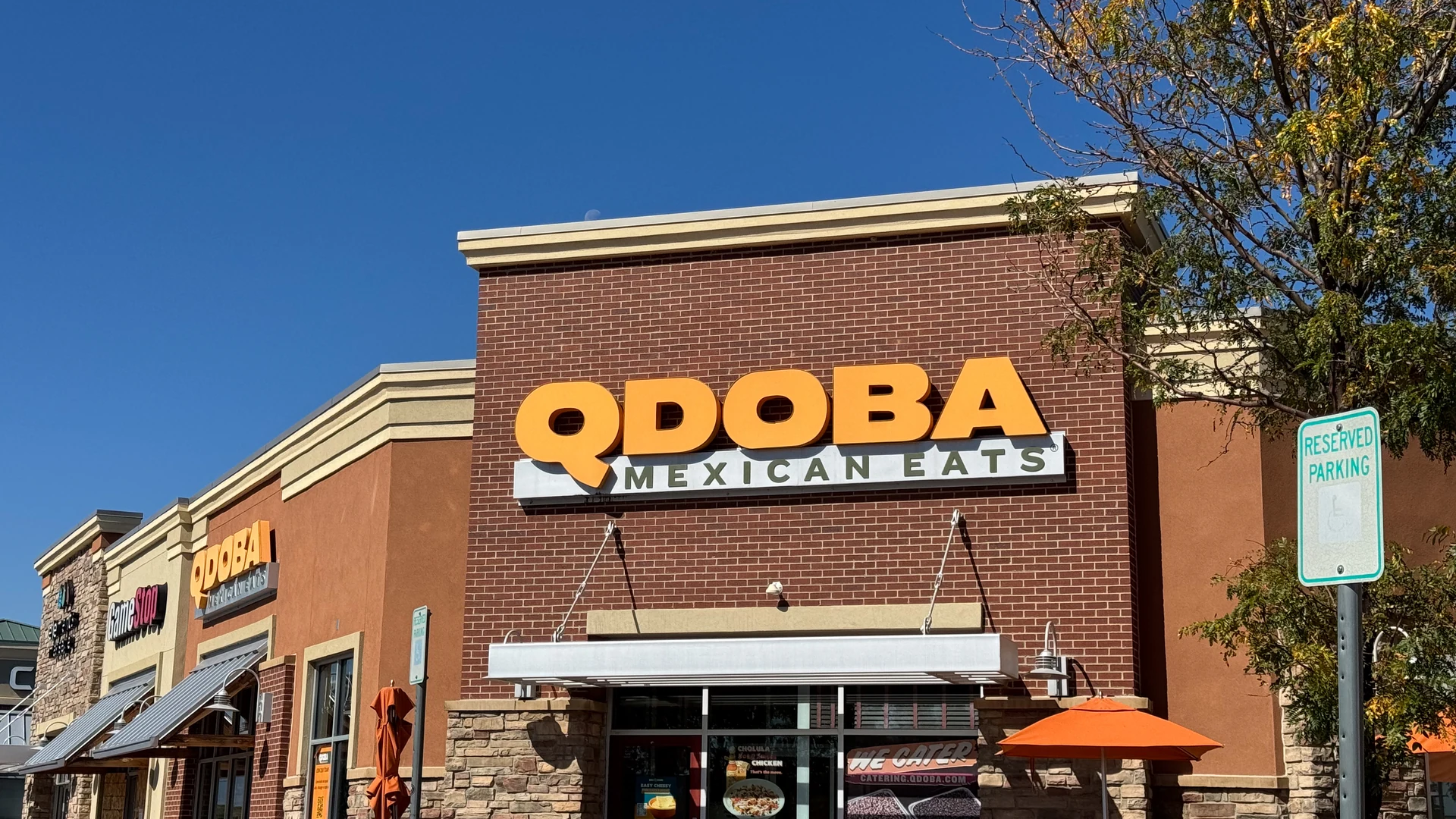
Qdoba signed a development agreement on September 9 to open 17 restaurants across San Diego County, and it handed the deal to a local operator. The franchisee is Hyperion Brands, a San Diego company led by CEO and co-founder Cesar Shih, who already runs Habit Burger & Grill units as a multi-unit franchisee. Qdoba runs its corporate operation out of Mission Valley, so the agreement puts a San Diego brand back into its own county through a San Diego operator.
For anyone tracking the San Diego restaurant market, the buyer matters more than the menu. Seventeen committed units, taken on by an operator who already runs another brand, marks where financed restaurant capital is moving in the county, and it sets a multi-year claim on the real estate those units will need.
Qdoba Is Scaling Through Local Partners
Qdoba operates roughly 875 restaurants across 46 states, plus Canada, Puerto Rico, Japan, and South Korea, and the brand has said it wants to reach about 2,000 units and open 100 a year in the years ahead. That growth belongs to Butterfly Equity, the Los Angeles private equity firm that acquired Qdoba in 2022 and merged it into Modern Restaurant Concepts. In August 2025 Butterfly closed a $527 million continuation fund, backed by former owner Apollo Global Management, to finance the expansion.
Chief Development Officer Jeremy Vitaro called California “a priority growth market” and pointed to Hyperion’s “strong development track record and a hometown advantage.” The San Diego agreement follows an earlier Qdoba development deal in Ventura and Santa Barbara. A private-equity-backed brand doubling its footprint relies on operators to build those units, and that operator carries the execution and the risk.
The Operator Already Runs Another Brand
Cesar Shih is not new to franchise operations, having built a multi-unit position with Habit Burger & Grill before adding Qdoba. Stacking a second brand onto an existing operation is a familiar move for operators with the systems and the balance sheet to support it. “As a San Diego based operator, we’re looking forward to bringing Qdoba’s bold flavors and great value to our guests across the region,” Shih said.
Multi-unit operators like Hyperion are among the most active and durable buyers in any restaurant market. They underwrite deals against real operating experience, they can finance more than a single-unit buyer, and they treat a new brand as another line in a portfolio rather than a bet-the-house decision. The same multi-unit franchise logic drove Mike’s Red Tacos to an 18-unit build-out across Los Angeles and Orange County, and it is the profile that commands the strongest terms when experienced operators sit across the table.
Seventeen Sites Is a Real Estate Commitment
Neither company disclosed specific addresses or a timeline, which is standard at the signing stage. The number itself sets the demand, and quick-service development on this scale needs suitable real estate, drive-thru-capable pads, end-caps in the right retail centers, and second-generation restaurant spaces that convert without a ground-up build. Every one of those sites competes with independent operators and other chains for the same limited inventory.
Securing that space in San Diego has not been simple. Retail availability across the county sits near multi-year lows, and well-located pads with the right zoning and parking draw multiple bidders. A commitment to 17 units over several years is a standing bid on San Diego retail real estate, and it raises the competition for the commercial spaces that both chains and independents are chasing.
Where Operator Capital Is Heading
For independent owners, the signal is about who they now share the market with. Franchise development at this scale reflects capital deciding that San Diego quick-service is worth a multi-year build-out, and it puts experienced, financed operators into the same corridors where single-unit owners work and eventually sell.
Those operators are also buyers. Established multi-unit groups expand by acquisition as often as by new construction, which gives a well-run independent near the right corridor a credible exit to a strategic buyer rather than only to a first-time owner. The private capital organizing around durable San Diego businesses is the same force showing up in restaurants, and it rewards owners who prepare their operation to be bought. For an owner weighing that horizon, a structured exit built years ahead is what turns a single strong location into a sale a multi-unit operator will compete for.
Sources
- PR Newswire, “QDOBA Signs 17-Unit Development Agreement Across San Diego County”
- Fast Casual, “QDOBA signs 17-unit development agreement in San Diego County”
- Restaurant Business, “Butterfly Equity to acquire Qdoba”
- Los Angeles Business Journal, “Butterfly Closes $527 Million Fund for Qdoba”
Businesses Mentioned
Tags