Orange County ended the third quarter of 2026 with retail availability at 3.7 percent, matching the lowest level the market has ever recorded, and average asking rent at $2.69 per square foot on a triple-net monthly basis, the highest in five years. Net absorption ran negative at 114,000 square feet, a sign of how little space was left to lease. Builders delivered just 6,000 square feet of new retail all quarter, and every bit of it was two freestanding restaurant pads in central Orange County. The squeeze is sharpest for food and beverage, and the reason sits in what it now costs to build a restaurant from scratch.
What a Kitchen Costs to Build From Scratch
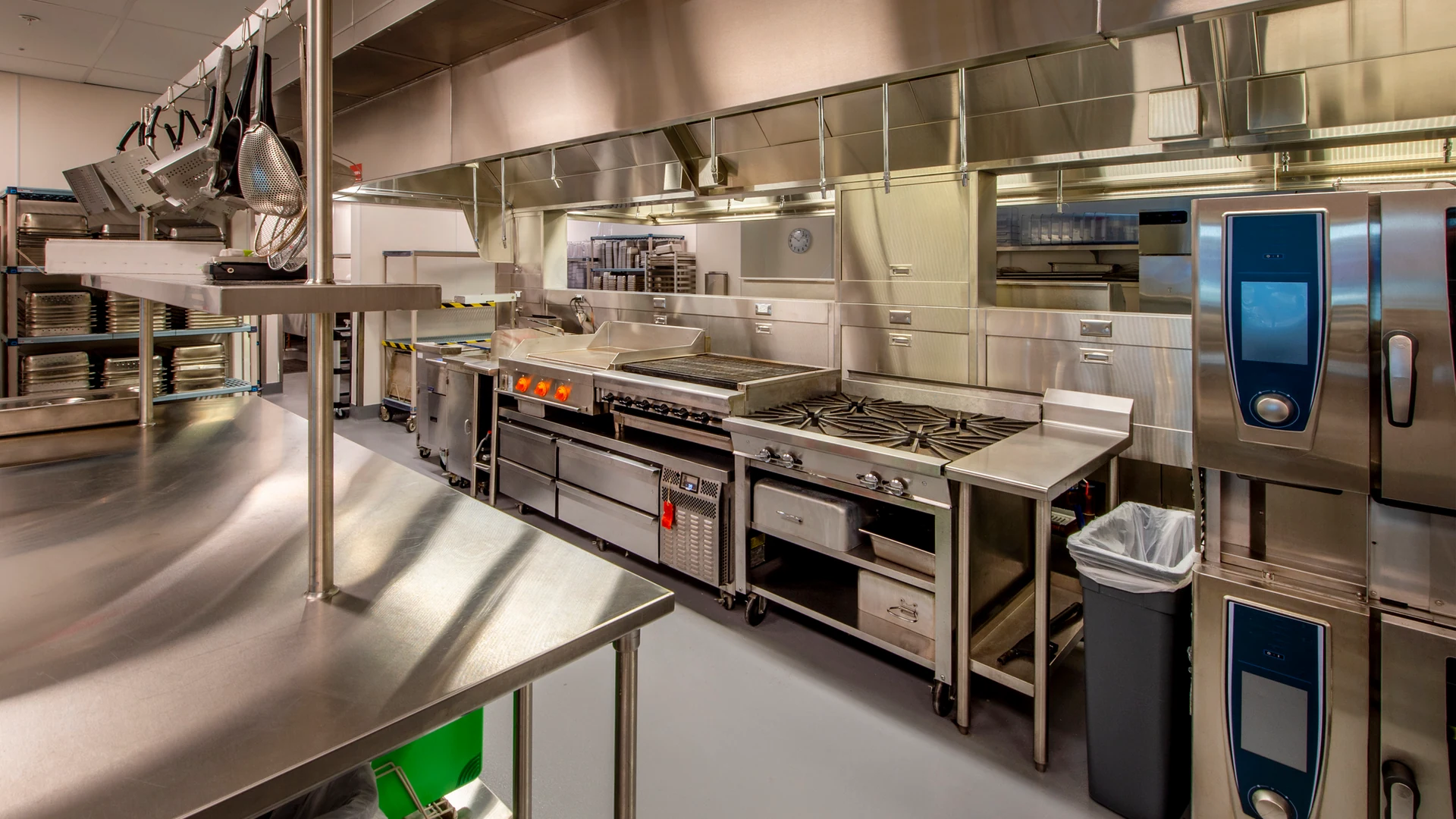
Building a commercial kitchen into a bare shell is the most expensive square footage in retail. Commercial brokers who handle restaurant space put the infrastructure alone at $150 to $400 per square foot, before a single table goes in. A new exhaust hood, ductwork, roof penetration, and fire-suppression system can run past $75,000. A walk-in cooler, prep sinks, and a dish machine add another $40,000 to $120,000. A ground-up build in Los Angeles takes nine to fourteen months of rent and permitting before the first cover is served. Taking over a space that already has the hood, the grease interceptor, the floor drains, and the walk-in avoids $50 to $150 per square foot and can cut a build-out budget in half.
That cost gap is why a former restaurant with its systems intact no longer sits empty for long, and why turnkey spaces increasingly trade for key money paid on top of rent to inherit the fixtures and equipment. The built-out box is the asset in short supply, and commercial real estate is now where much of a restaurant deal’s value is decided.
A Packed Dining Room Does Not Save the Lease
Crustacean has anchored 468 North Bedford Drive in Beverly Hills since 1995, a thirty-year run as one of the city’s most recognized tables, and it is closing this fall anyway. The building sold earlier in the year, and owner Elizabeth An told reporters the new landlord “has other plans for the building, and those plans do not suit Crustacean anymore.” The restaurant is running pop-ups at other venues while the family looks in Calabasas and Pasadena for a new home.
A full room and a famous name did not matter, because the one thing the operation did not control was the space. For a seller, the lease and the build-out are a large share of what a buyer actually pays for, and both carry a clock. An operator who waits until the lease is short, or until the landlord has other plans, sells a business with its most valuable part already slipping away. Lease term and control belong in the valuation long before a listing goes out, which is why lease negotiation is as much an exit decision as an operating one.
Demand Spills Into the Inland Empire
Restaurant-suited space in Orange County asks even more than the retail average, roughly $2.75 to $4.75 per square foot, and the corridors with any vacancy fill in weeks, pushing operators priced off the coast inland. Second-generation restaurant space across Riverside and San Bernardino counties often asks $1.85 to $3.25 per square foot, and the same build-out savings apply. The Inland Empire is absorbing the overflow of operators who want a working kitchen at a rent that pencils.
Who Wins the Squeeze
The supply feeding this demand is the steady wave of chain closures handing built-out boxes back to the market, and the state has made reuse easier with a new permit that lets operators test a concept in a vacant storefront for up to 120 days. Proven operators are the ones moving first, because they can underwrite a going concern faster than a first-timer can finance a shell.
For buyers, a working restaurant with a transferable lease beats a dark box in every market where a shell costs this much and takes this long. For sellers, the same logic runs in reverse, because the equipment, the systems, and the remaining lease term carry real value today, and that value holds up best while the FF&E is current and the lease still has runway. In Orange County especially, where there is almost nothing left to build into, a working kitchen with a transferable lease is the strongest position an owner can bring to a sale.
Sources
- CBRE, “Orange County Retail Figures Q3 2026”
- Parker & Associates, “Second-Generation Restaurant Space in Southern California”
- Beverly Press, “Crustacean to Close Doors in Beverly Hills After 30 Years”
Tags