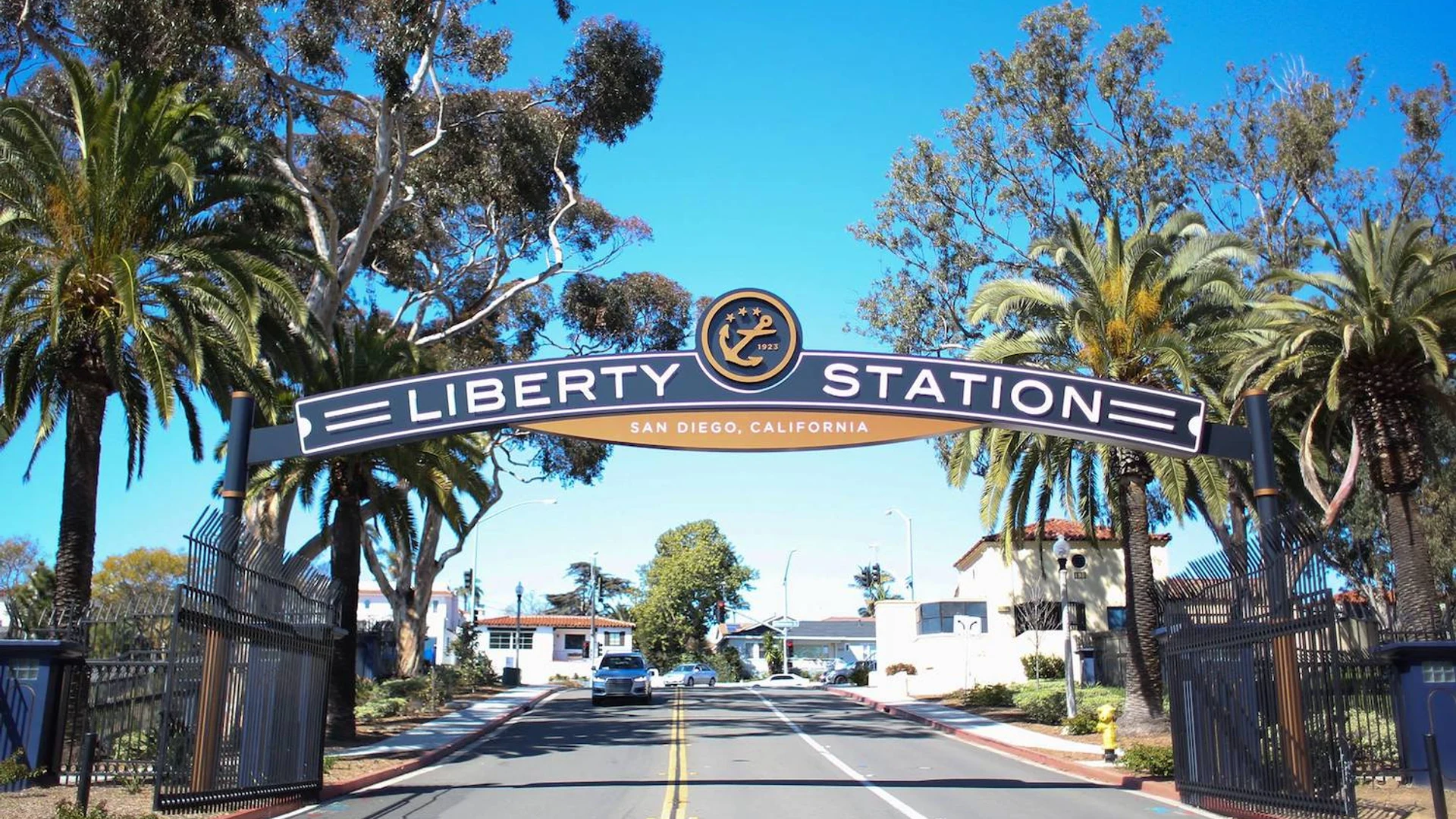
Ryan Thorsen, the hospitality operator who bought and revived Mister A’s in Bankers Hill in 2022, has committed roughly $20 million to a seven-acre project at Liberty Station in Point Loma. The development, called The Admiral, converts five 1920s former naval officers’ quarters near Rosecrans Street into a cluster of restaurants, bars, and event spaces on land Thorsen leased from the City of San Diego in 2024. Thorsen runs the project through his firm, Revival Hospitality, and groundbreaking is set for early fall 2026.
The number that moved this year is the budget, which climbed from an original $15 million to around $20 million as the plan grew and the schedule stretched. For anyone tracking the San Diego restaurant market, the site matters more than the menu, and The Admiral shows the caliber of operator that a marquee San Diego location now draws.
A Fine-Dining Operator Scales Into a District
Thorsen spent the years after taking over Mister A’s turning a single well-known restaurant into a platform for something larger. The Admiral gives him seven acres and five historic buildings on the northwestern edge of Liberty Station, the former Naval Training Center that operated from 1923 until 1997. Plans call for a full-service restaurant built around local seafood and a nod to the Point Loma fishing community, a cocktail bar and speakeasy in a former guard house, a wine market with a bakery, a screen-free game room, and an event venue anchored by a 1923 Spanish revival home. Edible gardens, stone walkways, and roughly 200 parking spaces round out the grounds.
Assembling that many concepts on one campus is a different undertaking than opening a restaurant. Each venue carries its own build-out, licensing, and staffing, and the whole compound has to work as a single destination. An operator takes that on only after proving they can run a demanding flagship, and Mister A’s gave Thorsen that record.
The Site Is the Asset
The Admiral is built on control of ground that rarely comes available. Seven contiguous acres of historic buildings inside an established district, held on a long municipal lease, is an asset shaped by entitlements and location rather than by any single dining room. The buildings are protected, the parking is already accounted for, and the setting carries a history that a new-build cannot manufacture.
That is what separates a project like this from a second-generation storefront. A storefront trades on its four walls and its lease rate. A seven-acre historic compound trades on the district around it, and the value compounds as the surrounding blocks fill in. Securing that kind of footprint is closer to commercial real estate strategy than to a conventional restaurant search, and the lease terms on public land shape the economics for decades.
Long Horizons Favor Patient Capital
The schedule shows how much patience a project like this demands. Thorsen first floated a 2026 opening, then split the work into three phases, with the first wrapping in late 2027 and the last finishing in fall 2028, and the budget rose by a third along the way. “This is one of the hardest things I’ve ever done,” Thorsen told Times of San Diego.
Cost creep and multi-year schedules are the norm on adaptive-reuse projects of this size, and they screen out anyone who needs a quick return. Only a well-capitalized operator can carry entitlement work, historic renovation, and a phased opening across two or more years. That patience is a familiar pattern among the strongest operators. Hillstone Restaurant Group waited nearly a decade and rebuilt from the ground up to open its first San Diego County location, and the same discipline is what lets a project the size of The Admiral pencil at all.
What a Destination Anchor Does to the Market
A compound on this scale changes the ground around it. Destination anchors pull traffic, lengthen the time visitors stay, and give landlords in the surrounding blocks a reason to hold out for stronger tenants and higher rents. Independent operators near Liberty Station are not competing with The Admiral for the same small storefronts, yet they feel its pull in the rents and the foot traffic it generates. The reuse of long-idle institutional buildings echoes the way operators have absorbed vacant coastal landmarks elsewhere in the region.
The operators who can execute these projects are also the ones with the balance sheets to buy. Established groups expand by acquisition as readily as by new construction, and the private capital gathering around durable San Diego businesses is the same money that funds compounds like The Admiral. For an owner working a strong location near a rising district, that mix of destination gravity and acquisitive capital is what turns a single restaurant into an asset a larger operator will pay to own.
Sources
- Times of San Diego, “The Admiral coming to Liberty Station in three phases”
- San Diego Magazine, “Mister A’s Owner to Bring $15M Project to Liberty Station in 2026”
- NBC 7 San Diego, “Owner of Mister A’s to bring $15M renovation project to Liberty Station”
Businesses Mentioned
Tags